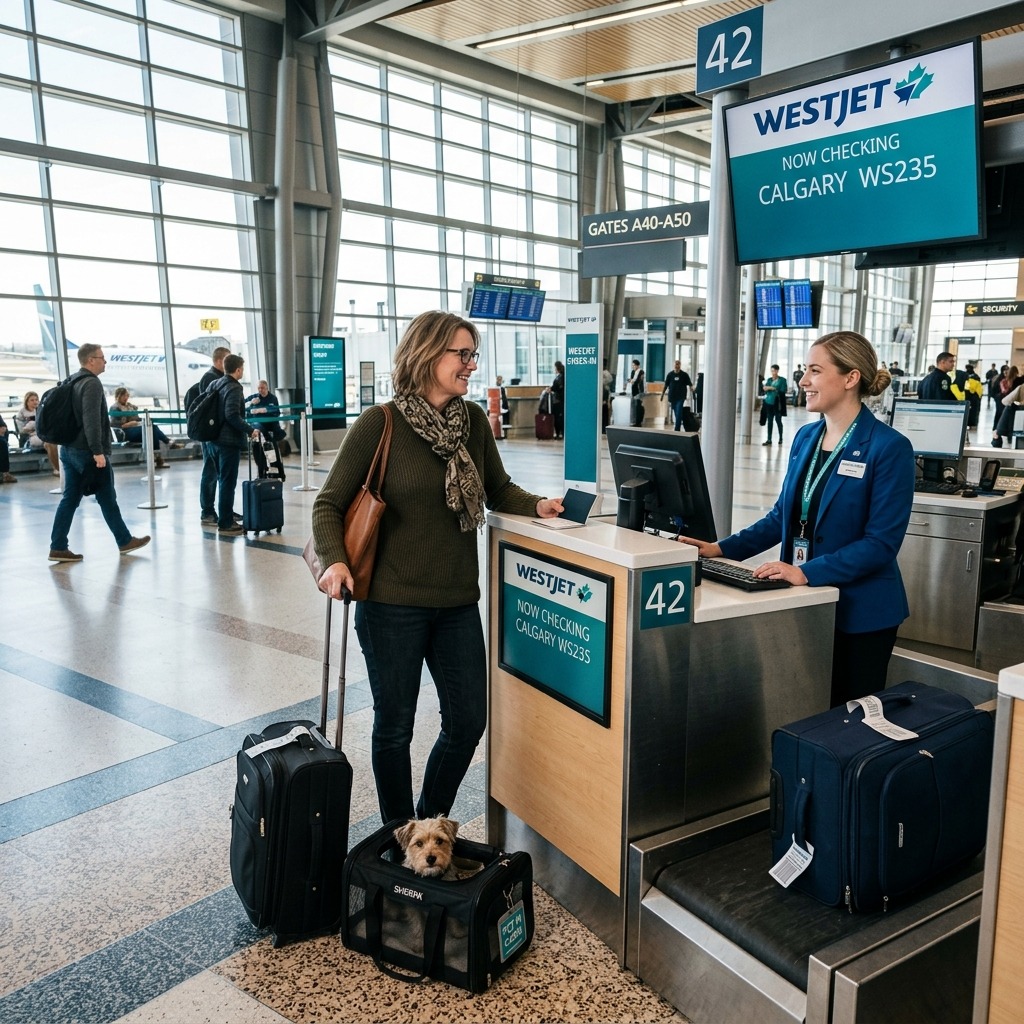
WestJet Pet Policy: The Complete 2026 Travel Guide
Flying with a pet shouldn’t feel like decoding a riddle. Yet many travelers reach the airport only to discover their carrier is half an inch too tall or their health certificate is dated one day too early. These small mistakes can cost you your pet’s seat on the plane.
Policies change often, so always confirm the latest details on WestJet’s official website before you book. Consider this your roadmap for planning a smooth trip with your furry companion.
How does WestJet’s pet travel policy work?
WestJet treats pet travel as a balance of three priorities: safety, comfort, and compliance. The airline accepts cats and dogs through three channels in the cabin, as checked baggage, or via WestJet Cargo and the right option depends on your pet’s size, your route, and the aircraft.
Here’s the quick breakdown:
|
Travel method |
Best for |
Pet stays where |
|
In-cabin |
Small cats and dogs |
Under the seat in front of you |
|
Checked baggage |
Medium to large dogs |
Climate-controlled hold |
|
WestJet Cargo |
Oversized or unaccompanied pets |
Dedicated cargo facility |
Only domestic cats and dogs are accepted under the standard pet policy. Other animals, including rabbits, birds, and reptiles, are not permitted on WestJet flights.
What size of dog can fly in the cabin on a WestJet flight?
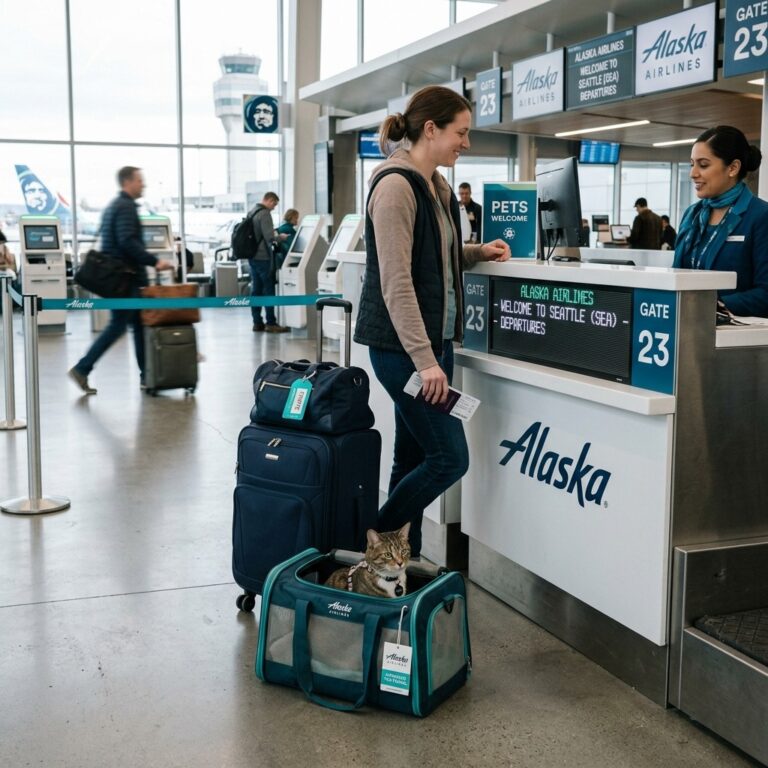
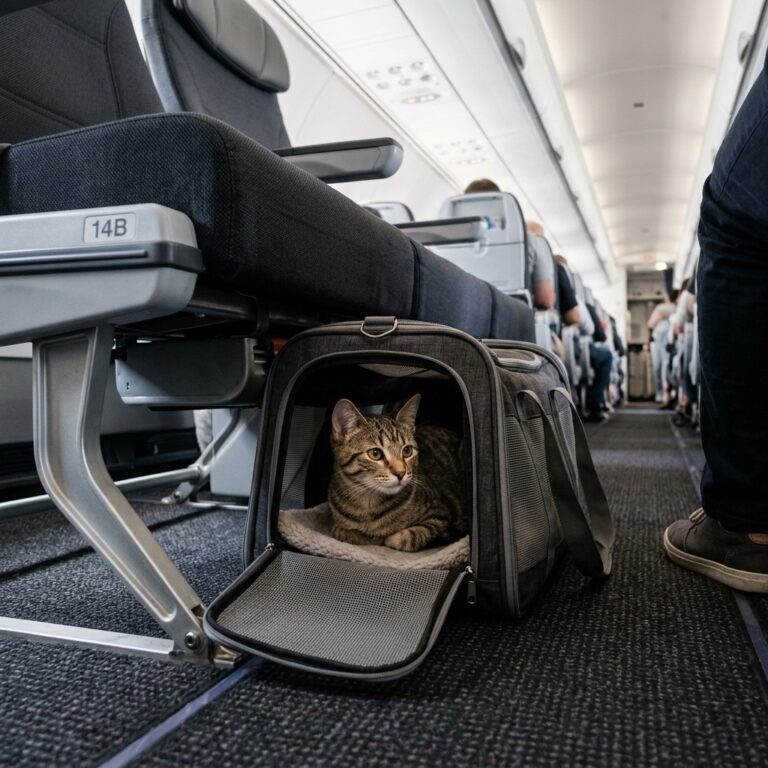
A dog can fly in the WestJet cabin if it fits comfortably inside an approved carrier that slides under the seat in front of you. The combined weight of the pet and carrier must not exceed 10 kg (22 lbs). Your dog must be able to stand, turn around, and lie down naturally inside the carrier.
WestJet doesn’t set a strict breed limit for cabin dogs the carrier and weight rules do the gatekeeping. If your dog is small enough to stay in its carrier for the whole flight, it qualifies.
WestJet cabin carrier size limits
|
Carrier type |
Maximum dimensions |
Combined weight limit |
|
Soft-sided (recommended) |
40.6 x 40.6 x 21.5 cm (16 x 16 x 8.5 in) |
10 kg (22 lbs) |
|
Hard-sided |
40.6 x 27.9 x 21.5 cm (16 x 11 x 8.5 in) |
10 kg (22 lbs) |
Real-world example: A 6 kg (13 lb) French Bulldog in a 3 kg soft carrier totals 9 kg well within the limit. A 9 kg Beagle in the same carrier hits 12 kg and would need to travel as checked baggage instead.
How much does WestJet charge for a pet?
WestJet charges a per-direction fee for pet travel, not a flat round-trip rate. In-cabin and checked baggage pets cost $50–$59 CAD for domestic flights and $100–$118 USD/CAD for transborder and international routes. WestJet Cargo pricing is quoted separately based on weight and distance.
WestJet pet fee table
|
Route |
In-cabin fee |
Checked baggage fee |
|
Within Canada |
$50–$59 CAD |
$50–$59 CAD |
|
Canada–US (transborder) |
$100–$118 USD/CAD |
$100–$118 USD/CAD |
|
International |
$100–$118 USD/CAD |
$100–$118 USD/CAD |
WestJet pet fee calculator example
Planning a round trip from Toronto to Vancouver with one cabin cat:
- Outbound: $59 CAD
- Return: $59 CAD
- Total: $118 CAD
For a Calgary–Orlando round trip with the same cat:
- Outbound: $118 CAD
- Return: $118 CAD
- Total: $236 CAD
Fees are charged per pet, per direction. Confirm current pricing at booking, since rates shift with currency and route changes.
How do I book my pet on a WestJet flight?
You cannot add a pet during standard online checkout. To book a pet on WestJet, call WestJet reservations directly after purchasing your ticket, or add the pet during the booking call. Space is limited per aircraft, so reserve your pet’s spot as early as possible.
Follow these steps:
- Book your own ticket first on westjet.com or by phone.
- Call WestJet reservations to add your pet—do this immediately.
- Confirm the pet count allowed on your specific flight (cabin spots are capped).
- Pay the pet fee at the time of booking or at check-in.
- Arrive early pet travelers should check in at the counter, not online.
WestJet typically limits in-cabin pets per flight, so a flight can “sell out” of pet spots even if seats remain. Booking weeks ahead is the safest move.
How long before a flight should I register my pet?
Register your pet as soon as you book your ticket ideally several weeks before departure. WestJet caps the number of pets allowed per flight, and spots fill on a first-come, first-served basis. For peak seasons and holidays, booking your pet a month or more in advance is strongly recommended.
At the airport, arrive early. Pet travelers must check in at the airport counter so an agent can verify the carrier and documentation.
What are the rules for pets traveling as checked baggage?
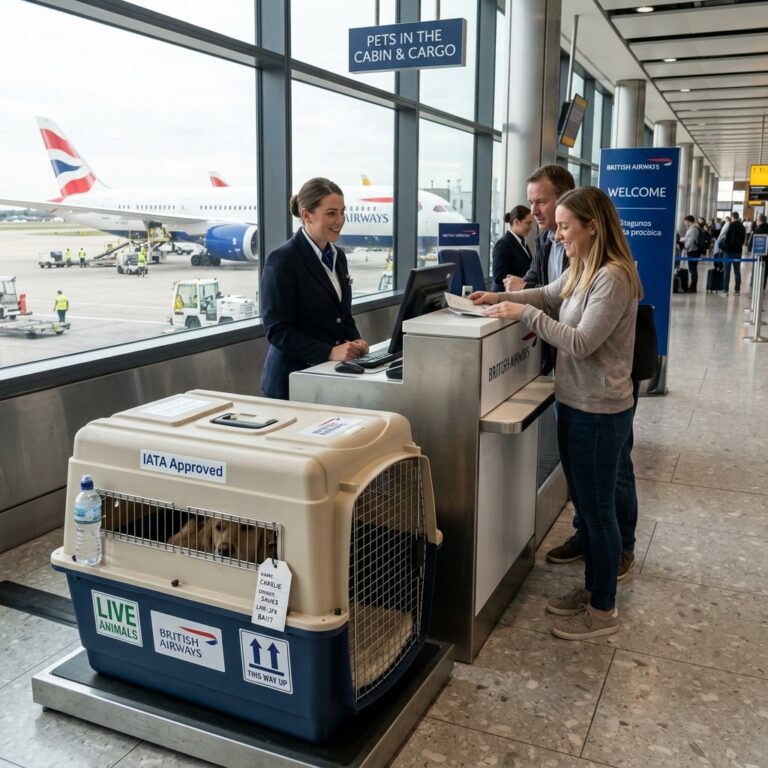
Pets too large for the cabin can travel as checked baggage in a climate-controlled hold, provided they’re accompanied by a passenger on the same flight. Your pet must travel in a sturdy, ventilated kennel that meets airline standards, and breed plus weather restrictions may apply.
WestJet checked baggage crate requirements
- Hard-sided kennel with secure, locking door
- Ventilation on all four sides for international travel (two sides minimum domestically)
- Room to stand, turn, and lie down naturally
- Leak-proof bottom lined with absorbent material
- Clear labeling with “Live Animal” stickers and directional arrows
- Food and water dishes attached inside the door
The combined weight of pet and kennel for checked travel can reach up to 45 kg (100 lbs) on most aircraft. Larger animals must use WestJet Cargo.
Breed restrictions and temperature embargoes
Snub-nosed (brachycephalic) breeds face the highest risk in cargo holds. WestJet restricts or refuses certain flat-faced breeds as checked baggage because they struggle with breathing in temperature extremes.
Commonly restricted brachycephalic breeds include:
- Bulldogs (English and French)
- Pugs
- Boston Terriers
- Boxers
- Pekingese
- Shih Tzus
- Persian and Himalayan cats
What is the WestJet pet embargo and when does it apply?
A pet embargo is a temporary ban on pet travel in the hold during extreme weather. WestJet enforces seasonal temperature embargoes to protect animals from heat or cold exposure during loading, transit, and unloading. Embargoes typically apply when forecast temperatures fall outside safe ranges.
Typical WestJet pet embargo conditions
|
Condition |
Approximate threshold |
|
Heat embargo |
Above ~29.5°C (85°F) at any point on the route |
|
Cold embargo |
Below ~-23°C (-10°F) at any point on the route |
Embargo dates aren’t fixed to a calendar they trigger based on actual and forecast temperatures along your route. Summer afternoons and deep winter mornings are the highest-risk windows. In-cabin pets are generally exempt because the cabin stays climate-controlled.
What are WestJet Cargo pet requirements?
WestJet Cargo handles pets that are too large for checked baggage or traveling unaccompanied. Cargo shipping requires advance booking, a compliant IATA-approved crate, and complete health documentation. This option suits oversized dogs, multiple animals, and pets relocating without their owner on the flight.
When to use WestJet Cargo
- Your pet and kennel exceed checked baggage weight limits
- Your pet is flying unaccompanied (no owner on the flight)
- You’re relocating multiple animals
- The route or aircraft doesn’t support checked pets
WestJet pet cargo booking process
- Contact WestJet Cargo well ahead of your travel date.
- Provide pet details species, breed, weight, and crate dimensions.
- Request a quote based on weight and distance.
- Confirm documentation requirements for your route.
- Arrange drop-off and pick-up at the designated cargo facilities.
WestJet cargo pet requirements for international travel
International cargo shipments carry extra layers of paperwork. Requirements vary by destination country, so verify rules with the receiving country’s authority before booking.
International cargo documentation often includes:
- Government-endorsed health certificate
- Rabies vaccination records (timing varies by country)
- Import permits for the destination
- Microchip identification (required by many countries)
- IATA-compliant crate with four-sided ventilation
Drop-off and pick-up happen at WestJet Cargo facilities rather than the passenger terminal. Build extra time into your schedule for both ends of the trip.
What health documents and the fit-to-fly form does WestJet require for dogs?
WestJet may require a recent veterinary health certificate confirming your pet is fit to fly, especially for checked baggage and cargo travel. A fit-to-fly statement, signed by a licensed vet, verifies your dog is healthy enough for air travel and free of contagious disease.
Typical documentation checklist:
- Health certificate issued within 10 days of travel (cargo and international)
- Rabies vaccination certificate, current and dated
- Fit-to-fly note from your veterinarian for hold travel
- Import/export permits for international destinations
- Microchip records where required
Sedation is generally discouraged for air travel, as it can affect a pet’s breathing at altitude. Always ask your vet before considering any calming medication.
How do I prepare my pet for a WestJet flight?
Preparing your pet starts weeks before departure. Acclimate your dog or cat to its carrier early, schedule a vet visit, and plan for exercise and bathroom breaks before check-in. A calm, well-prepared pet handles the journey far better than a stressed one.
A simple pre-flight prep timeline:
- 3–4 weeks out: Introduce the carrier; leave it open at home with treats inside.
- 2 weeks out: Book the vet visit and gather paperwork.
- 1 week out: Confirm carrier dimensions and weigh your pet plus carrier.
- Travel day: Exercise your pet, offer a light meal a few hours before, and limit water right before the flight.
At security, you’ll carry your pet through the screening area while the empty carrier goes through the X-ray machine. Keep a leash handy for control.
Do pet rules differ across WestJet aircraft types?
Pet accommodation can vary by aircraft because under-seat space differs between models. Smaller regional jets may have tighter under-seat dimensions or fewer cabin pet spots than larger narrowbody aircraft. Always confirm pet capacity for your specific flight.
This matters most for connecting itineraries. A pet that fits the cabin on one leg may face different limits on a regional connection. When booking, verify that every flight in your journey supports your pet’s travel method.
Frequently asked questions
What is the combined weight limit for a cabin pet on WestJet?
The combined weight of your pet and its carrier must not exceed 10 kg (22 lbs) for in-cabin travel.
How much does it cost to fly a pet within Canada?
Domestic in-cabin and checked pet travel costs roughly $50–$59 CAD per direction about $118 CAD for a typical round trip.
How many pets can fly in the WestJet cabin per flight?
Cabin pet spots are limited and capped per aircraft, so flights can fill their pet quota even when seats remain. Book early to secure a spot.
Can my pet travel internationally with WestJet?
Yes. Pets can travel internationally in the cabin, as checked baggage, or via WestJet Cargo, but you must meet the destination country’s import, vaccination, and quarantine rules.
Which dog breeds does WestJet restrict for checked travel?
Snub-nosed breeds like Bulldogs, Pugs, Boxers, and Boston Terriers face restrictions in the hold due to breathing risks in temperature extremes.
Does WestJet accept emotional support animals?
WestJet no longer recognizes emotional support animals as service animals. They must travel as regular pets under the standard pet policy and fees.
When does a WestJet pet embargo apply?
Temperature embargoes apply when forecast temperatures along your route exceed roughly 29.5°C (85°F) or fall below about -23°C (-10°F). In-cabin pets are usually exempt.
How soon before my flight should I book my pet?
Add your pet the moment you book your ticket several weeks ahead for normal travel and a month or more for holidays and peak season.
Do I need a health certificate for domestic pet travel?
A vet health certificate is most often required for cargo and international travel. Domestic checked pets may also need one, so confirm before you fly.
Can I sedate my pet for a WestJet flight?
Sedation is generally discouraged because it can impair breathing at altitude. Consult your veterinarian before giving any calming medication.

Muhammad Naeem is a travel researcher with 5+ years of experience analyzing airline rules and global travel regulations. He specializes in simplifying complex airline policies to help travelers avoid extra fees and fly with confidence. His work focuses on accuracy, clarity, and up to date information across international carriers.
One Comment