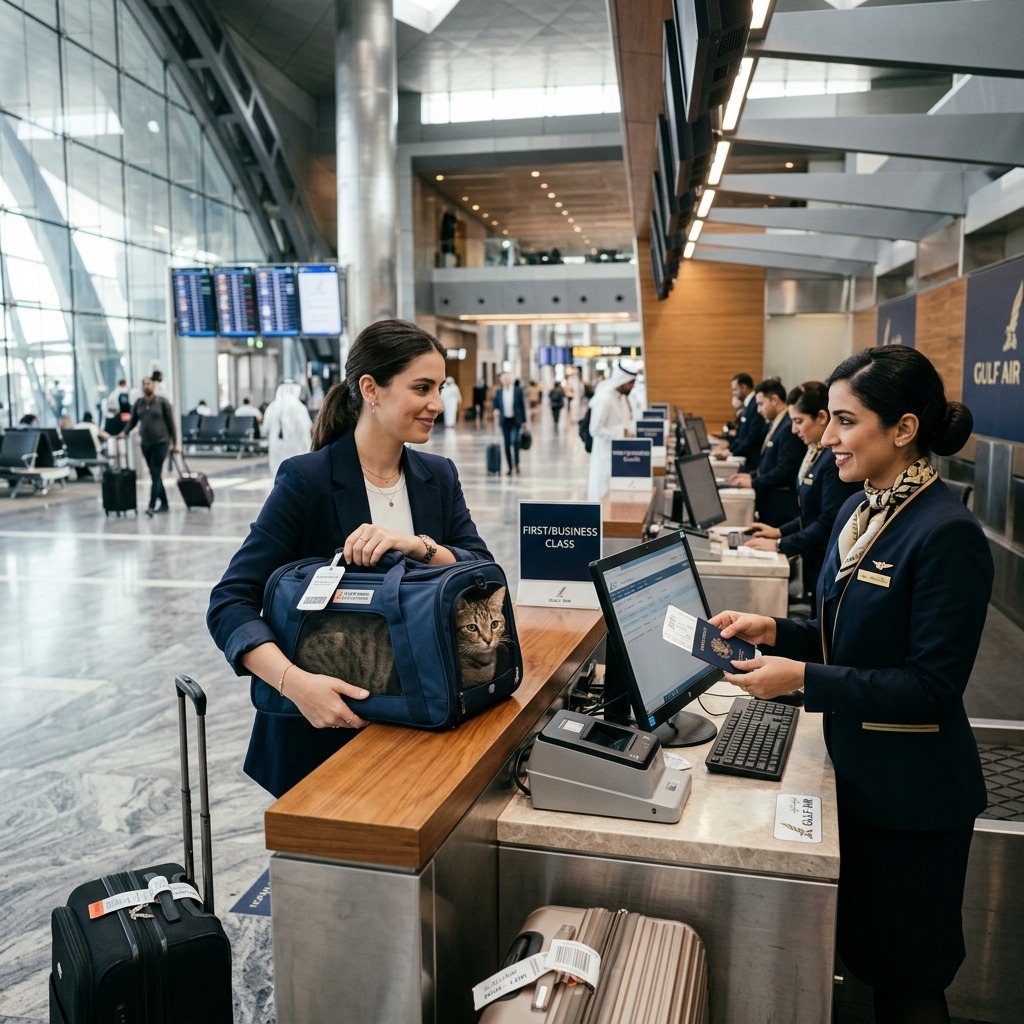
Qatar Airways Pet Policy: A Complete Guide for Travelers
Traveling with a pet takes more planning than booking a regular flight. You need the right carrier, the correct paperwork, and a clear understanding of where your animal will travel cabin, checked baggage, or cargo. Qatar Airways, the flag carrier of Qatar and one of the world’s most awarded airlines, has specific rules that differ from many Western carriers.
Disclaimer: Pet policies change often. Always confirm the latest rules directly with Qatar Airways before booking.
Does Qatar Airways allow pets on flights?
Qatar Airways does allow pets, but most animals travel as checked baggage or via Qatar Airways Cargo rather than in the cabin. The main exception is falcons, which can travel in the economy cabin on specific Middle East routes. Cats and dogs are not permitted in the passenger cabin on most flights.
This is an important difference. Many travelers assume small cats and dogs can ride in the cabin like they can on some U.S. or European airlines. With Qatar Airways, that’s usually not the case.
|
Travel Method |
Eligible Pets |
Notes |
|
In-cabin |
Falcons (select routes), service dogs |
Up to 6 falcons in economy on some flights |
|
Checked baggage |
Cats, dogs (within limits) |
Travels in pressurized hold |
|
Cargo |
Large pets, restricted breeds, bulk shipments |
Booked via Qatar Airways Cargo |
What types of pets does Qatar Airways accept?
Qatar Airways primarily accepts cats and dogs for transport as checked baggage or cargo. Falcons are accepted in the cabin on certain routes within the Middle East. Other animals, such as birds and small mammals, are generally handled through Qatar Airways Cargo on a case-by-case basis.
- Cats and dogs Accepted as checked baggage or cargo
- Falcons Accepted in cabin on select regional routes
- Other pets (birds, rabbits) Reviewed individually through cargo
- Service dogs Accepted in cabin with proper documentation
What dog breeds are restricted by Qatar Airways?
Qatar Airways restricts snub-nosed (brachycephalic) breeds and certain dangerous breeds because of health and safety risks. Flat-faced breeds struggle to breathe at altitude, while aggressive-breed bans align with Qatar’s import laws. These animals may be refused or require special cargo arrangements.
Commonly restricted or banned breeds include:
|
Category |
Example Breeds |
|
Snub-nosed dogs |
Bulldog, Pug, Boxer, Shih Tzu, Boston Terrier |
|
Snub-nosed cats |
Persian, Himalayan, Exotic Shorthair |
|
Restricted/banned dogs |
Pit Bull Terrier, Rottweiler, Doberman, Staffordshire Terrier |
If you own a flat-faced breed, talk to Qatar Airways Cargo well before your trip. These animals face a higher risk of breathing problems, so airlines apply extra caution.
What are the age and health requirements for pets?
Pets must be at least 16 weeks old, fully weaned, and in good health to travel with Qatar Airways. They also need up-to-date vaccinations, including rabies, and a veterinary health certificate issued shortly before departure. Pregnant or sick animals are not accepted.
- Minimum age: 16 weeks (and fully weaned)
- Rabies vaccination given at least 21–30 days before travel
- Health certificate issued within 10 days of departure (varies by country)
- Microchip for identification (required by many destinations)
What are the rules for in-cabin pet travel?
Qatar Airways does not allow cats and dogs in the cabin on most routes. Falcons are the main exception and may travel in economy class on certain Middle East flights, with a maximum of six falcons per cabin. Service dogs assisting passengers with disabilities are also permitted in the cabin.
So if you were searching for a “Qatar Airways pet in cabin price” for your cat or dog, you’ll likely need to book checked baggage or cargo instead. For falcons, a passport and permit are required, and a fee applies per bird.
Can pets travel in business class on Qatar Airways?
Pets cannot travel as cabin companions in Qatar Airways business class. Business class passengers traveling with cats or dogs must still send their pets as checked baggage or cargo. The premium cabin does not change pet eligibility only service animals and approved falcons may enter the cabin.
How do pets travel as checked baggage?
Pets traveling as checked baggage ride in a climate-controlled, pressurized section of the hold. The pet, plus carrier, must usually stay within the airline’s weight limit, and the carrier must meet IATA standards for size, ventilation, and security. Booking must be arranged in advance.
Checked baggage carrier must:
- Be IATA-approved and rigid (not soft-sided)
- Allow the pet to stand, turn, and lie down naturally
- Have proper ventilation on multiple sides
- Include a leak-proof floor and secure door
- Be labeled with “Live Animal” stickers
Carrier dimension guide (typical examples):
|
Pet Size |
Approx. Pet Weight |
Suggested Carrier (L×W×H) |
|
Small (cat, small dog) |
Up to 10 kg |
61 × 40 × 39 cm |
|
Medium dog |
10–20 kg |
81 × 56 × 58 cm |
|
Large dog |
20–35 kg |
102 × 69 × 76 cm |
When is Qatar Airways Cargo required for pets?
Qatar Airways Cargo is required for large pets, restricted breeds, multiple animals, and many international routes where checked-baggage pet travel isn’t offered. Cargo shipments are handled by trained staff and follow strict IATA Live Animals Regulations, making it the standard option for most long-haul pet journeys.
Booking is done through Qatar Airways Cargo (not the passenger booking system). You’ll often work with a pet relocation agent who handles paperwork, customs, and logistics.
- Large or heavy dogs that exceed checked-baggage limits
- Restricted breeds needing special handling
- Routes where the destination only permits cargo entry
- Travelers shipping pets ahead of their own arrival
Note on sedation: Qatar Airways and IATA advise against sedating pets for air travel. Sedatives can affect breathing and balance at altitude. Always follow your vet’s guidance.
What documents do you need to fly a pet with Qatar Airways?
You need a recent veterinary health certificate, proof of rabies and other vaccinations, a microchip record, and any import or export permits required by your destination country. Some routes also require a pet passport and a government-endorsed certificate. Missing paperwork is the top reason pets are denied boarding.
|
Document |
Purpose |
Typical Timing |
|
Veterinary health certificate |
Confirms pet is fit to fly |
Within 10 days of travel |
|
Rabies vaccination record |
Required for most countries |
21–30 days before travel |
|
Microchip certificate |
Identifies the pet |
Before rabies shot |
|
Import/export permit |
Legal entry to destination |
Weeks in advance |
|
Pet passport (EU/UK) |
Combines records in one document |
Ongoing |
How much does it cost to fly a pet with Qatar Airways?
Pet travel costs vary by route, weight, and method. As a rough guide, checked-baggage pets are often charged as excess baggage, while cargo pricing depends on the combined weight and dimensions of the pet and carrier. International cargo shipments are typically the most expensive option.
Example cost scenarios (estimates only):
|
Scenario |
Method |
Estimated Cost Range |
|
Small cat, regional route |
Checked baggage |
$200–$500 |
|
Medium dog, long-haul |
Cargo |
$1,000–$3,000+ |
|
Large dog + relocation agent |
Cargo + service fees |
$3,000–$6,000+ |
|
Falcon, Middle East route |
In-cabin |
Per-bird fee applies |
Remember to budget for extras: vet visits, vaccinations, an IATA-approved carrier, customs charges, and quarantine fees where they apply.
What are the pet import rules for popular destinations?
Each country sets its own pet import rules, and these matter as much as the airline’s policy. The UK, EU, USA, and Australia all have strict requirements, and Australia enforces mandatory quarantine. Always check government import rules alongside the Qatar Airways pet policy.
|
Destination |
Key Requirements |
Quarantine |
|
UK |
Microchip, rabies, tapeworm treatment |
Usually none if rules met |
|
EU |
Microchip, rabies, EU health certificate |
Usually none if rules met |
|
USA |
Rabies proof, CDC rules (dogs) |
Generally none |
|
Australia |
Import permit, blood tests, strict process |
Mandatory (10+ days) |
How can you prepare your pet for a smooth flight?
Prepare your pet by introducing the carrier early, keeping them hydrated, avoiding heavy meals before departure, and confirming microchip and ID details. Arrive at the airport early, line the carrier with absorbent bedding, and avoid sedation. Calm preparation lowers your pet’s stress and reduces travel risks.
- Train early: Let your pet sleep and eat in the carrier for weeks beforehand
- Light meal: Feed a small meal 4–6 hours before travel
- Hydration: Attach a spill-proof water container to the carrier
- ID everything: Microchip, collar tag, and carrier label
- Arrive early: Check-in for pets often closes earlier than passenger check-in
What do reviews say about Qatar Airways pet travel?
Traveler reviews of Qatar Airways pet travel are generally positive about cargo handling and animal welfare, though many note that cabin travel for cats and dogs is not available. Owners often praise the professional cargo team but advise starting paperwork early to avoid delays.
The most common pain points reported are documentation errors and last-minute booking issues both avoidable with early planning and a checklist.
Frequently Asked Questions
What is the 24-hour rule for Qatar?
For pets, the relevant rule is that veterinary health certificates and import documents must be recent often issued within days of travel. For passengers, Qatar Airways offers a 24-hour fare hold/refund window on some bookings, separate from pet rules.
What is not allowed on Qatar Airways?
Cats and dogs are not allowed in the passenger cabin on most routes. Snub-nosed breeds, banned dog breeds, pregnant or sick animals, and soft-sided carriers for the hold are also not accepted.
Is Qatar Airways good with pets?
Qatar Airways is considered reliable for pet transport, especially through its dedicated cargo service that follows IATA Live Animals Regulations. Owners generally report safe, professional handling, though cabin travel for cats and dogs isn’t an option.
What size cage do pets need on Qatar Airways?
The carrier must be large enough for the pet to stand, turn around, and lie down comfortably. A small cat may need roughly a 61 × 40 × 39 cm crate, while a large dog may require 102 × 69 × 76 cm. All crates must be IATA-approved.
Can pets fly in Qatar Airways business class?
No. Business class passengers cannot keep cats or dogs in the cabin. Pets still travel as checked baggage or cargo regardless of the passenger’s cabin class. Only service animals and approved falcons may enter the cabin.
How early should I book pet travel with Qatar Airways?
Book pet travel as early as possible ideally several weeks ahead. Cargo bookings, import permits, and vaccination timelines (rabies often needs 21–30 days) make early planning essential to avoid denied boarding.
Can emotional support animals fly with Qatar Airways?
Qatar Airways accepts trained service dogs for passengers with disabilities but generally does not accept emotional support animals in the cabin. ESAs typically must travel as checked baggage or cargo, following standard pet rules.

Muhammad Naeem is a travel researcher with 5+ years of experience analyzing airline rules and global travel regulations. He specializes in simplifying complex airline policies to help travelers avoid extra fees and fly with confidence. His work focuses on accuracy, clarity, and up to date information across international carriers.
3 Comments