Airline Power Bank Rules 2026: Which Chargers and Vapes Are Allowed?
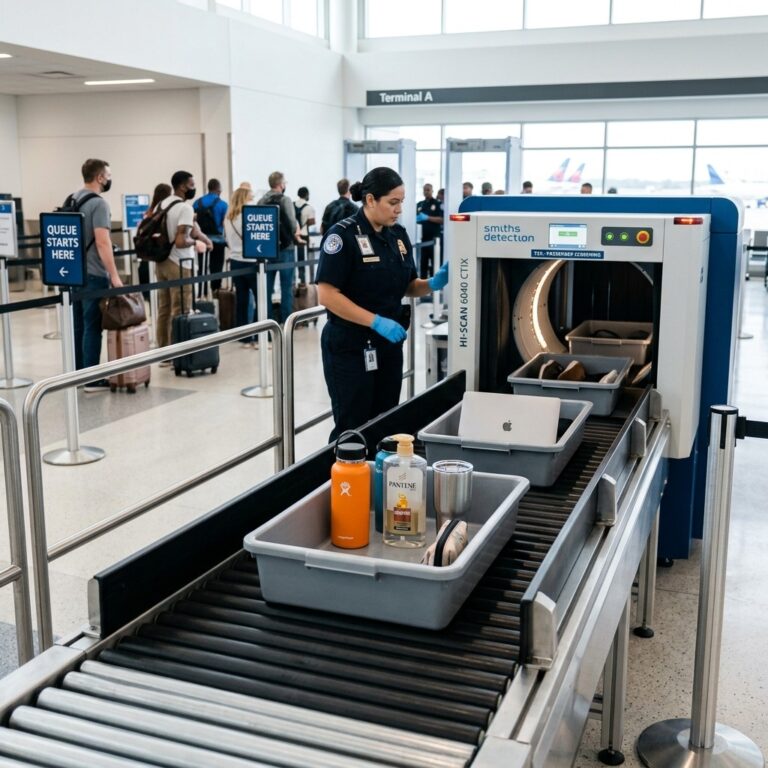
Power banks under 100Wh (roughly 27,000mAh) are allowed in carry-on luggage on nearly all commercial flights in 2026. They cannot go in checked bags ever. Vapes and e-cigarettes follow the same carry-on-only rule. What has changed dramatically in 2026 is where and how you can store and use these devices once onboard.
Airports haven’t changed much in decades. But what passengers carry has changed enormously and airlines are scrambling to keep up. Lithium-ion batteries are now in almost every bag: power banks, vapes, phones, laptops, e-cigarette kits. The FAA logged 85 verified lithium battery incidents on aircraft in 2024, a record annual high, representing a 388% surge since 2015 (FAA, 2025). Nearly 18% of those incidents resulted in emergency landings or evacuations.
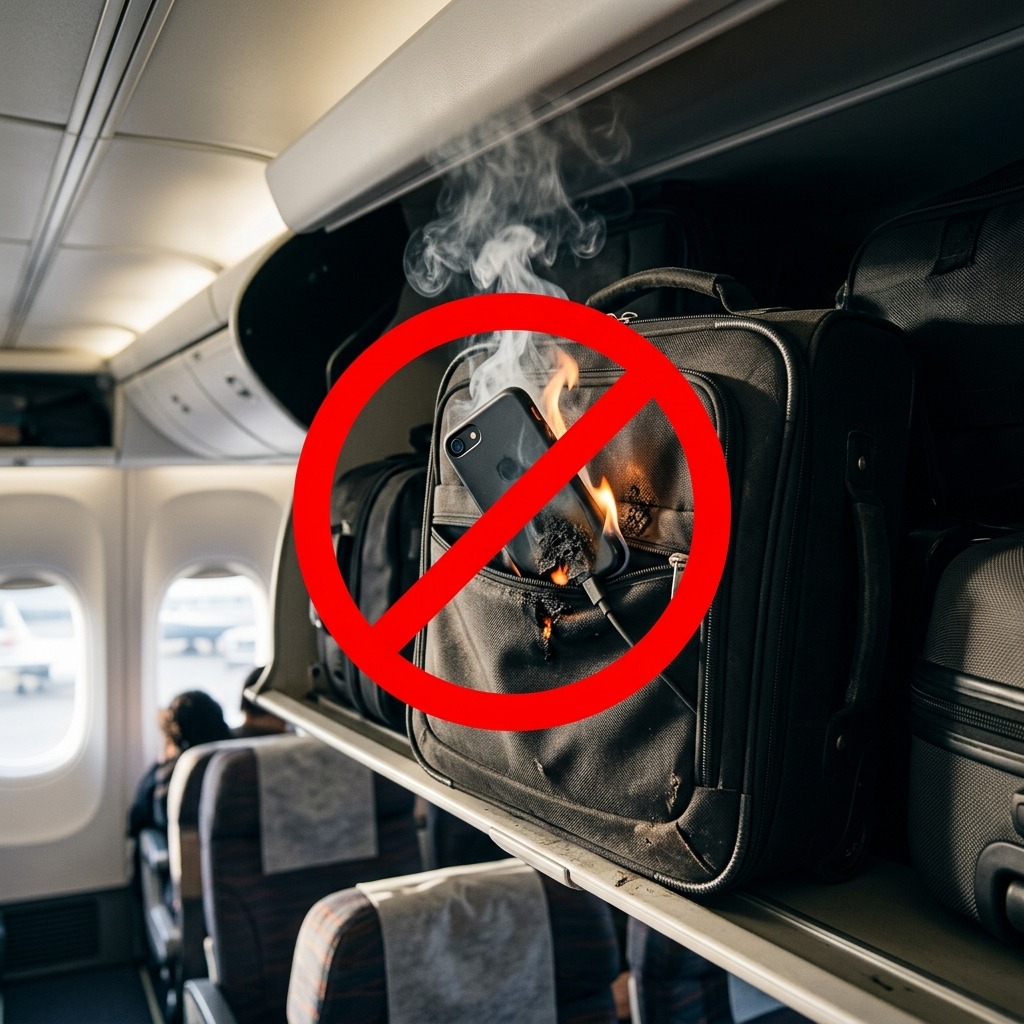
The tipping point came on January 28, 2025, when Air Busan Flight BX391 was destroyed by fire at Gimhae Airport in South Korea. The aircraft was a complete hull loss. The cause: a power bank igniting in an overhead bin. Then, in October 2025, Air China Flight CA139 experienced an in-flight overhead bin fire triggered by the same type of device. Two high-profile incidents in under a year and suddenly every major airline had a policy decision to make.
What Are the New Power Bank Rules for 2026?
The core rule has not changed: power banks must travel in carry-on baggage only and are banned from checked luggage on all commercial flights. What has changed, thanks to the IATA Dangerous Goods Regulations 67th Edition (effective January 1, 2026), is that charging a power bank from an in-seat USB port or aircraft outlet is now prohibited under global baseline IATA guidance. Using a power bank to charge your devices during taxi, takeoff, and landing is also banned under this updated standard.
Beyond the global baseline, a growing list of individual airlines have gone further banning in-flight use entirely and restricting where power banks can be stored while onboard. The gap between 2024 rules and 2026 rules is significant on many carriers.
The three rules you now need to check before every flight:
- Carry: Can you bring it at all? (Yes, if under 100Wh)
- Use: Can you charge devices from it mid-flight? (Varies by airline increasingly, no)
- Store: Can you keep it in the overhead bin? (Often no, as of 2026)
|
Power Bank Capacity |
Carry-On Allowed? |
Checked Bag? |
Notes |
|
Under 100Wh |
Yes, all flights |
Never |
No airline approval needed |
|
101–160Wh |
Sometimes |
Never |
Requires airline pre-approval; max 2 per passenger |
|
Over 160Wh |
No |
Never |
Banned on all passenger aircraft |
Can You Fly With a 10,000mAh Power Bank?
Yes. A 10,000mAh power bank is well within the allowed limit on every commercial airline. At the standard lithium-ion cell voltage of 3.7V, a 10,000mAh power bank equals approximately 37 watt-hours (Wh) less than half the universal 100Wh threshold. It is compliant for carry-on travel without any airline pre-approval.
How to calculate it yourself:
mAh ÷ 1000 × Voltage (3.7V) = Wh
10,000 ÷ 1000 × 3.7 = 37Wh ✓
This calculation matters because airports and gate agents check the Wh label printed on your device not the mAh. If the Wh rating isn’t printed on your power bank, security may stop you. Always check the label before packing.
Can I Bring a 20,000mAh Power Bank on a Plane?
Yes a 20,000mAh power bank is also permitted in carry-on luggage on virtually all commercial flights. At 3.7V, it equals approximately 74Wh, which remains comfortably under the 100Wh universal limit. Most competitors’ guides skip this calculation entirely, leaving travelers confused. Here’s the full picture:
|
Power Bank Size |
Calculated Wh (at 3.7V) |
Airline Status |
|
5,000mAh |
~18.5Wh |
Allowed, no approval needed |
|
10,000mAh |
~37Wh |
Allowed, no approval needed |
|
20,000mAh |
~74Wh |
Allowed, no approval needed |
|
27,000mAh |
~99.9Wh |
Allowed, but expect security scrutiny |
|
30,000mAh |
~111Wh |
Requires airline pre-approval |
One important edge case: some power banks use higher voltage cells or dual-cell configurations, which can push the Wh rating higher than the standard 3.7V formula suggests. Always defer to the label on the device, not just the mAh rating.
What Are the AirAsia Power Bank Rules for 2026?
AirAsia limits each guest to a maximum of two power banks, each not exceeding 100Wh. Power banks must be stored in the seat pocket or under the seat in front they are strictly prohibited in overhead compartments and checked baggage. Damaged or defective units may be confiscated by airport authorities before boarding.
According to AirAsia’s official newsroom update from April 30, 2026, these guidelines apply across all AirAsia flights. E-cigarettes are also banned from checked baggage on all AirAsia-operated routes. Devices between 100Wh and 160Wh may be carried for personal use with prior airline approval but this applies to other electronics like cameras and laptops, not power banks, which are capped at 100Wh per unit.
What Are the Power Bank Rules on Emirates, United, and Southwest?
Different airlines have adopted different levels of restriction. Here’s how three of the most-searched carriers compare:
|
Airline |
Max Power Banks |
Max Wh |
In-Flight Use |
Overhead Bin |
Effective Date |
|
Emirates |
1 |
100Wh |
Banned |
Banned |
Oct 1, 2025 |
|
United Airlines |
Not specified |
100Wh |
Not explicitly banned |
Banned |
Mar 1, 2026 |
|
Southwest Airlines |
Not specified |
100Wh |
Must be visible |
Banned when hidden |
May 2025 |
|
Lufthansa Group |
2 |
100Wh |
Banned entirely |
Banned |
Jan 15, 2026 |
|
AirAsia |
2 |
100Wh |
Banned |
Banned |
Apr 2026 |
Emirates operates the strictest single-bank policy of any major global carrier one power bank per passenger, stored at the seat, no charging at any point during flight.
United Airlines became the first major US carrier to ban overhead bin storage, triggered specifically by the Air China CA139 incident. American Airlines, Delta, JetBlue, and Alaska had not adopted the same overhead ban as of April 2026 but the trajectory is clear.
Southwest Airlines was the first US airline to act (May 2025), requiring power banks to remain visible during use. A power bank in a bag inside an overhead bin charging devices is prohibited.
Are Power Banks Allowed in Checked Luggage or Carry-On?
Power banks are carry-on only, without exception, on every commercial airline worldwide. This is one of the most consistent rules across all international aviation bodies FAA, IATA, ICAO, and EASA all agree. Power banks, portable chargers, and spare lithium-ion batteries cannot go in checked bags under any circumstances.
The reason is straightforward: a thermal runaway event in the cargo hold cannot be seen, heard, or suppressed by the crew. In the cabin, a passenger or flight attendant can detect heat, smoke, or unusual behavior early. In a sealed cargo hold, the first sign is often the fire suppression system activating by which point the situation has already escalated.
If you forget and check a bag containing a power bank, you may be pulled aside at the gate, your bag offloaded, and your flight missed.
Can You Bring a Vape or E-Cigarette on a Plane?
Vapes, e-cigarettes, vape pens, and electronic nicotine delivery systems follow the same carry-on-only rule as power banks. According to the TSA and FAA, all vaping devices powered by lithium-ion batteries must be in carry-on baggage or on your person never in checked luggage.
Using a vape on any commercial aircraft is prohibited worldwide. That rule is not new. What is relevant in 2026 is that vapes and power banks are both listed among the devices most frequently involved in FAA-tracked lithium battery fire incidents. Between 2006 and mid-February 2025, roughly 40% of approximately 600 total lithium battery fire incidents on aircraft involved battery packs like power banks and vapes (FAA data).
Key vape rules when flying:
- Carry-on or pocket only not in checked bags
- Cannot be used at any point during the flight
- Must be protected from accidental activation
- E-liquid is subject to TSA liquid restrictions (3.4oz/100ml in carry-on)
- Some countries criminalize possession of certain vaping products check destination laws
Can You Fly with an E-Bike Battery?
Almost certainly not. E-bike batteries are the category most travelers get wrong, and it’s an expensive mistake. Most e-bike batteries range from 300Wh to 700Wh far above the 160Wh maximum permitted on any passenger aircraft. The FAA explicitly bans lithium battery-powered generators and high-capacity battery systems exceeding 160Wh.
- Under 100Wh e-bike battery: Technically allowed in carry-on with no approval, but extremely rare in practice most e-bike batteries don’t come this small
- 100–160Wh: Requires airline pre-approval; still uncommon for e-bikes
- Over 160Wh: Banned on all passenger flights, no exceptions
Most airlines including major carriers like Delta, United, Lufthansa, and Qantas explicitly ban e-bikes or require the battery to be removed and shipped separately via approved freight. If you’re traveling with an e-bike, contact your airline’s cargo team well in advance. Surface shipping the battery is almost always the only legal option.
Why Are Airlines Banning Power Banks More Aggressively in 2026?
The escalation is driven by a documented pattern of incidents, two high-profile hull events, and new international regulatory standards converging at once.
The incident timeline:
- January 2025: Air Busan Flight BX391 destroyed by overhead bin power bank fire at Gimhae Airport (South Korea). Complete hull loss.
- 2024 total: 85 FAA-verified lithium battery incidents a record annual high
- 2006–Feb 2025: ~600 total incidents; ~40% linked to battery packs
- October 2025: Air China CA139 overhead bin power bank fire mid-flight → triggered United’s March 2026 bin ban
- January 2026: IATA DGR 67th Edition takes effect, banning in-seat charging globally
Phones and laptops contain lithium-ion batteries too. The difference is active thermal management. A smartphone constantly monitors battery temperature and throttles output if something goes wrong. A standalone power bank has no equivalent system just cells, a basic protection circuit, and a shell. When cells overheat, there’s no software to intervene. That physics gap is precisely what airlines are responding to.
Your Pre-Flight Power Bank Checklist
Before every flight, run through this:
- Check your airline’s current policy rules are changing on short timelines
- Confirm the Wh rating is visible on the device label
- Pack every power bank in carry-on only never checked bags
- Charge your devices fully before boarding if your airline restricts in-flight use
- Do not plug your power bank into in-seat USB ports to charge it (banned by IATA as of January 2026)
- If flying with Emirates, Lufthansa Group, AirAsia, Qantas, or any Asian/Korean carrier assume zero in-flight use is permitted
- Keep power banks accessible: seat pocket or under-seat bag, not buried in a carry-on in the overhead bin
- For Japan, Korea, India, or Australia routes: in-flight charging restrictions are legally mandated, not just airline preference
Frequently Asked Questions
Is a 20,000mAh power bank allowed on a flight in 2026?
Yes. At 3.7V, a 20,000mAh power bank equals approximately 74Wh well under the universal 100Wh carry-on limit. It must travel in carry-on baggage only and cannot go in a checked bag.
What happens if I accidentally check a bag with a power bank in it?
Your bag will likely be offloaded before departure. Gate agents and security do screen for lithium batteries in checked luggage. You may miss your flight, and the power bank may be confiscated. The rule applies on every commercial airline worldwide.
Can I use my power bank on a Lufthansa flight?
No. The Lufthansa Group banned in-flight use entirely across all its carriers Lufthansa, SWISS, Austrian Airlines, Brussels Airlines, Eurowings, ITA Airways, Edelweiss, and Air Dolomiti effective January 15, 2026. Power banks must be stored under the seat, not overhead.
Does AirAsia allow two power banks per passenger?
Yes. AirAsia permits a maximum of two power banks per guest, each not exceeding 100Wh. Both must be stored in the seat pocket or under the seat. Overhead compartment storage is prohibited.
Can I charge my power bank from a plane’s USB port?
No, not under IATA’s 2026 global baseline. The IATA DGR 67th Edition, effective January 1, 2026, prohibits charging power banks from in-seat USB ports or aircraft power outlets throughout the entire flight. Individual airlines may enforce this inconsistently during the transition period, but the regulatory intent is now explicit.
Are vapes allowed in checked luggage?
No. The TSA and FAA prohibit all e-cigarettes, vape pens, and vaping devices from checked luggage. They must travel in carry-on baggage only. Using them during a flight is also prohibited on all commercial airlines.
7. How do I know if my power bank exceeds 100Wh?
Check the Wh label printed on the device. If it only shows mAh, calculate: mAh ÷ 1,000 × 3.7 = Wh. A 27,000mAh bank sits right at the 100Wh borderline and may attract security scrutiny. Below 27,000mAh at standard voltage, you’re within the limit.
Can I fly with an e-bike battery?
Almost never. Most e-bike batteries range from 300Wh to 700Wh far above the 160Wh maximum allowed on passenger aircraft. The only practical option for flying with an e-bike is to ship the battery separately via approved hazardous materials freight.
Did South Korea ban power banks in overhead bins before other countries?
Yes. South Korea’s Ministry of Land, Infrastructure and Transport issued a directive in March 2025 banning power banks and e-cigarettes from overhead bins and checked luggage across all flights operating in the country one of the earliest national-level mandates, triggered directly by the Air Busan hull loss in January 2025.
Which US airline has the strictest power bank rules in 2026?
United Airlines. As of March 1, 2026, United bans power bank storage in overhead bins the first major US carrier to do so. Power banks must remain on the passenger’s person, in a seat pocket, or in an under-seat personal item. Other US carriers (Delta, American, JetBlue, Alaska, Southwest) have not yet adopted the full overhead bin ban, though Southwest requires power banks to be visible during use.

Muhammad Naeem is a travel researcher with 5+ years of experience analyzing airline rules and global travel regulations. He specializes in simplifying complex airline policies to help travelers avoid extra fees and fly with confidence. His work focuses on accuracy, clarity, and up to date information across international carriers.