TSA Liquid Rules 2026: Which Airports Allow Full-Size Bottles?
The TSA 3-1-1 liquid rule which limits carry-on liquids to 3.4 oz (100ml) containers in a single quart-size bag has not been abolished, but is being relaxed at airports equipped with advanced 3D CT scanners. As of 2026, select U.S. and international airports allow larger liquid containers, and 11 specific item categories are now exempt from the rule everywhere.
The rule has been part of air travel since 2006, born from a foiled UK plot to detonate liquid explosives concealed in soft drink bottles on transatlantic flights. For nearly two decades, travelers have been decanting shampoo into tiny bottles and tossing full-size sunscreen at the checkpoint. That frustrating routine is now changing but not uniformly, and not completely.
Here is everything you need to know about what has changed, where it applies, what it costs you if you get it wrong, and what the rules look like for both carry-on and checked baggage in 2026.
What Is the TSA 3-1-1 Liquid Rule, and Has It Been Abolished in 2026?
The TSA 3-1-1 rule requires that all liquids, gels, aerosols, creams, and pastes in carry-on bags must be in containers of 3.4 oz (100ml) or less, all fitting inside a single quart-size clear plastic bag, with one bag allowed per passenger. As of 2026, the rule has not been abolished but it is being selectively relaxed at airports with advanced CT scanning technology.
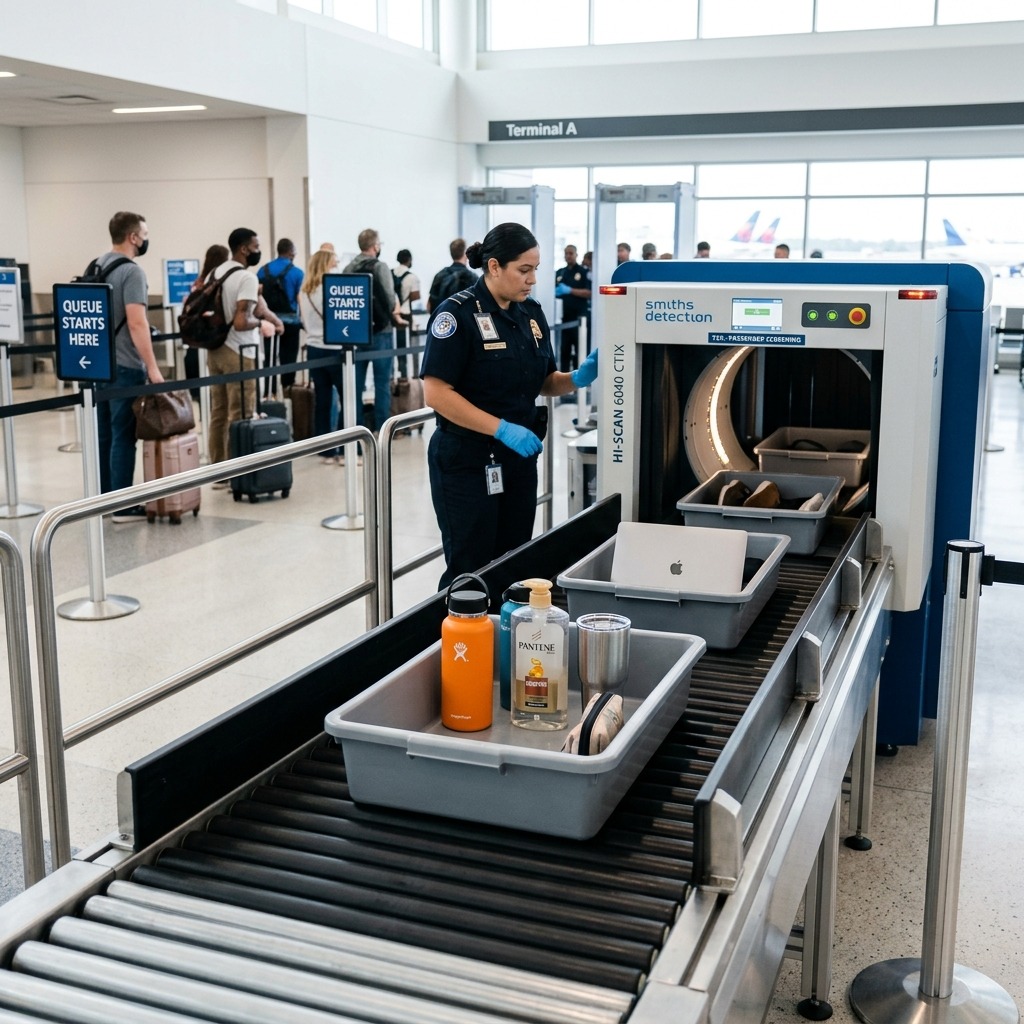
The Transportation Security Administration (TSA) is rolling out computed tomography (CT) scanners that produce detailed 3D images of bag contents, enabling more accurate threat detection without requiring small container sizes as a safety proxy. At airports where these scanners are installed, travelers can carry larger liquid containers. At airports without them, the original 3-1-1 rule still applies in full.
Do you still have to put liquids in plastic bags in 2026?
At most U.S. airports, yes. The quart-size clear bag requirement remains active unless you are at a CT-equipped checkpoint. Even at some CT airports, officers may still ask you to separate liquids for visual confirmation. The safest approach: always have your liquids accessible until you confirm your departure airport’s current scanner status.
What Is the Maximum Liquid You Can Bring in a Carry-On?
At standard U.S. airports (without CT scanners), the maximum is 3.4 oz (100ml) per container, with all containers fitting in one quart-size bag. At CT-equipped U.S. airports, larger containers are permitted for most liquid categories. At upgraded European airports, single containers up to 2 litres are now allowed. The table below summarizes the landscape.
|
Location |
Liquid Limit (Carry-On) |
Bag Requirement |
|
Standard U.S. airports |
3.4 oz (100ml) per container |
Quart-size clear bag required |
|
CT-equipped U.S. airports (ATL, JFK, LAX) |
Larger containers permitted (exemptions apply) |
No bag required at some checkpoints |
|
UK: Heathrow, Gatwick, Edinburgh, Birmingham |
Up to 2L per container |
No bag required |
|
EU: Rome, Dublin, Milan, Prague T2, Krakow |
Up to 2L per container |
No bag required |
|
EU: Paris, Madrid, Athens, Lisbon |
100ml per container |
Clear bag still required |
|
Flights to the U.S. from any European airport |
100ml (TSA rule applies) |
Clear bag required |
Critical edge case: Even if you depart from a European airport that allows 2L containers, any U.S.-bound flight still follows TSA’s 100ml standard. Your full-size bottle may be allowed on the outbound leg and confiscated on the return. Always pack for the stricter rule when crossing between differently regulated airports.
Which U.S. Airports Currently Allow Full-Size Bottles?
CT scanners are being installed at major U.S. hubs first. Confirmed or announced rollout airports include Atlanta (ATL), New York JFK, Los Angeles (LAX), Boston, Denver, Orlando, and Dallas Fort Worth (DFW, announced for 2026). At these airports, the expanded liquid permissions apply at CT-equipped security lanes.
Important: Not every security lane within a CT airport will have the upgraded equipment. If you end up routed through a standard lane, the 3-1-1 rule applies. Confirm your specific terminal and checkpoint using the free myTSA app or your departure airport’s website before travel.
What 11 Liquid Items Are Always Exempt from the 3-1-1 Rule?
Regardless of which airport you fly from, these 11 categories have always been permitted in quantities exceeding 3.4 oz. This is not a new change it is an existing exemption that many travelers don’t know about:
- Prescription medications (in original packaging)
- Over-the-counter liquid medicines (pain relievers, allergy remedies)
- Ice packs and gel packs for medical use
- Breast milk and baby formula (in reasonable quantities)
- Baby food (liquid or pureed, when traveling with a child)
- Liquid-filled baby teethers
- Live fish transported in water-filled containers
- Biological specimens in appropriate containers
- Wet batteries (such as those in wheelchair equipment)
- Duty-free liquids purchased within 48 hours, in tamper-evident sealed packaging with receipt
- Fresh eggs in original packaging
Prescription and baby food exceptions in practice: Declare these items to the TSA officer before screening. Medications larger than 3.4 oz must be presented separately from your other carry-on liquids. TSA officers may test these liquids using additional screening equipment, which adds a few minutes to your checkpoint time. No prescription is required to travel with over-the-counter medications, but original packaging reduces questions.
TSA Carry-On Rules: Bag Size, Dimensions, and Fees
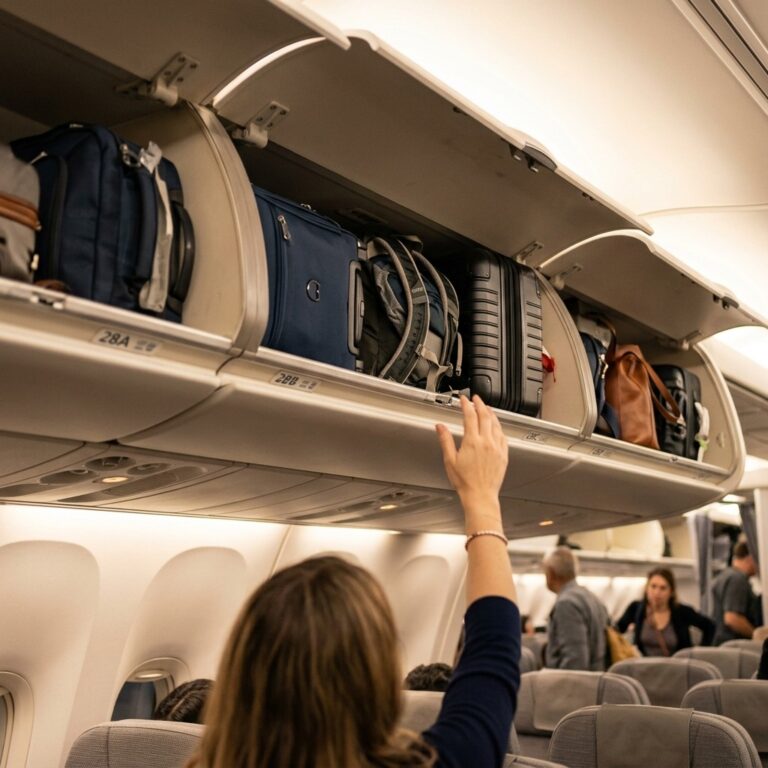
The 3-1-1 rule is not the only carry-on restriction that can catch travelers off guard. Bag size enforcement has intensified in 2026, with airlines using automated scanners at gates to measure bags precisely.
|
Airline |
Max Carry-On Size (incl. wheels/handles) |
Carry-On Fee (if oversized) |
|
22 x 14 x 9 inches |
$40–$60 at gate |
|
|
Southwest |
24 x 16 x 10 inches |
No fee (free checked bags) |
|
Frontier |
~18 x 14 x 8 inches (free personal item) |
$60–$100 |
|
Spirit |
~18 x 14 x 8 inches (free personal item) |
$65–$100 |
|
Allegiant |
Varies |
$45–$75 |
Gate-check fees run $35–$100 depending on carrier, substantially higher than paying for a checked bag online before your flight. If your bag is flagged at the gate, you lose time removing valuables while boarding queues pile up. Budget carriers are the highest risk: a Frontier carry-on fee paid at the gate can reach $100 versus $0 for a small personal item.
How Much Liquid Can You Take on a Plane in Checked Baggage?
There is no volume limit on non-flammable liquids in checked baggage. You can pack a full-size shampoo, a 750ml perfume, or a liter of mouthwash without restriction. The only prohibitions relate to flammability and safety classification.
What is not allowed in checked luggage (liquid-related)?
- Gasoline, lighter fluid, and fuel
- Aerosol sprays with flammable content
- Fireworks and explosive materials
- Spare lithium batteries and power banks (fire risk in cargo holds these must go in carry-on)
- Compressed gas cylinders (propane tanks, uncertified scuba tanks)
Perfume and alcohol in checked bags: permitted in reasonable quantities, provided they are not classified as highly flammable. TSA recommends wrapping bottles to prevent breakage.
What Is Not Allowed on a Plane Carry-On? (TSA New Banned Items and Updated List)
TSA prohibited carry-on items (2026):
- Liquids over 3.4 oz (at non-CT airports)
- Knives, box cutters, razor blades (non-disposable)
- Firearms and ammunition
- Pepper spray and tasers
- Hammers, screwdrivers, drills
- Flammable items
- Spare lithium batteries (must be in carry-on, not checked)
- E-cigarettes and vaping devices (must be in carry-on not checked)
- Multi-tools with blades
The most commonly confiscated items at checkpoints are oversized liquids, multi-tools, aerosol cans, and fuel-powered hair styling tools. Getting an item confiscated doesn’t just cost you the item depending on severity, TSA may issue fines or flag your record for additional screening on future flights.
International Airline Liquid Restrictions: How Do Other Countries Compare?
The European picture is fragmented. The chart below reflects the current status as of 2026, sourced from individual airport authorities (via Euronews, January 2026):
|
Region / Airport |
Current Liquid Limit |
CT Scanners Installed? |
|
UK: Heathrow, Gatwick, Edinburgh, Birmingham, Belfast |
2L per container |
Yes |
|
UK: Stansted, City, Luton |
100ml (no bag removal required) |
Partial |
|
Italy: Rome, Milan Linate, Bologna, Milan Malpensa T1 |
2L per container |
Yes |
|
Ireland: Dublin (both terminals) |
2L per container |
Yes |
|
Poland: Krakow, Poznan |
2L per container |
Yes |
|
Lithuania: Vilnius, Kaunas |
2L per container |
Yes |
|
Germany: Frankfurt |
100ml (40 of 160 lanes have CT) |
Partial |
|
Germany: Munich |
Transitioning (€45M investment ongoing) |
Partial |
|
France: Paris CDG, Orly |
100ml |
No (target: 2030) |
|
Spain: Madrid Barajas |
100ml |
No |
|
Greece: Athens |
100ml (scanner upgrade planned for 2027) |
No |
|
Portugal: Lisbon |
100ml |
No |
The German situation is particularly risky: at Frankfurt, roughly one in four security lanes has CT capability. Your full-size bottle has a 75% chance of being confiscated. Munich is actively installing 60 CT scanners across all 48 lanes but regulations remain inconsistent during the transition. If you’re flying through either airport, pack for 100ml until further notice.
Practical Packing Tips to Avoid Security Problems in 2026
- Check your specific departure airport not the country, not the airline. Rules vary by terminal and lane.
- Always have liquids accessible at the checkpoint until confirmed otherwise.
- Declare medical liquids proactively to the TSA officer before scanning.
- Pack an empty bag first, as Christopher Murgia, TSA’s Federal Security Director for Maryland, advises: “Travelers are less likely to see their carry-on bag trigger an alarm” when starting with an empty bag.
- Don’t use expansion zippers on rolling bags overstuffed bags get measured more carefully and flagged for gate-checking.
- Download the myTSA app its “What Can I Bring?” tool gives real-time confirmation on any item.
- For international connections, pack to the stricter airport’s standard. Your return leg’s airport may not match your departure airport.
- Pre-pay checked bags online if you’re unsure about carry-on compliance. Online checked bag fees start around $30–$35; gate-check fees start at $40 and climb to $100.
What the Full Rollout Could Mean for Travelers
When CT scanners are fully deployed across U.S. airports, travelers could realistically skip travel-sized versions of everyday products altogether. A full-size bottle of shampoo costs roughly $8–$12 retail; travel-sized versions average $3–$5 per trip. Frequent travelers who fly 20+ times per year currently spend $60–$100 annually on miniature toiletries they wouldn’t otherwise buy. Full scanner rollout eliminates that cost entirely. The TSA has not announced a national completion date for CT deployment. Until deployment is universal, the practical advice stays consistent: confirm before you pack, not after you’ve already thrown away your conditioner.
Frequently Asked Questions
Has TSA completely eliminated the 3-1-1 liquid rule in 2026?
No. The 3-1-1 rule remains active at all airports without CT scanners. At CT-equipped airports, restrictions are relaxed for most liquid categories. The rule has not been abolished it has been selectively suspended where technology supports it.
Which U.S. airports currently allow full-size liquid bottles through security?
As of 2026, CT scanners enabling larger liquid allowances are confirmed or in rollout at Atlanta (ATL), New York JFK, Los Angeles (LAX), Boston, Denver, Orlando, and Dallas Fort Worth (DFW). Coverage within each airport varies by terminal and security lane.
Can I bring a full-size bottle of shampoo in my carry-on in 2026?
Only at airports with CT scanners, and only at CT-equipped lanes within those airports. At all other U.S. checkpoints, the 3.4 oz limit applies. International rules differ airport by airport.
Do I need a doctor’s note to carry prescription liquids over 3.4 oz?
No. TSA does not require a prescription or physician’s letter. However, keeping medications in original labeled packaging reduces delays. Inform the officer before screening and expect the items to be tested separately.
What happens if I accidentally bring a prohibited liquid to the checkpoint?
TSA will confiscate it. For repeated or intentional violations involving items that pose security risks, civil penalties can apply. Fines vary by offense type and intent. Most accidental liquid violations result only in confiscation with no fine.
Are duty-free liquids bought at the airport exempt from the 3-1-1 rule?
Yes, with conditions. Duty-free liquids purchased within 48 hours and sealed in a tamper-evident bag with the original receipt are permitted beyond 3.4 oz. This exemption applies on inbound international flights to the U.S. TSA still recommends packing duty-free items in checked baggage when possible.
Can I bring baby formula and breast milk in unlimited quantities?
No formal volume cap exists, but quantities must be “reasonable for the duration of the flight,” per TSA guidelines. Both are always exempt from the 3.4 oz rule. Officers may screen them separately using additional testing equipment, which can add 3–5 minutes to your checkpoint experience.
What are the liquid rules for checked baggage is there a maximum?
There is no volume restriction on non-flammable liquids in checked baggage. Flammable liquids, compressed gas, and aerosol sprays with flammable content are prohibited regardless of quantity. Perfume and wine are permitted in checked bags in reasonable quantities.
Do European airports with the 2L liquid allowance apply it to U.S.-bound flights?
No. Flights departing European airports bound for the United States still follow TSA’s 100ml requirement, even when the departure airport has full CT scanner capability. This means a bottle permitted on your outbound flight from Heathrow to New York could still be confiscated at the U.S. departure checkpoint on your return.
What is the cheapest way to avoid carry-on liquid issues on a budget airline?
Ship toiletries to your destination in advance, use hotel-provided products, or pack liquids in checked baggage. If flying Frontier or Spirit, pre-purchasing a checked bag online ($40–$55) is significantly cheaper than paying a gate-check fee ($75–$100) and gives you unlimited non-flammable liquid packing flexibility.

Muhammad Naeem is a travel researcher with 5+ years of experience analyzing airline rules and global travel regulations. He specializes in simplifying complex airline policies to help travelers avoid extra fees and fly with confidence. His work focuses on accuracy, clarity, and up to date information across international carriers.