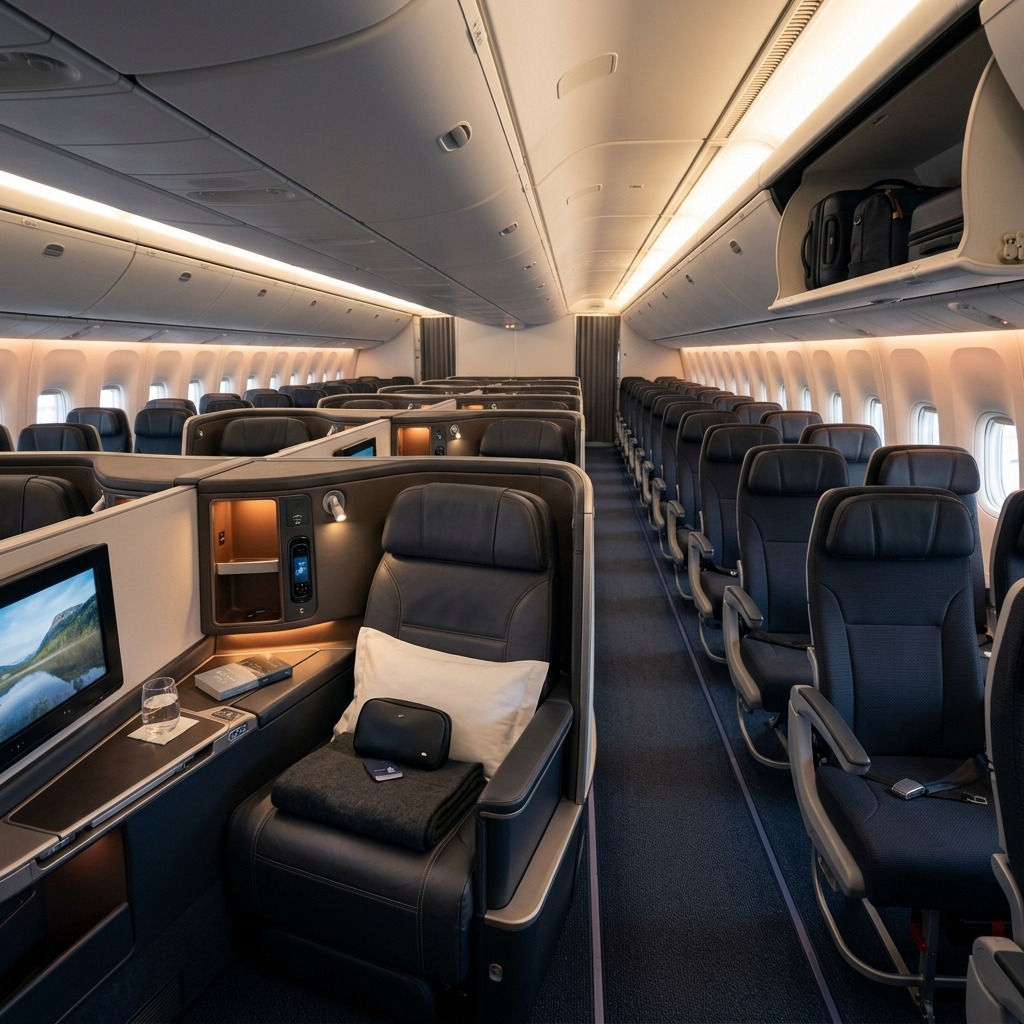
American Airlines Premium Seat Expansion: 40% Premium Seats and Baggage Impact
American Airlines announced a sweeping narrowbody overhaul on August 18, 2026, pushing premium seating from 25% to 40% of cabin capacity, adding 4K seatback screens fleetwide by 2028 and Starlink Wi-Fi from 2027. The headline story is the upgrade. The story nobody is writing: fewer economy seats per aircraft means more passengers competing for the same overhead bin real estate.
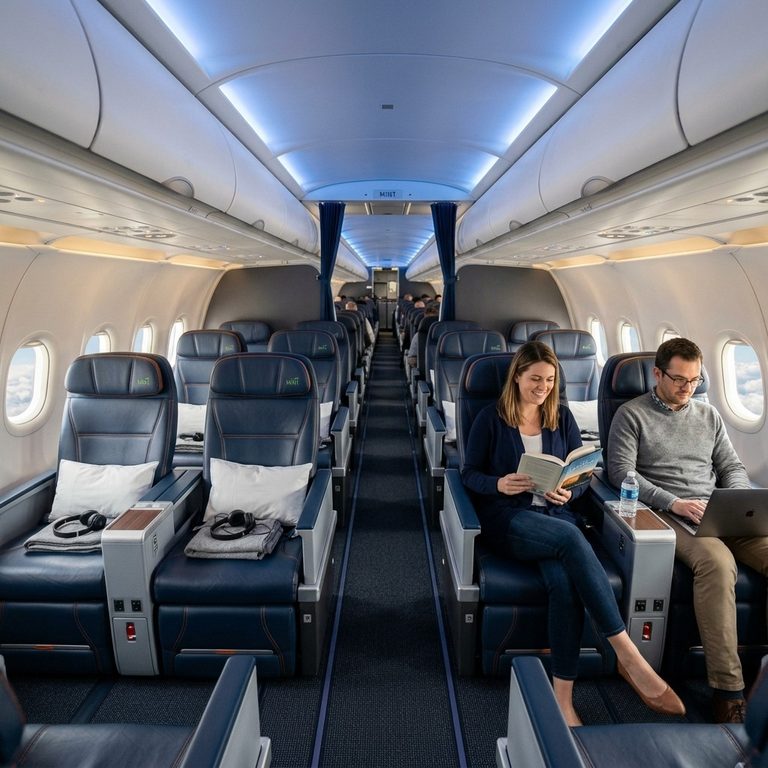
American Airlines just made its most ambitious product investment in a generation. New 4K seatback screens across 800+ narrowbody jets. Starlink satellite internet arriving in 2027. First-class cabins on the 737 MAX 10 that seat 24 passengers the largest premium cabin American has ever placed on a domestic narrowbody. Chief Customer Officer Heather Garboden called it “one of the most significant investments in the onboard experience in our history.”
Every competitor blog has covered exactly that. The shiny seats. The Bluetooth headphones. The USB-C ports. What almost none of them have done is run the math that matters most if you’re sitting in row 28 with a roller bag and a middle seat.
When American Airlines expands premium seating from 25% to 40% of a narrowbody aircraft, economy shrinks. Not by a little. The seat-count math has real consequences for carry-on bag access, gate-check risk, and the economics of Basic Economy travel and if you don’t understand the implications before you book, you may end up paying fees that feel like they came out of nowhere.
What Is American Airlines’ Narrowbody Premium Seat Expansion?
American Airlines’ narrowbody premium seat expansion is a fleet-wide reconfiguration announced August 18, 2026, that will raise the share of first-class and Main Cabin Extra seats from approximately 25% to 40% of each aircraft’s capacity. The program covers retrofit of existing aircraft beginning in 2028 and new deliveries with factory-installed configurations arriving the same year.
The carrier is adding rows of first-class seating to its Airbus A319 and A320 fleets and configuring its incoming Boeing 737 MAX 10 with the most premium-dense domestic narrowbody cabin in American’s history. The A321neo fleet will also gain additional first-class capacity. Main Cabin Extra American’s extra-legroom economy tier will expand across the majority of the narrowbody fleet as well.
American Airlines Narrowbody Premium Seats by Aircraft Type
|
Aircraft |
New First-Class Seats |
4K Screens |
Key Timeline |
|
Airbus A319 |
12 (added row) |
Yes retrofit |
Retrofit begins 2028 |
|
Airbus A320 |
16 (added row) |
Yes retrofit |
Retrofit begins 2028 |
|
Boeing 737 MAX 10 |
24 (factory-installed) |
Yes factory |
New deliveries from 2028 |
|
A321neo |
Increased (TBA) |
Yes retrofit |
Retrofit through early 2030s |
Beyond the seat counts, the inflight technology overhaul is significant. Every seat across 800+ narrowbody jets will receive:
- 4K seatback screens with improved picture quality and personalized content
- Bluetooth connectivity for wireless headphones and earbuds
- USB-C fast charging at every seat
- Starlink high-speed Wi-Fi beginning 2027 (separate from the retrofit program)
The retrofit rollout begins in 2028 and is scheduled for completion in the early 2030s. Newly delivered Airbus and Boeing aircraft will arrive with factory-installed screens from 2028 onward.
What Does the Premium-to-Economy Ratio Shift Actually Do to Overhead Bins?
When American Airlines increases premium seating from 25% to 40%, economy seats decrease from 75% to 60% of cabin capacity which means fewer economy rows per aircraft, fewer overhead bins available to economy passengers, and more competition per remaining bin space. This is the math that competitor coverage has almost entirely ignored.
Consider the arithmetic on a typical American Airlines A320. At the current configuration with roughly 150 seats, approximately 38 seats are premium and 112 are economy. Post-retrofit with 16 first-class seats and an expanded Main Cabin Extra section hitting the 40% threshold, the economy count drops to around 90 standard seats. That’s roughly 22 fewer economy seats and roughly 5–6 fewer overhead bin units available to economy passengers.
Economy Seat Count: Before vs. After Premium Expansion
|
Aircraft |
Total Seats (est.) |
Economy Seats Now (75%) |
Economy Seats After (60%) |
Economy Seats Lost |
|
Airbus A319 |
~128 |
~96 |
~77 |
~19 |
|
Airbus A320 |
~150 |
~112 |
~90 |
~22 |
|
Boeing 737 MAX 10 |
~180 |
~135 |
~108 |
~27 |
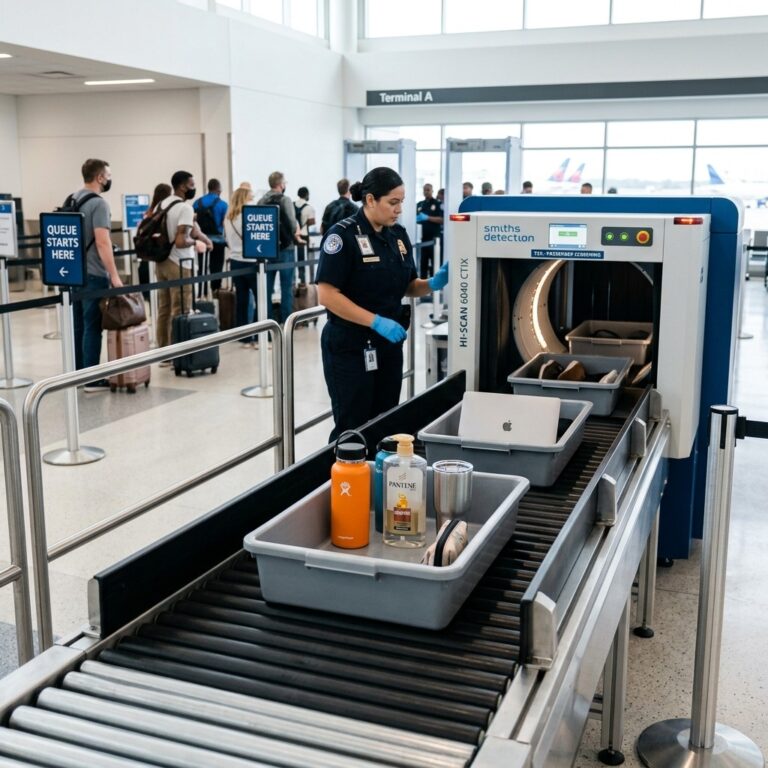
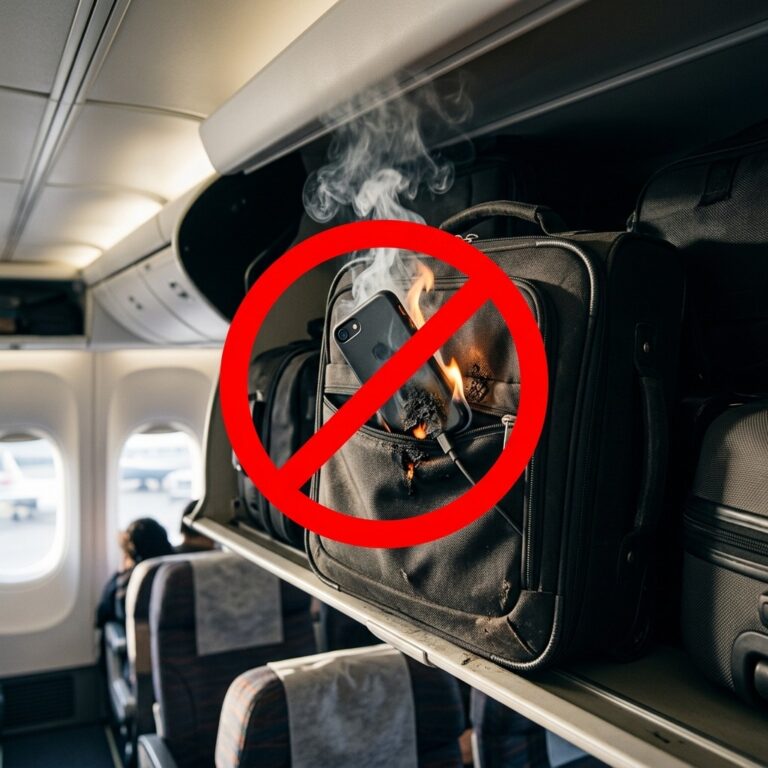
The overhead bin consequence is direct. Premium cabins board first and stow bags in the forward overhead bins. Main Cabin Extra passengers board next and receive dedicated overhead bin space a stated MCE benefit. Economy passengers boarding in Groups 4 through 9 increasingly find bins full before they reach their rows, forcing gate-checks on full flights.
This isn’t hypothetical. It mirrors exactly what happened during United Airlines’ Economy Plus expansion and Delta’s Comfort+ rollout both of which were followed by passenger reports of increased gate-check frequency on crowded routes.
How Do American Airlines’ 40% Premium Seats Compare to Delta and United?
American Airlines’ target of 40% premium seating on narrowbody aircraft is more aggressive than the current configurations at both Delta and United, which run Comfort+ and Economy Plus respectively at approximately 20–25% of narrowbody capacity. American’s push creates the densest premium cabin ratio among the three major U.S. carriers on domestic routes.
|
Carrier |
Premium Economy Tier |
Approx. Narrowbody Premium % |
Dedicated Overhead Bin Access |
|
American Airlines |
Main Cabin Extra (+ First Class) |
~40% (target) |
Yes MCE benefit |
|
Delta Air Lines |
Comfort+ (+ First Class) |
~22–25% |
Yes Comfort+ benefit |
|
United Airlines |
Economy Plus (+ First Class) |
~20–23% |
Yes Economy Plus benefit |
American’s strategy is a direct response to a persistent profitability gap. According to data from the airline’s second quarter 2026 earnings context reported by Tiket2, premium passengers generated nearly half of American’s ticketed revenue while occupying only about 30% of seats. CEO Robert Isom has acknowledged a roughly $3 billion profitability shortfall versus Delta and United. The cabin overhaul is the most concrete step yet toward closing it.
United Airlines is simultaneously adding 68 Airbus A321neo and A321XLR aircraft by 2028, each with lie-flat Polaris business-class seats. American’s domestic narrowbody reconfiguration is, in part, a direct competitive response to that expansion.
What Are American Airlines’ Current Baggage Fees for Economy Passengers in 2026?
American Airlines’ current checked baggage fees for domestic economy passengers are $45 to prepay the first bag online or $50 at the airport. Basic Economy passengers pay $50 to prepay or $55 at the airport for their first bag a $5 premium applied to the cheapest fare class. These fees were updated in April 2026 per an official American Airlines newsroom announcement.
Standard Main Cabin (domestic):
- First checked bag: $45 prepay / $50 airport
- Second checked bag: $55 prepay / $60 airport
- Third checked bag: $200
Basic Economy (domestic):
- First checked bag: $50 prepay / $55 airport
- Second checked bag: $60 prepay / $65 airport
- Third checked bag: $200
Who still gets free bags:
- AAdvantage status members (Gold, Platinum, Platinum Pro, Executive Platinum)
- Most AAdvantage co-branded Citi and Barclays credit cardholders on domestic itineraries
- Passengers booked in first class or Main Cabin Extra
- Active-duty U.S. military personnel
Carry-on allowance:
- All fare classes: one personal item (must fit under seat) + one carry-on bag (22″ × 14″ × 9″)
- Basic Economy passengers board in the last group, making overhead bin access the real risk not the policy itself
Is Main Cabin Extra Now Worth Buying for Economy Travelers on American Airlines?
Main Cabin Extra is now a stronger value proposition for any American Airlines economy passenger traveling with a full-size roller bag, particularly on routes where flights run full. MCE provides dedicated overhead bin space, earlier boarding (before the general economy rush), additional legroom, and a complimentary alcoholic beverage. As economy seat counts shrink and more passengers compete for fewer bins, the bin access benefit becomes materially more valuable.
Here’s the practical calculation. Paying 25–55 for a Main Cabin Extra seat on a popular route eliminates the gate-check risk entirely. American currently does not charge a gate-check fee (bags are returned at the jet bridge), but gate-checking a bag changes the passenger experience significantly adding wait time, eliminating the ability to pack liquids in the roller, and increasing the risk of damage or delay on connections.
For passengers traveling with only a personal item, standard economy remains the rational choice. For anyone with a laptop bag plus a standard roller, MCE’s guaranteed bin access has real monetary and experiential value especially on flights operated by newly retrofitted narrowbodies where premium section expansion is already complete.
How Should Economy Passengers Pack to Avoid Gate-Check Risk on American Airlines Flights?
Economy passengers on American Airlines flights can minimize gate-check risk by selecting Main Cabin Extra, packing exclusively with a personal item when possible, checking bags early online at the discounted prepay rate, or holding an AAdvantage co-branded credit card that provides first-bag free benefits and typically includes priority boarding. On newly reconfigured narrowbody aircraft, these steps become more important, not less.
Practical strategies by traveler type:
- Business travelers (laptop + roller): Upgrade to Main Cabin Extra. The dedicated bin access alone justifies the fare difference on full flights.
- Weekend travelers (backpack only): Standard economy works. A backpack under the seat eliminates overhead bin dependency entirely.
- Families (multiple bags): Prepay checked bags online to save $5 per bag versus airport pricing, and board together as a group to avoid split overhead bin placement.
- AAdvantage cardholders: Confirm your credit card’s bag fee waiver still applies to your fare class. Basic Economy tickets purchased May 18, 2026 and beyond now restrict status benefits including complimentary upgrades verify the card benefit separately.
- Infrequent flyers on Basic Economy: Budget for one checked bag at $50 prepay rather than assuming overhead space will be available. With 22–27 fewer economy seats on reconfigured aircraft, full flights will fill bins faster.
What Does American Airlines’ Premium Seating Expansion Mean for AAdvantage Members?
AAdvantage elite members will benefit from more upgrade inventory as retrofits complete, but the timeline is gradual and Basic Economy fare restrictions tightened in 2026 in ways that affect even status holders.
The 737 MAX 10’s 24-seat first-class cabin and the A320’s expanded 16-seat first-class section both increase the pool of eligible upgrade seats. For Platinum and Platinum Pro members, this eventually means better upgrade odds. The caveat is timing: retrofits begin in 2028 and won’t complete across the fleet until the early 2030s. Route-by-route aircraft assignment determines whether you see the benefit in the near term.
On Basic Economy fares, the rules changed materially in 2026. AAdvantage status members purchasing Basic Economy tickets after May 18, 2026 must pay for seat selection and are no longer eligible for complimentary or systemwide upgrades even at Platinum level. Free bag benefits for status holders on Basic Economy remain intact, but the upgrade path is closed.
What Is American Airlines’ Timeline for the Premium Seating 2028 Rollout?
American Airlines’ premium seating and seatback screen rollout follows a two-track timeline. Starlink Wi-Fi installation on narrowbody aircraft begins in 2027. New Airbus and Boeing deliveries with factory-installed 4K screens and premium cabin configurations begin entering the fleet in 2028. Existing narrowbody aircraft retrofits also begin in 2028 and are scheduled for completion in the early 2030s.
Key dates:
- 2027: Starlink high-speed Wi-Fi begins installation on narrowbody fleet
- 2028: New 737 MAX 10 deliveries enter service with 24 first-class seats and factory 4K screens
- 2028: A319 and A320 retrofit program begins (12 and 16 first-class seats respectively)
- 2028: A321neo first-class expansion retrofits begin
- Early 2030s: Full narrowbody fleet retrofit program complete
The retrofit cost has not been disclosed by American Airlines.
The Real Calculus for Economy Travelers on American Airlines Going Forward
American Airlines’ narrowbody overhaul is genuinely significant from a product standpoint. The reversal of Project Oasis the ill-fated densification push that stripped seatback screens and crammed in more rows is a meaningful correction. Starlink connectivity, 4K displays, and Bluetooth audio will make the economy experience materially better on retrofit aircraft.
But the seat math is unambiguous. Fewer economy rows mean fewer economy overhead bins. As premium sections grow and boarding priority differentiates earlier among cabin tiers, standard economy passengers boarding late on full flights will increasingly face gate-check situations on popular domestic routes.
The actionable response is straightforward:
- Book Main Cabin Extra on any flight where you plan to carry on a roller. The dedicated bin access is now a structural advantage, not a luxury.
- Prepay checked bags online if you’re on a standard economy or Basic Economy ticket. The $5 discount versus airport pricing is real money across multiple trips.
- Hold or apply for an AAdvantage co-branded credit card. First-bag-free on domestic itineraries eliminates the fee pressure entirely.
- Pack a personal item only on short-haul routes. A well-packed backpack under the seat removes overhead bin dependency from the equation.
- Check aircraft type before booking. Retrofit aircraft won’t appear until 2028 at the earliest, but knowing whether your flight operates a 737 MAX 10 will tell you exactly how the premium ratio shakes out.
American Airlines is making a credible bet on premium revenue. Economy passengers who understand the downstream effects and adjust their booking behavior accordingly will navigate the transition without paying for it unnecessarily.
Frequently Asked Questions
When will American Airlines’ 40% premium seat target be fully achieved?
American Airlines has not committed to a specific completion date for the 40% ratio. The retrofit program begins in 2028 and runs through the early 2030s. New deliveries contribute to the premium density from 2028, but the full narrowbody fleet won’t reach the 40% threshold until the majority of aircraft complete retrofit.
How many first-class seats will the American Airlines 737 MAX 10 have?
The Boeing 737 MAX 10 will be configured with 24 first-class seats the largest first-class cabin American Airlines has placed on any narrowbody aircraft. New 737 MAX 10 deliveries with factory-installed premium cabins and 4K seatback screens begin arriving in 2028.
What first-class seat count will the American Airlines A321neo have after expansion?
American has confirmed that the A321neo will receive additional first-class seating in its cabin reconfiguration, but has not disclosed a specific seat count for the A321neo configuration as of August 2026. Details are expected as retrofit schedules are finalized.
Does expanding premium seating change American Airlines’ carry-on bag policy?
No. The cabin reconfiguration does not change carry-on bag policy. All economy passengers retain the right to one personal item and one carry-on bag (22″ × 14″ × 9″). The practical risk overhead bins filling before economy passengers board increases as economy cabin size shrinks and MCE passengers gain dedicated bin access.
Will American Airlines charge a fee for gate-checking a carry-on bag?
As of August 2026, American Airlines does not charge a gate-check fee for carry-on bags. Bags are checked at the gate and returned at the jet bridge. However, involuntary gate checks become more likely on full flights as economy seat counts decrease and boarding priority separates cabin classes further.
What is the current Basic Economy first checked bag fee on American Airlines domestic flights?
For Basic Economy tickets purchased on or after May 18, 2026, the first checked bag costs $50 when prepaid online or $55 at the airport. This represents a $5 premium over the standard Main Cabin first-bag fee of $45 prepay / $50 airport.
Do AAdvantage status members lose free bags when buying Basic Economy fares?
No. AAdvantage status members retain complimentary bag allowances on Basic Economy tickets. However, status members on Basic Economy fares issued after May 18, 2026, lose access to complimentary seat selection and are no longer eligible for complimentary or systemwide upgrades, regardless of status tier.
Does Main Cabin Extra include guaranteed overhead bin space on American Airlines?
Yes. Main Cabin Extra passengers receive dedicated overhead bin space as a stated benefit of the product. This guarantee does not apply to standard economy or Basic Economy passengers, who are subject to overhead bin availability at the time of boarding.
When does Starlink Wi-Fi arrive on American Airlines narrowbody aircraft?
American Airlines plans to begin installing Starlink high-speed satellite internet on its narrowbody fleet in 2027 a year ahead of the 4K seatback screen retrofit program. American has not yet confirmed whether Starlink service will be complimentary or tiered, unlike United Airlines, which already offers free Starlink fleetwide.
How does American Airlines’ 40% premium ratio compare to Delta Comfort+ and United Economy Plus?
American’s 40% target combining first class and Main Cabin Extra is meaningfully higher than the approximately 22–25% that Delta allocates to Comfort+ plus first class and the roughly 20–23% United allocates to Economy Plus plus first class. American is making the most aggressive premium densification play of the three major U.S. carriers on domestic narrowbody routes.

Azeem breaks down airline baggage policies, fare-class benefits, and peak pricing rules into practical guidance for smooth trip planning. He verifies every fee and dimension against official airline sources so travelers can pack with confidence.