Airline Surveillance Pricing 8 Airlines Frank Pallone August 25 2026: What Travelers Need to Know
Eight major US airlines American, Delta, United, Alaska, JetBlue, Southwest, Frontier, and Hawaiian face an August 25, 2026 congressional deadline to disclose whether they use personal data to set individualized ticket prices. This practice, called surveillance pricing, is already shaping fares, baggage fees, and seat charges. Here’s what’s happening and exactly how to protect your wallet.
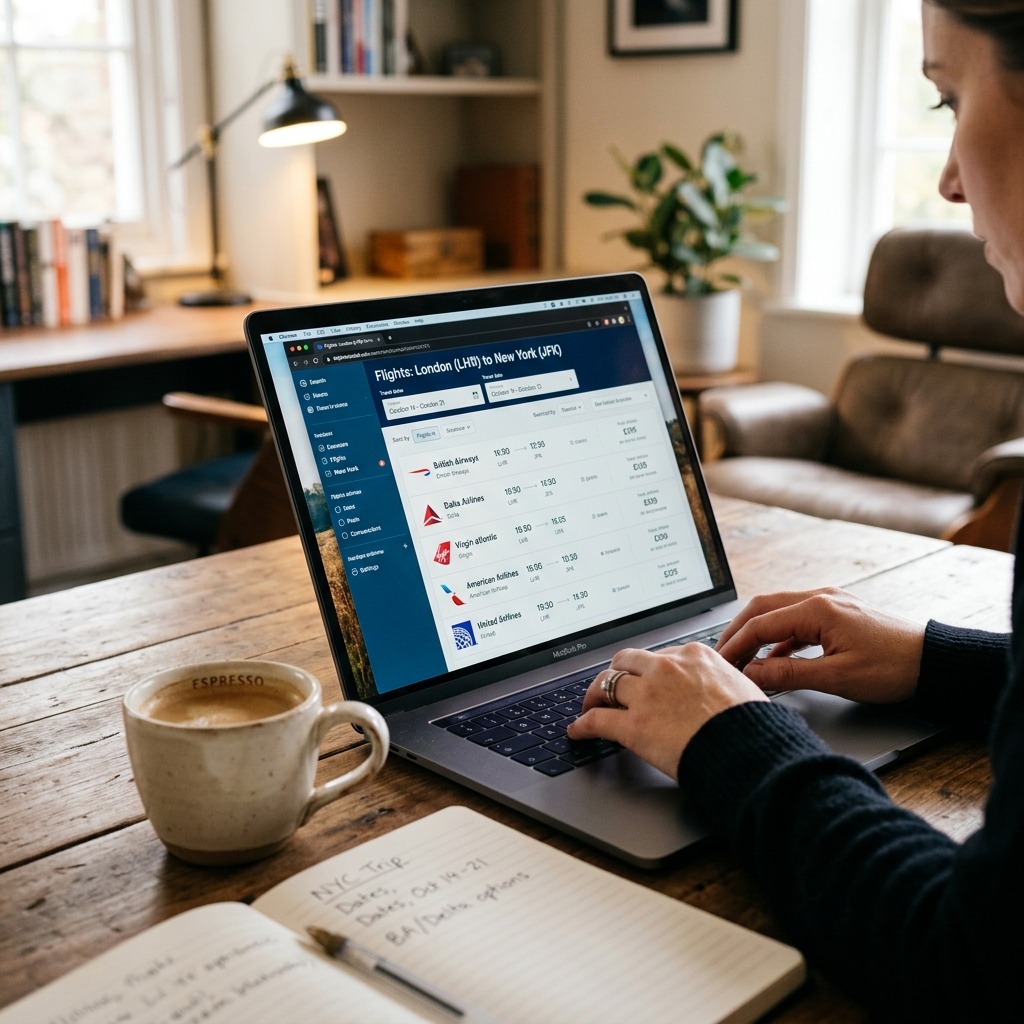
You searched for a flight. Then you searched again. By the third visit, the price had jumped $80. Coincidence? Not necessarily.
A congressional investigation launched by Rep. Frank Pallone, Jr. (D-NJ), Ranking Member of the House Energy and Commerce Committee, is now formally asking eight of the largest US carriers to answer that exact question under oath, on a deadline. The letters, dated August 12, 2026, require airlines to disclose whether they are collecting consumers’ browsing history, device type, location, and loyalty data to charge different customers different prices for the same seat.
This is not a fringe concern. One study cited in Pallone’s letter found that an airline boosted its own revenue by as much as 6% using AI-driven pricing based on consumer data revenue that comes directly out of passengers’ pockets. Delta Air Lines has publicly confirmed it is already testing AI-personalized ticket pricing, with plans to cover up to 20% of its fares through algorithmic pricing. And a class action lawsuit filed against JetBlue in April 2026 has set legal precedent that could reshape how every airline in this country sells you a seat.
What Is Surveillance Pricing, and How Is It Different From Dynamic Pricing?
Surveillance pricing and dynamic pricing are related but distinct. Dynamic pricing adjusts fares based on supply and demand a well-known industry practice. Surveillance pricing goes further: it uses an individual consumer’s personal data browsing history, location, device type, even the timing of searches to estimate how much that specific person will pay and charge them accordingly.
The Federal Trade Commission (FTC) defines surveillance pricing as “a form of personalized dynamic pricing where companies use a consumer’s online data location, demographics, browsing history, shopping habits, or device type to set individualized prices, often charging higher amounts based on an inferred willingness to pay.”
In plain terms: dynamic pricing changes the price based on the market. Surveillance pricing changes the price based on you.
|
Feature |
Dynamic Pricing |
Surveillance Pricing |
|
Based on demand & supply |
Yes |
Yes |
|
Uses your personal data |
No |
Yes |
|
Price varies per individual |
No |
Yes |
|
Disclosed to consumers |
Often |
Rarely |
The distinction matters legally and ethically. Surveillance pricing is not currently illegal in the US but secretly collecting the data used to power it may be, as the JetBlue lawsuit argues.
Which 8 Airlines Are Under Scrutiny Right Now?
Rep. Frank Pallone’s August 12, 2026 letters targeted eight carriers that together cover the overwhelming majority of US domestic air travel. All eight have been asked to respond by August 25, 2026.
The eight airlines named in Pallone’s congressional inquiry are:
|
Airline |
Market Position |
Known AI/Pricing Technology |
|
American Airlines |
Largest by fleet size |
Revenue management AI systems |
|
Delta Air Lines |
Premium-focused carrier |
Fetcherr AI (confirmed, Q2 2025) |
|
United Airlines |
Major hub carrier |
Pricing algorithm investment confirmed |
|
Alaska Airlines |
West Coast dominant |
Dynamic pricing systems in use |
|
JetBlue Airways |
Low-cost/value carrier |
FLYR partnership; named in class action |
|
Southwest Airlines |
No-fee model carrier |
Under scrutiny despite different fee structure |
|
Frontier Airlines |
Ultra-low-cost carrier |
Heavy ancillary fee reliance |
|
Hawaiian Airlines |
Regional/trans-Pacific |
Acquired by Alaska; pricing practices under review |
Pallone noted that “the airline industry specifically has faced several public allegations of surveillance pricing,” and that lawsuits have already been filed against carriers for using consumer information to set prices.
How Do Airlines Actually Use Your Personal Data to Set Prices?
Airlines collect data from multiple touchpoints your browser cookies, device identifiers, loyalty account history, location signals, and search behavior and feed that information into pricing algorithms designed to estimate the maximum price you’ll accept before abandoning your search.
Here’s a realistic breakdown of how this works across your booking journey:
Before you search:
- Your loyalty account stores past travel patterns, spending habits, and fare sensitivity
- Third-party data brokers may supply demographic data (estimated income, neighborhood, age) without you realizing it
- Device type is flagged (mobile vs. desktop often yields different prices)
While you search:
- Tracking pixels and session-replay tools like FullStory capture mouse movements, hesitation time, and scroll depth
- Cookies log how many times you’ve searched the same route
- Your departure location, IP address, and VPN status are noted
At checkout:
- Algorithms cross-reference your behavioral profile with pricing models
- “Willingness to pay” scores adjust the fare displayed or the fees attached to it
The JetBlue class action (Phillips v. JetBlue Airways Corp., No. 1:26-cv-02405-PKC-RML, filed April 22, 2026) specifically named FullStory (behavioral analytics) and PROS Holdings (real-time pricing algorithms) as third-party data recipients, alleging JetBlue failed to disclose how these tools fed into pricing.
What Did the Delta AI Ticket Pricing Study Actually Find?
According to Rep. Pallone’s August 2026 congressional letter, one study found an airline boosted revenue by as much as 6% by leveraging AI pricing based on consumer information an increase that comes directly at the expense of consumers paying higher fares than a transparent system would produce.
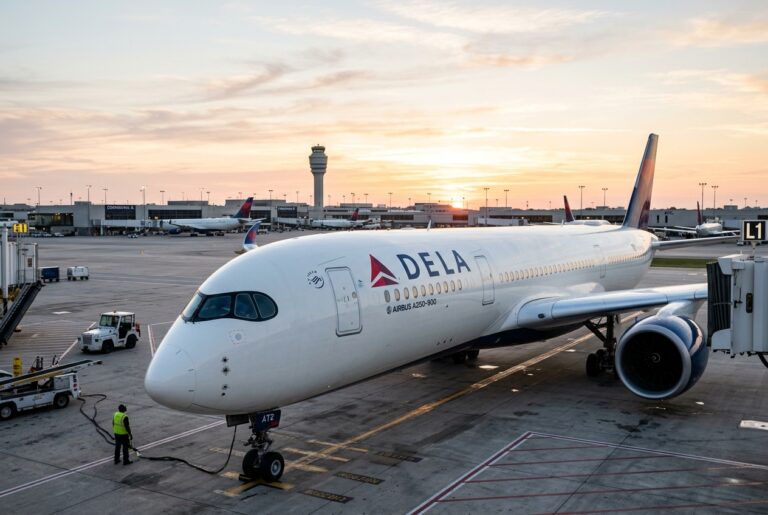
Delta is the most publicly transparent about its AI pricing ambitions. Delta President Glen Hauenstein confirmed during the carrier’s Q2 2025 earnings call that Delta, working with Israeli AI startup Fetcherr, had begun using AI to set personalized ticket prices covering 3% of its domestic fares at the time, with a stated goal of reaching 20% of all fares by year-end 2025.
Hauenstein described the shift as “a full reengineering of fare pricing,” with the goal of finding “the right price at the right time to the right customer.” Consumer advocates and lawmakers interpreted that differently. Sen. Ruben Gallego (D-AZ) called it “predatory pricing,” writing on X that “Delta’s CEO just got caught bragging about using AI to find your pain point meaning they’ll squeeze you for every penny.”
Delta maintains it does not discriminate and that its fares comply with federal law. However, the company declined to specify whether its safeguards against discriminatory pricing outcomes are human- or algorithm-enforced.
Other carriers have followed similar paths:
- JetBlue partnered with FLYR for AI-assisted pricing
- Virgin Atlantic reported a 10% increase in dynamically priced seat fees
- Lufthansa and flydubai use PROS Holdings for real-time pricing
Are Baggage Fees and Seat Selection Fees Also Being Personalized?
Yes. While most public scrutiny has focused on ticket prices, baggage fees and seat selection charges represent the next frontier of AI-personalized airline fees. Airlines have significant flexibility in how they price ancillary fees, and AI systems can adjust these based on the same consumer data used to personalize ticket prices.
This is the content gap most competitors miss. The regulatory debate has focused on base fares but for many travelers, ancillary fees now represent a larger share of total trip cost than the ticket itself. Frontier and Spirit (before its closure) built entire business models on this structure. The same AI tools that personalize your ticket price can, in principle, personalize:
- Checked baggage fees (currently $35–$45 per bag at most major carriers, but dynamic variations are possible)
- Seat selection fees (ranging from $0 to $150+ depending on carrier and route)
- Priority boarding fees
- Flight change and cancellation fees
|
Fee Type |
Current Typical Range |
Personalization Risk Level |
|
Checked baggage |
$35–$45 first bag |
Medium (AI can adjust by route, demand) |
|
Seat selection |
$0–$150+ |
High (AI can target by loyalty status, urgency) |
|
Priority boarding |
$10–$30 |
Medium |
|
Same-day flight change |
$75–$200 |
High (AI tracks urgency signals) |
|
Cancellation fee |
$0–$200+ |
High (AI can infer flexibility) |
Pallone’s inquiry covers pricing transparency broadly, meaning baggage and seat fees fall within scope. Consumers searching for total trip cost not just base fare should treat ancillary fee pricing with the same skepticism as ticket pricing.
What Is the Frank Pallone Airline Surveillance Pricing Investigation?
Rep. Frank Pallone (D-NJ) formally expanded a congressional surveillance pricing probe to cover eight major US airlines on August 12, 2026, demanding answers by August 25, 2026. Pallone chairs the House Energy and Commerce Committee’s Democratic oversight work and launched the broader investigation into corporate surveillance pricing in May 2026.
Pallone’s inquiry is part of a broader pattern of legislative scrutiny. In May 2026, his committee sent letters to 25 large US corporations, including Albertsons, Amazon, Costco, Kroger, Target, and Wegmans, asking about their personalized pricing practices. The airline-specific expansion followed multiple public allegations, the Delta AI disclosure, and the JetBlue class action filing.
Key questions Pallone is asking airlines to answer by August 25:
- What personal data do you collect from consumers?
- How is that data used in your pricing systems?
- Do consumers pay different prices based on their personal information?
- What third-party vendors receive consumer data for pricing purposes?
- What disclosures do you make to consumers about these practices?
“Consumers deserve to know if businesses are using their personal information to manipulate the prices they pay or experiment with algorithms to set the prices they see,” Pallone wrote in the August 12 press release.
What Does the JetBlue Lawsuit Mean for All Airlines?
The JetBlue class action (Phillips v. JetBlue, filed April 2026) is described as “one of the very first class actions in American history regarding dynamic surveillance pricing.” Its legal theory pairing federal wiretap law (ECPA) with state consumer protection statutes could serve as a template for lawsuits against every airline now under Pallone’s inquiry.
The case has a distinctly viral origin. On April 18, 2026, a JetBlue customer posted on X that a fare had jumped $230 in a single day while booking travel to attend a funeral. A JetBlue customer service account replied advising the customer to “clear your cache and cookies or book with an incognito window.” JetBlue deleted the post but not before it was screenshotted and widely shared. That exchange became a central exhibit in the complaint.
JetBlue denied the allegation, calling the tweet an “error” and stating that its fares “are not determined by cached data or other personal information.” The lawsuit disagrees.
Key legal claims in Phillips v. JetBlue:
- ECPA violations (federal wiretap law) unauthorized tracking of behavioral data
- NY General Business Law § 349 deceptive trade practices
- NY General Business Law § 396 advertising a price with intent to change it based on personal data
Law firm Mayer Brown, which analyzed the complaint, noted that the legal theory “hinges on alleged gaps between what privacy policies disclose and what tracking pixels, session-replay tools, and third-party analytics partners actually do” a dynamic that applies to virtually every major airline’s website.
Maryland became the first US state to specifically ban surveillance pricing, passing the Protection From Predatory Pricing Act. New Jersey and Connecticut also have laws limiting the practice. More than 40 bills addressing surveillance pricing have been introduced across US states in 2026 alone.
How Can You Beat Airline Pricing Algorithms Right Now?
The most effective countermeasures against airline surveillance pricing combine browser hygiene (clearing cookies, using incognito mode) with strategic timing and cross-platform comparison shopping. No single tactic eliminates personalized pricing entirely, but layering multiple approaches significantly reduces the data airlines can use to profile you.
Use these tactics before and during your next flight search:
Browser & Device Tactics
- Use incognito or private browsing mode prevents cookie-based tracking between sessions
- Clear your browser history and cookies before any flight search
- Use a VPN to search from a different geographic location (useful for comparison, though airlines are increasingly aware of VPN use)
- Compare mobile vs. desktop pricing apps may display different fares than browsers; always check both
- Try different browsers your primary browser may have months of airline search history stored
Booking Strategy Tactics
- Search on Tuesdays and Wednesdays historically lower demand periods, less AI incentive to maximize price
- Book 3–6 weeks ahead for domestic flights (outside of this window, AI systems often raise prices as demand signals increase)
- Use multiple fare comparison platforms Google Flights, Kayak, Hopper, and Skyscanner may surface prices the airline’s own site inflates based on your data
- Create price alerts instead of repeated manual searches repeated searches are logged and can trigger “urgency pricing”
- Consider booking directly through airline sites in incognito mode after comparing on third-party platforms
Data Minimization Tactics
- Limit data sharing in loyalty programs rewards programs are a primary data collection point
- Decline location tracking in airline apps
- Read privacy policies before logging in to check for pricing-related disclosures
One important caveat from travel analyst Gary Leff: airlines may eventually require login for benefits like elite status or seat upgrades, making it progressively harder to opt out of personalized pricing entirely. Acting on data hygiene habits now, before that shift, matters.
What Transparency Should Consumers Demand From Airlines?
Consumers should demand four things: disclosure of what data is collected and how it influences pricing, opt-out rights for personalized pricing, total cost transparency before checkout (including all baggage and seat fees), and third-party audit rights over pricing algorithms.
This connects directly to what Pallone’s August 25 inquiry is trying to establish. Specifically:
- Total cost upfront: Many airlines advertise base fares and disclose baggage and seat fees late in the booking process. Regulation requiring total-cost disclosure at the point of search would help consumers compare accurately.
- Data use disclosure: Current privacy policies often do not disclose that behavioral tracking tools feed pricing algorithms the core allegation in the JetBlue lawsuit.
- Opt-out rights: Maryland’s new law sets a standard. Federal legislation, which Pallone has indicated he would support in a new Congress, could extend opt-out rights nationally.
- Algorithm transparency: Who audits whether pricing AI produces discriminatory outcomes? Currently, no federal requirement exists to answer that question.
What Happens If Airlines Don’t Respond by August 25, 2026?
If airlines miss or inadequately respond to the August 25 deadline, Pallone has signaled the inquiry will be used to build legislative support for a formal surveillance pricing bill. Congressional Democrats are expected to make economic legislation a priority if they gain House majority seats in November 2026 midterms, with Pallone’s committee positioned at the center of that effort.
The August 25 deadline is a disclosure request, not a legal mandate so there are no immediate penalties for non-response. However, the consequences are still real:
- Responses (or non-responses) become public record, available to regulators, class action attorneys, and journalists
- Inadequate disclosures could accelerate state-level legislation, particularly in states with active surveillance pricing bills
- Federal bills could follow, potentially requiring data-use disclosures, opt-outs, or algorithmic audits
- Litigation risk increases: the JetBlue complaint establishes that public statements about pricing can be treated as admissions in court
Pallone said results from the inquiry will directly inform whatever legislation lawmakers write. “In order for me to build support for a legislative initiative, I have to be able to show to my members, both Democratic and Republican, that this is a major problem.”
Frequently Asked Questions
What is the August 25 airline surveillance pricing deadline?
It is the date Rep. Frank Pallone set for eight major US airlines to respond to a congressional inquiry about whether and how they use consumer personal data including browsing history, location, and loyalty data to set individualized ticket prices.
Which airlines received letters from Rep. Pallone?
American Airlines, Delta Air Lines, United Airlines, Alaska Airlines, JetBlue Airways, Southwest Airlines, Frontier Airlines, and Hawaiian Airlines were all named in the August 12, 2026 congressional letters.
How much extra revenue can airlines make from AI surveillance pricing?
A study cited in Pallone’s August 2026 congressional letter found that one airline boosted revenue by as much as 6% using AI pricing based on consumer data a gain that comes at the direct expense of passengers.
What percentage of Delta’s fares are currently set by AI?
Delta President Glen Hauenstein confirmed during the Q2 2025 earnings call that Delta was using AI to set approximately 3% of its fares at that time, with a target of 20% by end of 2025.
Is airline surveillance pricing illegal in the United States?
No. The JetBlue class action complaint itself acknowledges that “surveillance pricing is not illegal in the United States.” What may be illegal is secretly collecting consumer data without adequate consent which is the basis of the JetBlue lawsuit.
Does clearing cookies actually change the fare I see?
Potentially yes. The viral JetBlue incident in April 2026 centered on a customer service representative advising a passenger to clear their cache and cookies to access lower fares. Using incognito mode and clearing cookies prevents cookie-based behavioral tracking between sessions.
Do airlines charge different prices on mobile vs. desktop?
Reports from consumer advocates and travel analysts suggest that device type can influence displayed prices, as mobile users are often identified as higher-urgency bookers. Always compare the same route across both mobile and desktop before booking.
Are baggage fees and seat selection fees also personalized by AI?
Currently, most confirmed AI personalization focuses on ticket prices, but the same data infrastructure and algorithmic systems can extend to ancillary fees like baggage and seat selection. The regulatory inquiry covers pricing practices broadly, not just base fares.
What states have already banned surveillance pricing?
Maryland was the first US state to specifically ban surveillance pricing. New Jersey and Connecticut also have state laws limiting the practice. More than 40 surveillance pricing bills have been introduced across US states in 2026 alone.
Can using a VPN protect me from airline surveillance pricing?
A VPN can obscure your location and IP address, which are data points airlines may use in pricing. However, travel analysts warn that airlines may increasingly require login to access elite perks, which would re-identify you regardless of VPN use. VPN testing across different geographic locations is still a useful comparison tool, not a complete solution.

Azeem breaks down airline baggage policies, fare-class benefits, and peak pricing rules into practical guidance for smooth trip planning. He verifies every fee and dimension against official airline sources so travelers can pack with confidence.