Delta Boeing 737-900ER Review 2026: Best Seats and Configurations
Delta operates three distinct Boeing 737-900ER configurations (739, 73J, and 73R). While the standard 739 offers seatback screens and power outlets throughout, the ex-Lion Air 73R version lacks inflight entertainment and power. Identifying your specific aircraft version is essential for securing the best seat.
Traveling on a Delta Air Lines narrowbody aircraft often means encountering the Boeing 737-900ER. This twin-engine jet serves as a domestic workhorse for the airline, operating high-density routes across the United States. Booking a ticket on this specific plane comes with a hidden catch that catches many frequent flyers off guard.
Delta flies three completely different cabin interiors under the exact same aircraft name. Your flight experience can range from a highly modernized cabin with seatback screens and power outlets to a bare-bones interior completely lacking inflight entertainment. Relying on outdated generic seat maps can leave you stranded in a middle seat with a dead phone battery and a missing window.
What makes the Delta Boeing 737-900ER fleet unique?
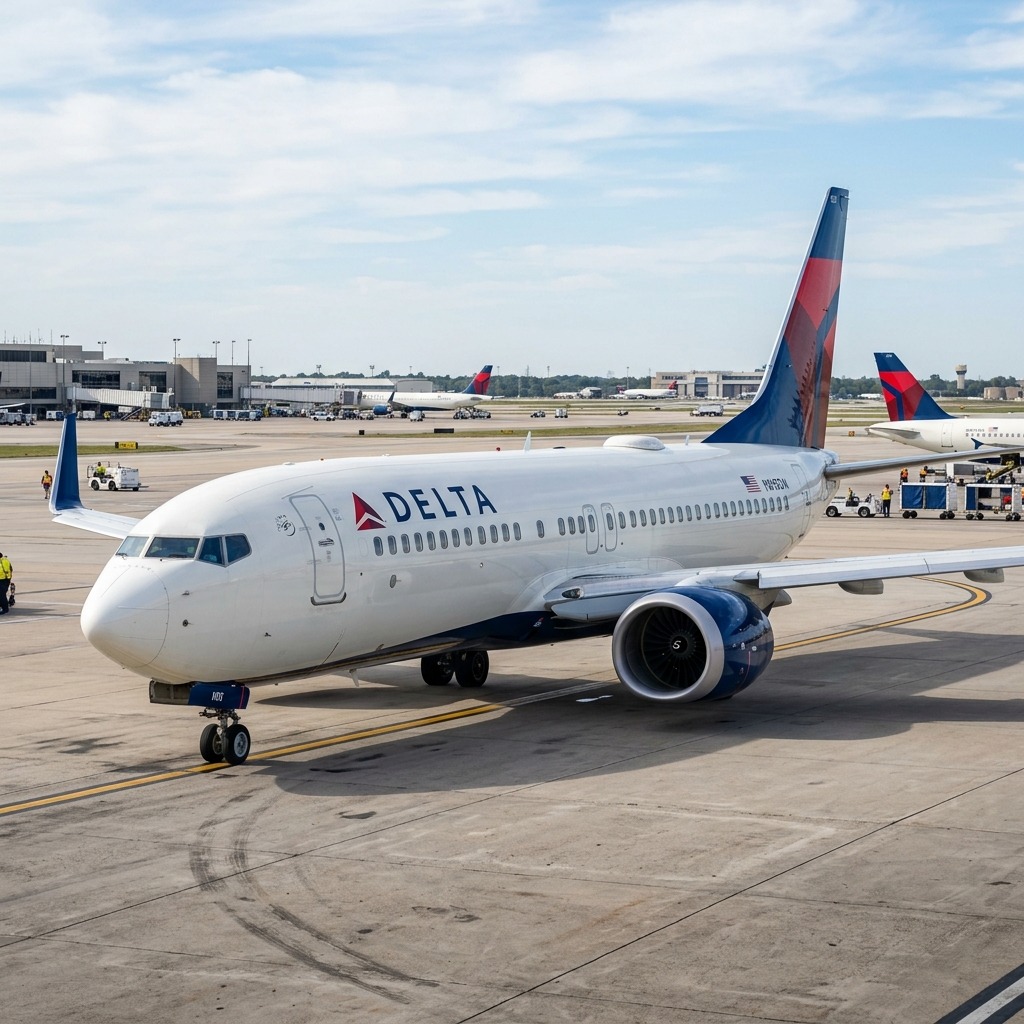
The Delta Boeing 737-900ER fleet is unique because it consists of over 160 aircraft delivered between 2013 and 2018, featuring three vastly different cabin layouts. While designed to replace older planes, the varying interiors require passengers to carefully check flight details before selecting seats.
Delta placed a massive initial order for 100 fuel-efficient 737-900ERs to replace older models like the Boeing 757 and Airbus A320 [Delta, 2011]. Today, the airline operates approximately 163 of these jets [Planespotters.net, 2025].
The “ER” designation stands for Extended Range. This engineering upgrade allowed airlines to fly longer transcontinental routes safely. The fleet features the modern Boeing Sky Interior, utilizing curved cabin architecture and blue LED lighting to make the aircraft feel larger and more comfortable.
Delta 737-900ER Fleet Basics
- Total Aircraft: ~163 jets
- Delivery Timeline: 2013 to 2018
- Cruising Speed: 525 mph (844 km/h)
- Total Range: 2,810 miles
How do the Delta 737-900ER configurations compare?
The configurations compare by dividing into three sub-fleets: the standard 739 featuring 180 seats and full amenities, the 73J offering a massive 45-inch First Class pitch, and the 73R completely lacking power outlets and screens. Choosing the right version directly impacts your inflight experience.
Delta categorizes the fleet into three distinct equipment codes. You can find these codes in your booking confirmation under the aircraft type details.
Version 1: The Standard Boeing Configuration (739)
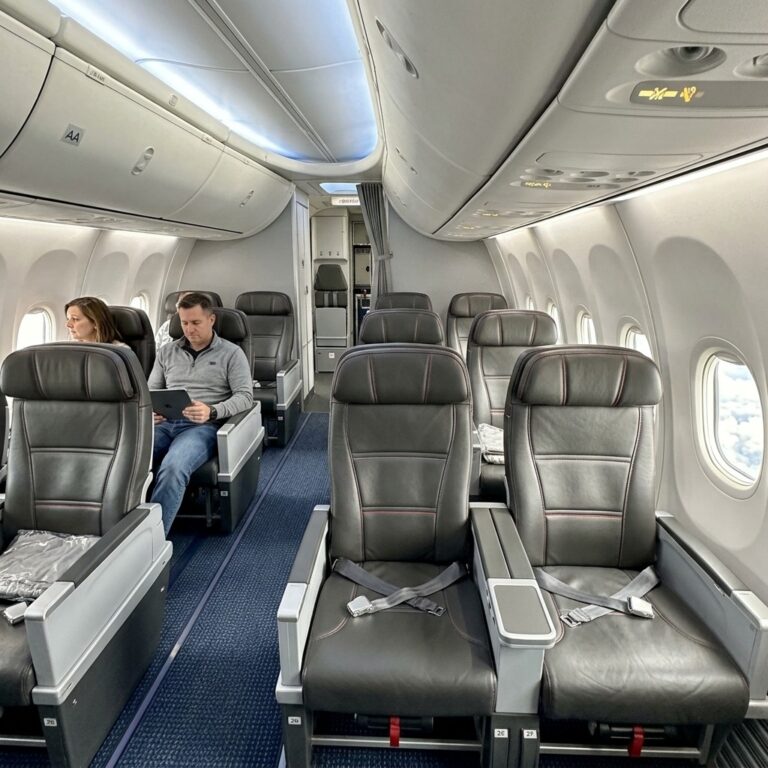
This is the most common version you will encounter. It features 180 seats divided into 20 First Class, 27 Comfort+, and 133 Main Cabin seats. Passengers enjoy full access to Wi-Fi, USB ports, standard AC power outlets, and personal seatback video screens featuring Delta Studio.
Version 2: The Premium Acquired Configuration (73J)
Delta acquired several of these aircraft from Lion Air. This layout features 12 First Class seats, just 6 Comfort+ seats, and 162 Main Cabin seats. The defining feature here is the massive 45-inch pitch in First Class, which is vastly superior to the standard domestic recliner. It includes USB power and seatback screens throughout the cabin, with AC power restricted to First Class.
Version 3: The Bare Bones Configuration (73R)
This is the least desirable aircraft in the sub-fleet. It holds 173 seats, categorized into 12 First Class, 24 Comfort+, and 137 Main Cabin seats. Crucially, this aircraft lacks personal inflight entertainment systems and power outlets entirely. While Wi-Fi is available, you must bring a fully charged device to stay entertained on longer routes.
Configuration Breakdown
- 739 Model: 20 First Class seats, Full IFE, Full Power Outlets
- 73J Model: 12 First Class seats, Full IFE, Limited Power Outlets
- 73R Model: 12 First Class seats, No IFE, No Power Outlets
What is the passenger experience across ticket classes?
The passenger experience across ticket classes varies significantly by aircraft version. First Class offers a premium 2×2 layout, Comfort+ provides up to 34 inches of legroom, and Main Cabin delivers standard 30-inch seating. Amenities depend entirely on the specific sub-fleet flying your route.
737-900ER Delta First Class
The typical 737-900er delta first class cabin features a 21-inch seat width and a 37-inch pitch. If you are looking for the delta 737-900er first class best seat, Row 2 is generally the winner. It avoids the bulkhead storage restrictions of Row 1 and the galley noise found near the back of the cabin. If you catch the 73J version, First Class gives you an incredible 45 inches of legroom. Meals are served on flights longer than 900 miles (roughly 2.5 hours).
Delta Comfort+ Experience
Upgrading to Comfort+ typically costs between $40 and $100 for a medium-haul flight. If you value 34 inches of pitch over the standard 30 inches, the cost breaks down to roughly $15 per flight hour. Choose this upgrade if arriving refreshed for a meeting matters more than saving the baseline fee, or if you need extra space to work on a laptop.
Main Cabin Experience
Standard seats offer a 17.3-inch width. Always bring a fully charged power bank, especially if you get placed on the 73R version. The standard pitch is 30 to 31 inches, making early boarding beneficial so you can secure overhead bin space before the cabin fills up.
Where are the best and worst seats on this aircraft?
The best seats on this aircraft are Row 2 in First Class and Rows 11 through 13 in Comfort+. The worst seats include Row 15 due to a missing window and Row 20 due to limited recline. Always verify your specific layout before upgrading.
Outdated third-party platforms often display incorrect cabin layouts. Searching for a boeing 737-900er delta seatguru or boeing 737-900er seatguru map usually yields a generic layout that fails to account for the 73J and 73R versions. Rely directly on the seat map provided in the Delta app during checkout.
Seats to Avoid
Beware of the delta boeing 737-900er row 15. Specifically, seats 15A and 15B are missing a window entirely. This is due to air conditioning risers routed upwards through the aircraft fuselage. Do not book this row if you enjoy looking outside during the flight.
Another area of concern is the boeing 737-900er row 20. The delta 737-900er exit row 20 provides a mixed bag. While Row 21 features massive legroom, Row 20 sits immediately in front of the emergency exit. To prevent seats from blocking the evacuation path during an emergency, Row 20 seats are heavily restricted and do not recline.
Seat Recommendations
- Best First Class: Row 2 (Away from galley noise, full floor storage access)
- Best Comfort+: Row 12 (Forward location, optimal legroom, fast deplaning)
- Worst Economy: Row 15 A/B (Missing window due to air conditioning duct)
- Worst Exit Row: Row 20 (Exit row seating with zero recline capability)
Maximizing your next Delta flight
Booking the right seat requires vigilance and a solid understanding of Delta’s specific sub-fleets. Check your flight details for the exact aircraft code before paying for seat selection. If you see only 12 First Class seats on the seat map, you are flying on an acquired aircraft and should prepare for potential amenity downgrades by downloading offline entertainment and charging your devices beforehand. Doing your homework ensures your flight is comfortable, productive, and completely surprise-free.
Frequently Asked Questions
How old is the Delta 737-900ER?
Delta’s Boeing 737-900ER aircraft were delivered between 2013 and 2018. This gives the fleet an average age of roughly 8 to 13 years as of 2026, making them relatively modern narrowbody aircraft.
What is the difference between 737-900 and 737-900ER?
The original 737-900 was heavily restricted by emergency exit regulations, capping its capacity at 189 passengers. The 737-900ER (Extended Range) added an extra pair of exit doors and a flat rear pressure bulkhead, increasing capacity to 220 passengers and improving fuel range.
What are the best seats on a 737-900ER?
The best seats are Row 2 in First Class for maximum comfort and storage, and Row 21 in the Main Cabin for exceptional exit row legroom. Mid-cabin Comfort+ seats (Rows 11 and 12) are optimal for quick deplaning.
Why is 737-900 not popular?
The original Boeing 737-900 was not popular because it could not carry more passengers than the smaller 737-800 due to a lack of emergency exits. Airlines saw no financial benefit in flying a heavier plane that offered no extra passenger revenue.
Is the 737-900ER new?
No, the 737-900ER is not a brand-new aircraft. It belongs to the Boeing Next Generation (NG) family, which preceded the newer Boeing 737 MAX series. However, Delta’s fleet features modern interiors and updated lighting.
What does er mean on a Boeing plane?
The letters “ER” stand for Extended Range. This indicates that the aircraft has been engineered with auxiliary fuel tanks and aerodynamic improvements to fly longer distances than the standard model.
Is the Boeing 737-900ER a max?
No, the Boeing 737-900ER is not a MAX aircraft. It is part of the older, highly reliable Boeing 737 Next Generation (NG) family and does not utilize the MCAS system found on the MAX variants.
Where not to sit on a Boeing 737?
Do not sit in Row 15 on the left side (seats A and B), as it is missing a window due to internal air conditioning ducts. Additionally, avoid Row 20, as it sits in front of an emergency exit and does not recline.
Does the Boeing 737-900ER have Delta One?
No, the Boeing 737-900ER does not feature Delta One flat-bed seating. It is a narrowbody aircraft designed for domestic and short-haul international flights, featuring standard domestic First Class recliners.
How many 737-900ERs does Delta have?
Delta Air Lines operates a massive fleet of approximately 163 Boeing 737-900ER aircraft. They make up a significant portion of the airline’s domestic network capability.

Muhammad Naeem is a travel researcher with 5+ years of experience analyzing airline rules and global travel regulations. He specializes in simplifying complex airline policies to help travelers avoid extra fees and fly with confidence. His work focuses on accuracy, clarity, and up to date information across international carriers.