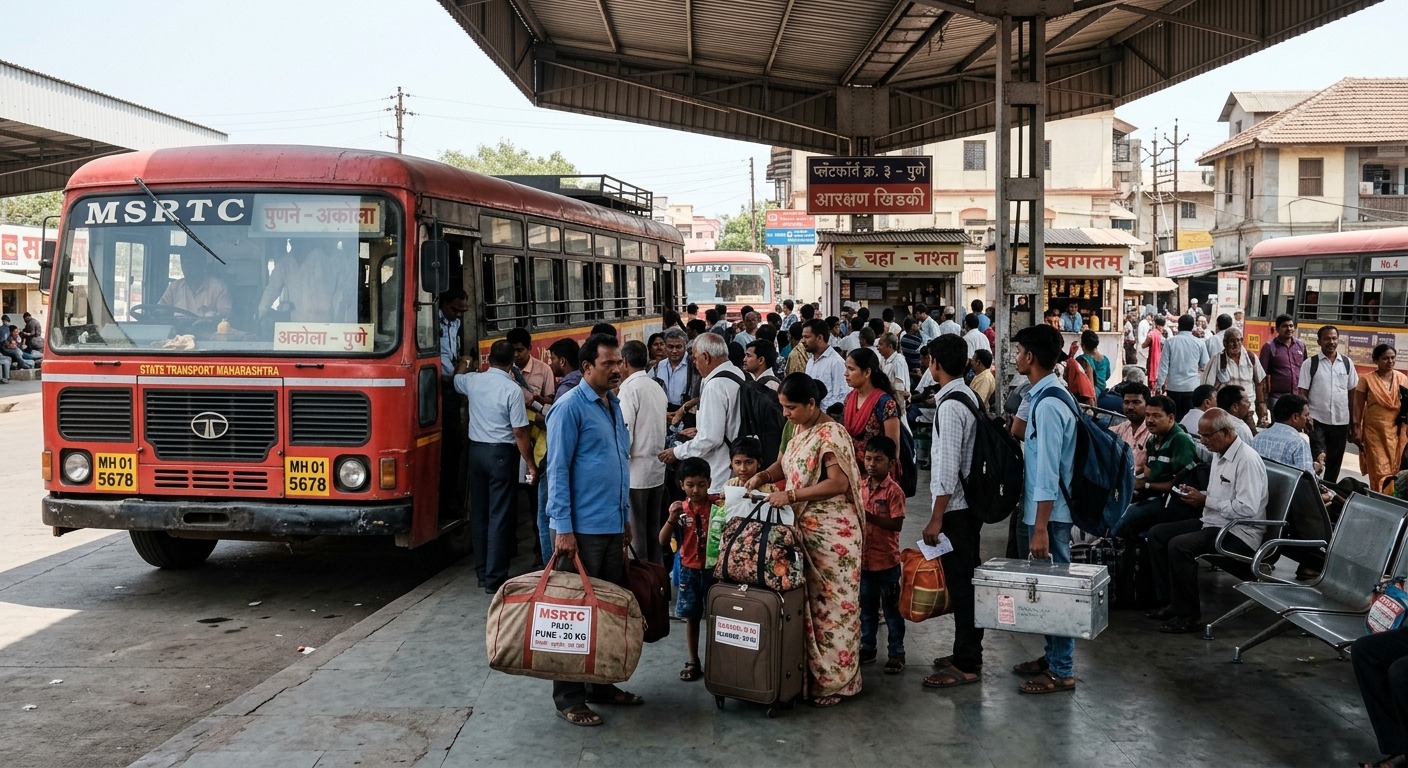
MSRTC Luggage Policy: Rules, Charges & Parcel Service 2026
MSRTC allows 20 kg of free luggage per passenger, up to a maximum of 50 kg. Excess baggage between 20-40 kg costs Rs 5-50 per stage depending on distance, while luggage above 40 kg costs Rs 50-100 per stage. Staff estimate weight visually, since MSRTC buses don’t carry weighing machines at most stations.
Planning a trip on a Maharashtra State Road Transport Corporation (MSRTC) bus and wondering how much luggage you can bring along? You’re not alone. Every day, millions of passengers travel on MSRTC’s red “Lal Pari” buses, Shivneri Volvos, and Shivshahi coaches and a good chunk of them carry more than just a backpack. Whether you’re heading home with festival groceries, moving cities with a couple of suitcases, or transporting farm produce, knowing MSRTC’s luggage rules before you board can save you both money and hassle.
What Is MSRTC’s Luggage Policy?
MSRTC permits each passenger to carry up to 20 kg of luggage free of charge, with a hard cap of 50 kg total per person. Anything beyond the free allowance is charged per the corporation’s stage-based fee structure, which was revised and implemented from August 27, 2019.
Here’s the policy at a glance:
|
Luggage Weight |
Policy |
|
0–20 kg |
Free (included in ticket fare) |
|
20–40 kg |
Extra charge applies (Rs 5–50 per stage) |
|
40–50 kg |
Higher extra charge applies (Rs 50–100 per stage) |
|
Above 50 kg |
Not permitted as standard passenger luggage |
MSRTC introduced this luggage levy after cutting passenger fares, according to a 2019 report from The Bridge Chronicle. A source from the MSRTC Pune division explained that the change was partly designed to offset revenue lost from lower ticket prices, especially on rural routes where passengers frequently carry heavy items like food grain and farming equipment.
How Does MSRTC Calculate Extra Luggage Charges?
MSRTC charges excess luggage based on weight bracket and distance traveled, calculated in “stages” of the route. For 20–40 kg of luggage, the charge is Rs 5 per stage on short routes (0–84 km) rising to Rs 50 for longer routes (up to 600 km). For luggage above 40 kg, charges start at Rs 50 per stage and climb to Rs 100 on longer distances.
One detail surprises most passengers: MSRTC doesn’t use weighing machines at most bus stations. Conductors and staff estimate luggage weight by sight, based on the bag’s size and how it’s packed. This visual estimation method means enforcement can vary depending on the staff member and depot.
Sample Cost Breakdown
Let’s put this into practice with a few real-world examples:
- Example 1 Pune to Aurangabad (approx. 220 km), 30 kg suitcase: Since this bag falls in the 20-40 kg bracket and the distance exceeds 84 km, the passenger pays around Rs 5 added per stage along the route, gradually increasing with each stage.
- Example 2 Short intracity hop (under 84 km), 45 kg of goods: This falls in the above-40 kg bracket for a short route, so the charge is roughly Rs 50 for the trip.
- Example 3 Long-distance run (500+ km), 45 kg of goods: Since this bag exceeds 40 kg and travels a long distance, the charge climbs toward the Rs 100 per-stage range.
As one regular Pune-to-Aurangabad commuter told The Bridge Chronicle, carrying 25-30 kg of luggage quarterly could push a Rs 655 fare up to Rs 700 or more a real cost difference for frequent travelers.
MSRTC Luggage Rules: Where Should Your Bags Go?
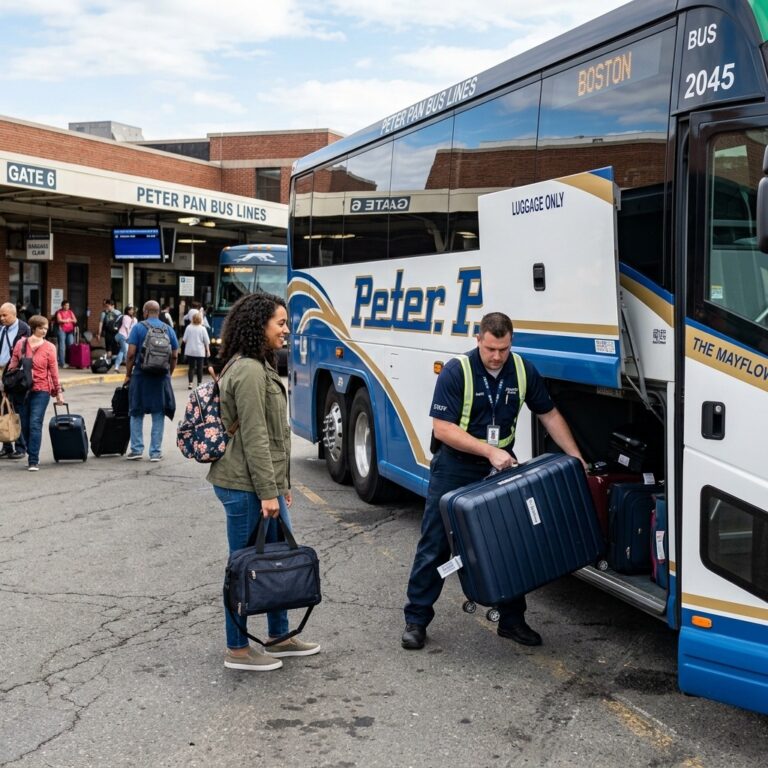
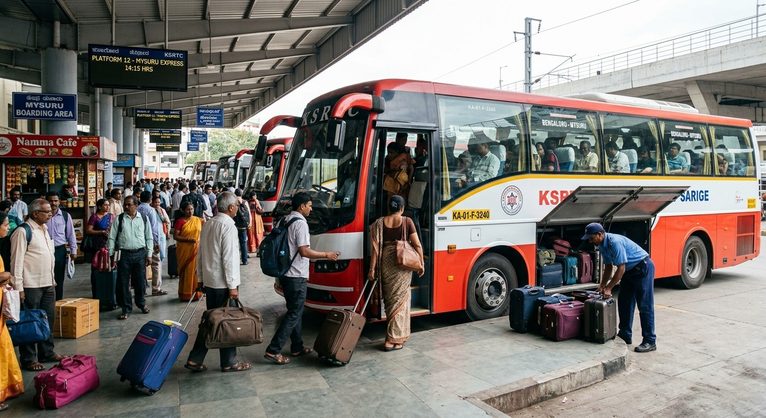
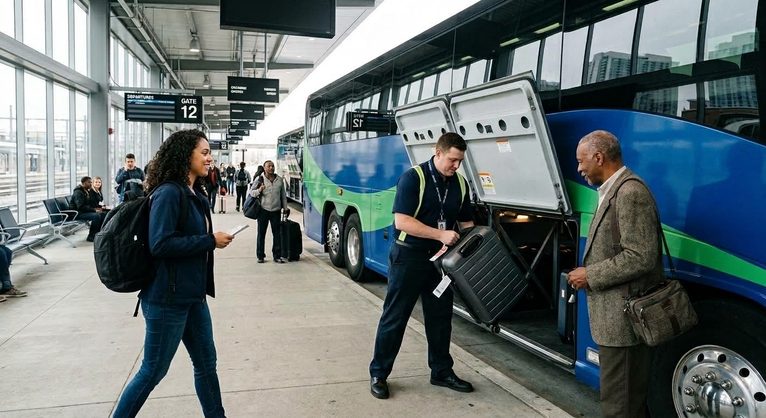
MSRTC luggage is generally stored in the bus’s underbody compartment (the “bus bay”), while one small bag is allowed inside the cabin with the passenger. Oversized bags or multiple large pieces may be restricted if the compartment is full, or may attract an ad hoc charge from the conductor.
Underbody Compartment vs. Cabin Storage
|
Storage Type |
What It’s For |
Extra Charge Likely? |
|
Underbody bay |
Suitcases, large bags, checked luggage |
Only if overweight or oversized |
|
Cabin (inside coach) |
One small bag, valuables, essentials |
No |
|
Overhead rack |
Small items only, limited on ST buses |
No |
Passenger experiences shared on Quora back this up. On Shivneri buses (MSRTC’s AC Volvo service between Pune and Mumbai), a single 23 kg suitcase is typically accepted in the underbody bay without any extra fee, provided it’s one reasonably sized item. Extra charges become more likely when:
- Luggage exceeds the bay’s dimensions
- A passenger carries multiple large bags instead of one
- The bus is already at full luggage capacity
- The item is deemed hazardous or unsafe to transport
Practical tip: Arrive at the boarding point early. Conductors load the underbody bay in the order passengers board, so early arrival gives you a better shot at secure placement and reduces the risk of a conductor citing “no space” as grounds for an extra charge.
MSRTC Parcel Service Rates
MSRTC’s Parcel Courier Service allows passengers and businesses to send goods separately from passenger travel, using the corporation’s existing bus network across Maharashtra. Rates are calculated based on the weight of the parcel and the distance between the origin and destination depots, similar in structure to the stage-based luggage charges applied to passenger baggage.
This service (officially listed under MSRTC’s service categories) is separate from the baggage you carry with you as a boarding passenger. It’s designed for situations where:
- You need to send goods to a family member in another city without traveling yourself
- A local business wants an affordable way to move stock between towns
- You have more luggage than you can reasonably carry, and want it to travel independently
Because parcel rates are set locally by depot and vary by route, passengers should confirm current rates directly at the originating MSRTC depot or parcel booking counter before shipping. Weight, distance, and the nature of the goods (fragile, perishable, or standard) all factor into the final cost.
MSRTC Parcel Service Tracking
MSRTC parcel tracking is handled at the depot level, meaning passengers typically track a shipment using the receipt number issued at booking, verified by contacting the originating or destination depot directly rather than through a centralized online tracking portal.
If you’ve booked a parcel through MSRTC, here’s how to stay on top of it:
- Keep your receipt safe. The booking slip issued at the depot is your primary reference for tracking and claiming the parcel.
- Contact the depot directly. Since MSRTC’s parcel network operates depot-to-depot, the fastest way to confirm a parcel’s status is a call to the originating or receiving depot.
- Confirm arrival before travel. If someone else is collecting the parcel on your behalf, share the receipt details with them in advance to avoid delays.
- Ask about delivery windows. Parcel delivery timing depends on the bus schedule on that specific route, so ask the depot staff for an estimated arrival window.
This depot-based system reflects MSRTC’s broader operating model the corporation runs on a decentralized network of divisional depots rather than a single centralized logistics platform, which is worth keeping in mind if you’re used to real-time tracking from private courier companies.
MSRTC Courier and Cargo Services
Beyond passenger baggage, MSRTC operates a dedicated Parcel Courier Service that uses its statewide bus fleet to move cargo and courier items between depots across Maharashtra, making it a budget-friendly alternative to private logistics companies for intercity shipments.
This service is one of MSRTC’s lesser-known offerings, but it plays an important role in connecting Maharashtra’s smaller towns and villages many of which MSRTC serves directly even where private couriers have limited reach. According to data referenced in academic reviews of MSRTC’s operations, the corporation directly connects to over 71% of villages in the state, with total population coverage exceeding 90%. That extensive rural network makes MSRTC’s cargo service a practical choice for shipments to areas where courier infrastructure is thin.
Who tends to use it:
- Small businesses moving goods between towns without their own logistics setup
- Families sending items to relatives in another city
- Farmers and traders transporting produce or equipment
- Anyone needing an affordable alternative to private parcel companies for intrastate shipments
Tips for Traveling With Luggage on MSRTC Buses
- Pack within 20 kg where possible. Staying under the free allowance is the simplest way to avoid any extra charge altogether.
- Arrive early for bay space. Underbody compartments fill up on a first-come basis, especially on popular routes like Pune-Mumbai.
- Keep valuables in your cabin bag. Don’t place passports, cash, or electronics in checked luggage carry them with you inside the coach.
- Label every bag clearly. A simple name-and-phone-number tag prevents confusion at busy depots with multiple stops.
- Use the parcel service for bulk items. If you’re moving more than you can reasonably carry, booking a separate parcel shipment is often more practical than negotiating excess baggage fees at boarding.
- Ask before you board. Since weight is estimated visually, confirming with the conductor beforehand avoids surprises after your bag is already loaded.
Frequently Asked Questions
How much free luggage does MSRTC allow per passenger?
MSRTC allows 20 kg of free luggage per passenger as part of the standard ticket fare, with a maximum permissible weight of 50 kg per person for any single journey.
What happens if my luggage weighs more than 40 kg?
Luggage above 40 kg is charged at a higher rate than the 20-40 kg bracket, starting around Rs 50 per stage on shorter routes and rising to about Rs 100 per stage on routes covering 600 km or more.
Does MSRTC weigh luggage with a scale?
No. Most MSRTC depots don’t use weighing machines. Staff estimate luggage weight visually based on bag size and appearance, which means charges can vary slightly by conductor and location.
Can I carry a 23 kg suitcase on a Shivneri bus without paying extra?
Yes, in most cases. A single 23 kg suitcase typically fits within the underbody bay’s standard capacity and is accepted without an additional fee, provided it’s your only large item and the bay isn’t already full.
Is there a fixed rupee amount for excess luggage, or does it change by route?
The charge changes by route distance. MSRTC calculates excess baggage fees in stages, adding roughly Rs 5 at each stage of the journey, so longer routes accumulate higher total charges than short ones.
Can I keep a bag inside the bus cabin instead of the underbody compartment?
Yes. MSRTC generally permits one small bag inside the coach with the passenger, in addition to larger luggage stored in the underbody bay.
What items might attract extra charges even under 20 kg?
Bulky or unusually shaped items like farming equipment or large containers can attract charges even under 20 kg if staff judge them to take up disproportionate space in the bay.
How is MSRTC’s parcel service different from carrying luggage as a passenger?
The parcel service moves goods independently of passenger travel, using depot-to-depot booking and separate rate calculations, whereas passenger luggage travels with you on your own ticket.
Can I track my MSRTC parcel shipment online?
Not through a centralized portal. Tracking is handled at the depot level using your booking receipt, so confirming status typically means contacting the originating or destination depot directly.
Why did MSRTC introduce luggage charges in 2019?
MSRTC introduced revised luggage charges from August 27, 2019, partly to offset revenue lost after the corporation reduced passenger bus fares, according to reporting from The Bridge Chronicle.

Azeem breaks down airline baggage policies, fare-class benefits, and peak pricing rules into practical guidance for smooth trip planning. He verifies every fee and dimension against official airline sources so travelers can pack with confidence.
One Comment