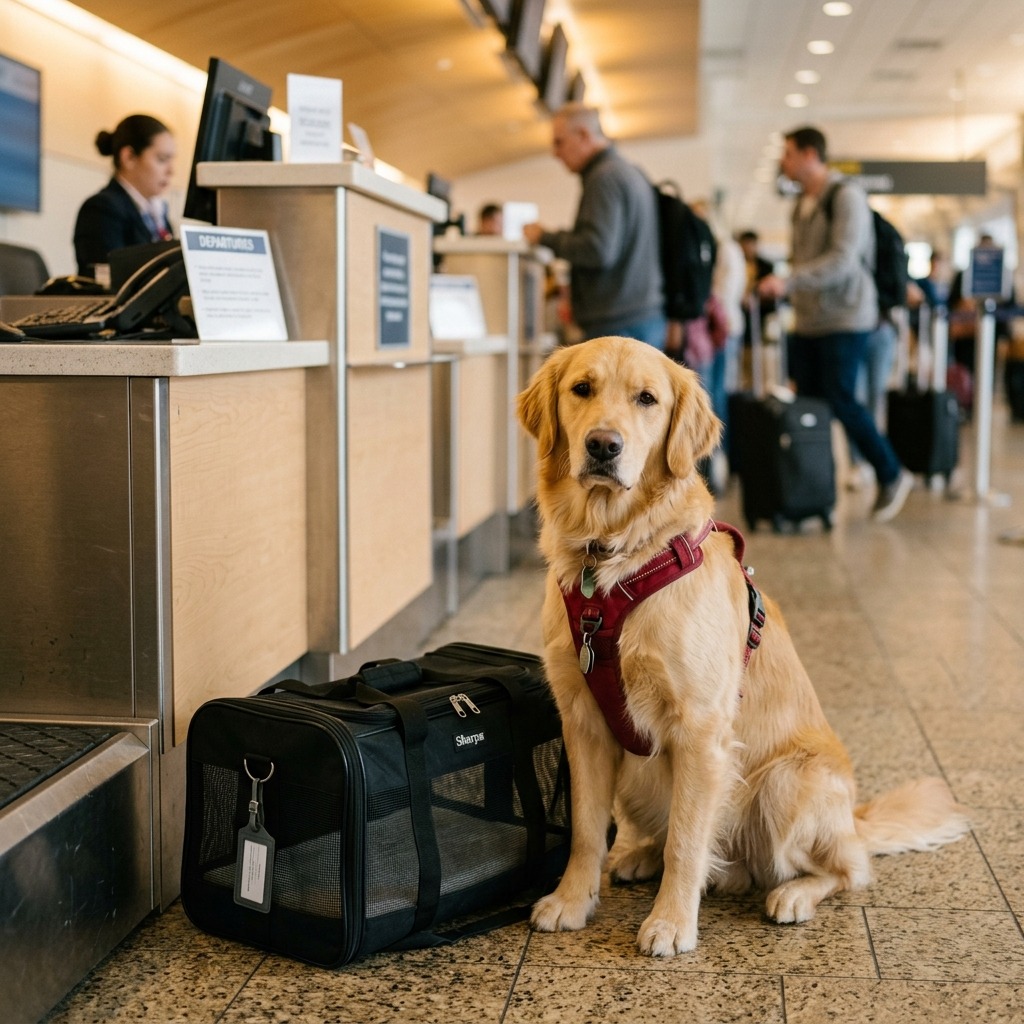
IATA Pet Travel Rules 2026 Airport Cabin: New Flying Rules
Flying with a pet has never been simple. But 2026 brought some of the most meaningful regulatory updates in years, and many pet owners still do not know about them.
According to IATA’s 2025 Global Passenger Survey, about one in four respondents has traveled or would consider traveling with a pet. Among them, 41% cited uncertainty about pet eligibility as a major challenge, while 36% were unsure about airline policies and 34% did not fully understand the process.
Most major airlines have not yet fully aligned with these updates. Pet owners flying in 2026 should verify crate requirements, prepare health documents, and check airline-specific policies before booking.
What Exactly Changed in IATA’s 2026 Pet Travel Rules?
IATA’s 2026 updates span two documents: the 52nd edition of the Live Animals Regulations (effective January 2026) and the new In-Cabin Operational Guidelines (published July 15, 2026). Together, they introduce stricter training standards, clarified container construction rules, updated documentation language, and for the first time a standardized framework for managing pets in the aircraft cabin.
|
Area |
What Changed |
Why It Matters |
|
Training |
Enhanced, standardized live-animal handling protocols |
More consistent staff handling at check-in and on board |
|
Container Requirement 1 (CR1) |
Clarified ventilation requirements and absorbent bedding standards |
Your crate may no longer meet the spec if bedding or ventilation is borderline |
|
Terminology |
“Spacer bar” replaced with “spacer”; “reservation” replaced with “booking” |
Procedural language in airline systems updated |
|
State Variations |
Updated rules for Argentina, Canada, and Great Britain |
Cross-border routes through these countries need re-verification |
|
Operator Variations |
Amendments to many individual airline policies within the LAR |
Check the airline’s variation page, not just the general rule |
|
Species Listings |
Bengal cat classification corrected; Fishing Cat added; new rodent species added |
Relevant for exotic pet owners |
|
CR1 Bedding |
Explicit absorbent bedding requirement clarified |
Fabric liners may not satisfy the standard on all airlines |
The New In-Cabin Guidelines: What Do They Actually Require?
The July 2026 In-Cabin Operational Guidelines are addressed primarily to airlines, but they directly affect what passengers experience. IATA’s Brendan Sullivan, Global Head of Cargo, stated the goal plainly: “Well-prepared travelers and industry-wide best practices enable airlines to deliver a safe, consistent, and efficient experience for those traveling with their pets.”
The guidelines cover recommended procedures across five stages: booking, check-in, boarding, the on-board experience, and arrival. Airlines are encouraged (though not mandated) to adopt these as standard operating procedures.
The key takeaway for pet owners: these guidelines signal what compliant airlines should be asking and checking at each step. If your airline hasn’t adopted them yet, you may encounter inconsistency which makes preparation on your end even more critical.
How Do IATA’s New Rules Affect Dogs and Cats?
Under IATA’s 2026 updates, dogs and cats traveling by air must be housed in a container compliant with Container Requirement 1 (CR1), which now includes clarified ventilation openings, absorbent bedding, and an internal sizing formula based on the individual animal’s measurements not generic “small,” “medium,” or “large” labels.
The core sizing formula remains:
- Length = A + ½B (A = nose to tail base; B = elbow to floor)
- Width = C × 2 (C = shoulder width or widest point)
- Height = D + bedding thickness (D = top of head or ear tip to floor)
Snub-nosed (brachycephalic) breeds including French Bulldogs, Pugs, Bulldogs, Boxers, and Pekinese must travel in a container 10% larger than the formula result. IATA also recommends against transporting brachycephalic breeds in hot weather due to their difficulty regulating body temperature.
Two adult dogs may share a container only if both weigh under 14 kg each and are compatible. Animals over 14 kg must travel individually. Puppies and kittens must be at least eight weeks old and fully weaned.
What Are IATA Approved Dog Crate Sizes?
There is no single “IATA approved dog crate size.” IATA does not certify or approve specific products. Instead, a crate is compliant when it satisfies Container Requirement 1 (CR1) meaning internal dimensions must be calculated from your specific dog’s body measurements using the IATA formula, not from a manufacturer’s “airline-approved” label.
This is the most common and costly misunderstanding in pet air travel.
How to Calculate the Right IATA Crate Size for Your Dog
Measure your dog and apply the formula:
| Measurement | What to Measure | Crate Dimension |
| A | Tip of nose to base of tail | Used for length |
| B | Ground to elbow joint | Used for length (A + ½B) |
| C | Widest point across shoulders | Used for width (C × 2) |
| D | Floor to top of head or ear tip | Used for height (D + bedding) |
Example for a Labrador Retriever: A = 28″, B = 12″, C = 16″, D = 24″. Minimum internal dimensions: Length = 28 + 6 = 34″, Width = 16 × 2 = 32″, Height = 24 + 1″ bedding = 25″.
Note: IATA sizing uses internal dimensions. Exterior crate measurements are always larger, sometimes by 3–5 inches per side. Many owners buy based on exterior measurements and end up with a non-compliant crate.
What Are the Best IATA Approved Dog Crates for XXL and Giant Breeds?
For XXL and giant breeds, the three most widely used IATA-compliant crate options in 2026 are the Petmate Sky Kennel 48″, the RuffLand 500 Series XL, and the Gunner G1 Large though each has trade-offs in terms of internal space, weight, and practical airline acceptance
|
Crate Model |
Exterior Dimensions |
Interior Dimensions |
Empty Weight |
Best For |
|
Petmate Sky Kennel 48″ |
48″ × 32″ × 35″ |
44″ × 29″ × 32.5″ |
~20 lbs |
Giant breeds; clearest airline-first option |
|
RuffLand 500 Series XL |
36″ × 26″ × 29.75″ |
36″ × 23″ × 28″ |
~42 lbs |
Large (not giant) breeds; premium build |
|
Gunner G1 Large |
40.25″ × 28″ × 33.25″ |
33.25″ × 21″ × 29″ |
72 lbs |
Road travel; aircraft weight limits often restrict it |
American Airlines states that combined pet and kennel weight must not exceed 100 lbs / 45 kg. At 72 lbs empty, the Gunner G1 Large leaves little room for a large dog before hitting that ceiling. The Petmate 48″ is the most practical airline-first choice for giant breeds; the RuffLand 500 XL suits large but not giant dogs and is meaningfully lighter.
What Construction Features Does an IATA Crate Require?
Regardless of brand, every IATA-compliant crate must:
- Be rigid, leak-proof, and escape-proof
- Have ventilation on all four sides (three sides minimum on some domestic routes)
- Include a water container accessible from outside for refilling
- Have wheels removed or secured inoperable
- Have no protruding hardware that could injure the animal or handlers
- Have absorbent bedding (clarified in the 2026 edition)
- Weigh under 60 kg / 132 lbs total (dog + crate) or include forklift spacers if heavier
Where to Buy IATA Approved Dog Crates
IATA-compliant crates for large and XXL dogs are available through:
- Petmate.com Sky Kennel 48″ direct from the manufacturer
- RuffLandKennels.com 500 Series XL with airline kit configuration
- Amazon wide stock, but verify interior dimensions before purchasing
- Chewy and PetSmart carry Petmate and similar hard-sided options
- Pet relocation specialists companies like The ARK at JFK and WorldCare Pet can source and verify crates for your specific route and dog
- IATA-certified cargo agents can provide made-to-measure crates for unusual breeds or sizes
Always confirm with your airline that the specific crate you plan to use is accepted on your aircraft type before purchasing. Airlines can reject a compliant crate if it exceeds the cargo hold dimensions of a particular aircraft.
How Do These Changes Affect Exotic Pets and Birds?
IATA’s 2026 LAR updates tightened protocols for exotic species, particularly through updated species listings, new container requirements for raptors (CR20A), and stricter documentation rules. The 52nd edition added the Fishing Cat and corrected Bengal cat classifications, signaling closer scrutiny of species that fall near CITES protection thresholds.
Key changes for bird owners:
- Container Requirement 19 (CR19) now specifies maximum ventilation openings and maximum bird density per container
- The new CR20A creates a dedicated container requirement for raptors and birds of prey that are hooded during transport
- CR20 updates the method of feather protection
For owners of exotic or unusual pets, the most important step is confirming species acceptability with your airline before booking. Not all airlines accept all species even when IATA permits transport. Several carriers maintain their own restricted species lists that go beyond IATA minimums.
Service Animals vs. Emotional Support Animals: What Do the New Rules Say?
Under the current IATA framework, service animals trained to perform specific tasks for a person with a disability are treated separately from pets and are subject to different airline acceptance criteria. Emotional support animals (ESAs) no longer receive the same protected status on most airlines following U.S. Department of Transportation changes in 2021, and IATA’s 2026 guidance on service dogs reinforces this distinction.
IATA released separate Guidance on Traveling with Service Dogs alongside the new in-cabin guidelines, reflecting a deliberate effort to draw a clear line between working service dogs and pets. For U.S. flights, all major airlines now follow the DOT’s ruling: ESAs are treated as pets and must comply with all standard pet policies.
Owners of trained service dogs should download IATA’s Service Dog Guidance directly from iata.org, as it contains documentation and advance notice requirements that differ from standard pet travel procedures.
How Should You Prepare Your Pet for Air Travel Under 2026 Rules?
To travel with a pet in 2026, you need a vet-issued health certificate (most airlines require it within 10 days of departure), proof of current vaccination, a microchip with a number matching all documents, and an IATA CR1-compliant container sized to your specific animal all confirmed with your airline before travel.
Practical preparation steps:
- Book early. Most airlines cap the number of pets per flight. Spots fill quickly, especially during summer.
- Schedule your vet appointment last. Health certificates have short validity windows (typically 7–10 days). Book the vet appointment as close to departure as legally possible.
- Crate-train your pet. IATA and veterinary associations both recommend introducing the travel container weeks before departure. A dog or cat that is comfortable in the crate travels significantly better.
- Skip the sedatives. IATA, the American Veterinary Medical Association, and virtually all airlines advise against sedating pets for air travel. Sedation impairs balance and thermoregulation, which can be dangerous at altitude and many airlines will deny boarding to a visibly sedated animal.
- Exercise before check-in. A tired dog is a calmer dog. Walk your dog immediately before reaching the airport.
- Feed lightly. Give a small meal and water about two hours before check-in, then water only until departure.
- Check microchip compliance. International destinations increasingly require ISO 11784/11785-compliant microchips. Verify this before booking international flights.
How Are Major Airlines Implementing the New IATA Guidelines?
As of August 2026, no major commercial airline has publicly confirmed full adoption of IATA’s July 2026 In-Cabin Operational Guidelines, though several including Lufthansa and Alaska Airlines already operate procedures largely consistent with the new framework. Most U.S. carriers continue to apply their existing pet policies, which vary significantly from IATA’s updated recommendations.
|
Airline |
In-Cabin Pets |
Cargo (General Public) |
Max In-Cabin Weight |
One-Way Fee (Domestic) |
IATA Alignment |
|
Delta |
Yes (dogs, cats, birds) |
No (military only) |
Under 20 lbs combined |
$150 USD |
Partial |
|
United |
Yes (dogs, cats) |
No (military only) |
~20 lbs combined |
$150 USD |
Partial |
|
Yes (dogs, cats) |
No (military only) |
Under 20 lbs combined |
Varies |
Partial |
|
|
Alaska Airlines |
Yes |
Yes (general public) |
Carrier fits under seat |
Varies |
Strong |
|
Southwest |
Yes (no international/Hawaii) |
No |
Carrier fits under seat |
Varies |
Partial |
|
Lufthansa |
Yes |
Yes |
8 kg combined |
Varies |
Strong |
|
KLM |
Yes |
Yes (via agent) |
8 kg / 17.6 lbs combined |
Varies |
Strong (with exceptions) |
|
Air France |
Yes |
Yes |
Similar to KLM |
Varies |
Strong |
|
Emirates |
In-hold / cargo only (most routes) |
Yes |
N/A |
Varies |
Partial |
Notable gaps:
- Delta, United, and American have all discontinued general cargo pet programs. For large dog owners on these carriers, options are severely limited.
- KLM restricts hold travel on Boeing 787-9, 787-10, A321neo, and KLC Cityhopper flights over two hours. Connections with pets in the hold must be under three hours.
- Most brachycephalic breeds are not permitted in KLM’s hold.
- UK-bound flights on most European carriers restrict in-cabin and hold pet transport due to UK government import embargoes.
- Alaska Airlines remains the only major U.S. carrier consistently offering cargo pet transport for the general public and was ranked the most pet-friendly U.S. airline by AirAdvisor in 2026.
In-Cabin Carrier Dimensions by Airline (2026)
|
Airline |
Max Soft-Sided Dimensions |
Max Hard-Sided Dimensions |
|
Delta |
18″ × 11″ × 11″ |
Fits under seat |
|
American Airlines |
18″ × 11″ × 11″ |
19″ × 13″ × 9″ (mainline only) |
|
Alaska Airlines |
17″ × 11″ × 9.5″ |
Not specified |
|
Southwest |
~18.5″ × 8.5″ × 13.5″ |
Not typically permitted |
|
KLM |
18″ × 11″ × 9″ (46×28×24 cm) |
Not typically permitted |
What Common Mistakes Should Pet Owners Avoid in 2026?
The following errors account for the majority of denied boardings and check-in rejections:
- Buying an “airline-approved” crate based on exterior dimensions. IATA sizing uses internal dimensions. A crate labeled 40″ may have an interior closer to 35″.
- Using an expired health certificate. Most airlines require it issued within 7–10 days of departure. Booking the vet appointment too early is a recurring problem.
- Not notifying the airline in advance. Airlines limit pets per flight. Calling after booking sometimes weeks later means the spot may already be taken.
- Assuming your airline follows IATA minimums exactly. Airline-specific rules often exceed IATA minimums. Always check both.
- Leaving wheels on the crate. IATA requires wheels to be removed or disabled. Crates rejected for this reason at check-in cannot quickly be modified.
- Sedating your pet. Airlines can and do deny boarding to sedated animals. Sedation is also medically dangerous at altitude.
- Missing destination-country import requirements. Australia, New Zealand, Hawaii, Japan, and the UK all have strict quarantine and documentation requirements that operate independently of IATA rules.
Frequently Asked Questions
What is the IATA Live Animals Regulation 52nd edition and when did it take effect?
The 52nd edition of the IATA LAR is the current global standard for transporting live animals by air, effective January 2026. It includes updates to container requirements, training standards, species listings, and documentation language. The official document is available for purchase at iata.org.
Does IATA certify or approve specific dog crate brands?
No. IATA does not certify individual crate brands. A crate is compliant when it meets Container Requirement 1 (CR1) specifications, including proper internal sizing, ventilation on all four sides, leak-proof flooring, absorbent bedding, and disabled wheels.
What is the minimum age for a puppy or kitten to fly?
IATA requires animals to be at least eight weeks old and fully weaned before air travel. Some airlines and destinations impose higher age minimums Delta requires dogs to be at least six months old for travel to the U.S. from another country, and at least 15 weeks for travel to the EU.
Can two dogs share one crate under 2026 IATA rules?
Two adult dogs may share a container only if both weigh under 14 kg (approximately 30 lbs) each and are compatible. Dogs over 14 kg must travel individually. Puppies from the same litter under six months old may be grouped (maximum three per container), each weighing no more than 14 kg.
How much bigger does a crate need to be for a brachycephalic dog?
Snub-nosed breeds (French Bulldogs, Pugs, Bulldogs, Boxers, Pekinese) require a container 10% larger than the standard IATA formula result. This additional space helps compensate for their respiratory limitations. Several airlines impose additional or seasonal restrictions on these breeds regardless of crate size.
Which U.S. airline allows large dogs in cargo for the general public in 2026?
Alaska Airlines remains the only major U.S. carrier currently offering cargo pet transport to the general public in 2026. Delta, United, and American have restricted their cargo pet programs to active military and State Department personnel only.
What did IATA’s July 2026 in-cabin guidelines actually change?
The July 2026 In-Cabin Operational Guidelines introduced recommended procedures for airlines to follow at each stage of cabin pet travel booking, check-in, boarding, on-board management, and arrival. The guidelines are not mandatory, but they represent IATA’s official best-practice framework and signal where airline policies are expected to converge.
Are emotional support animals still treated differently from pets under 2026 rules?
No. Following the U.S. Department of Transportation’s 2021 ruling and IATA’s reinforcement of the service animal distinction in 2026, ESAs are now treated as regular pets by most airlines. Only dogs trained and documented as service animals for a specific disability receive special handling. ESAs must comply with all standard pet policies.
Does the IATA formula apply to in-cabin soft carriers as well?
The IATA CR1 formula primarily governs cargo containers. For in-cabin travel, airlines set their own maximum carrier dimensions (typically around 18″ × 11″ × 11″ for soft-sided bags). The key rule for in-cabin travel is that the pet must be able to stand, sit, turn, and lie naturally inside the carrier the same welfare principle underpins both contexts.
How early before a flight should a pet owner contact the airline?
As early as possible ideally at the time of booking. Most flights limit the number of pets on board, and availability is not always visible during standard online booking. Contact the airline directly to add your pet to the reservation and confirm the spot in writing. Reconfirm at least 48 hours before departure, as IATA recommends.

Azeem breaks down airline baggage policies, fare-class benefits, and peak pricing rules into practical guidance for smooth trip planning. He verifies every fee and dimension against official airline sources so travelers can pack with confidence.





One Comment