Southwest Airlines Lounges: Confirmed 2026 Locations, Access, and Opening Plans
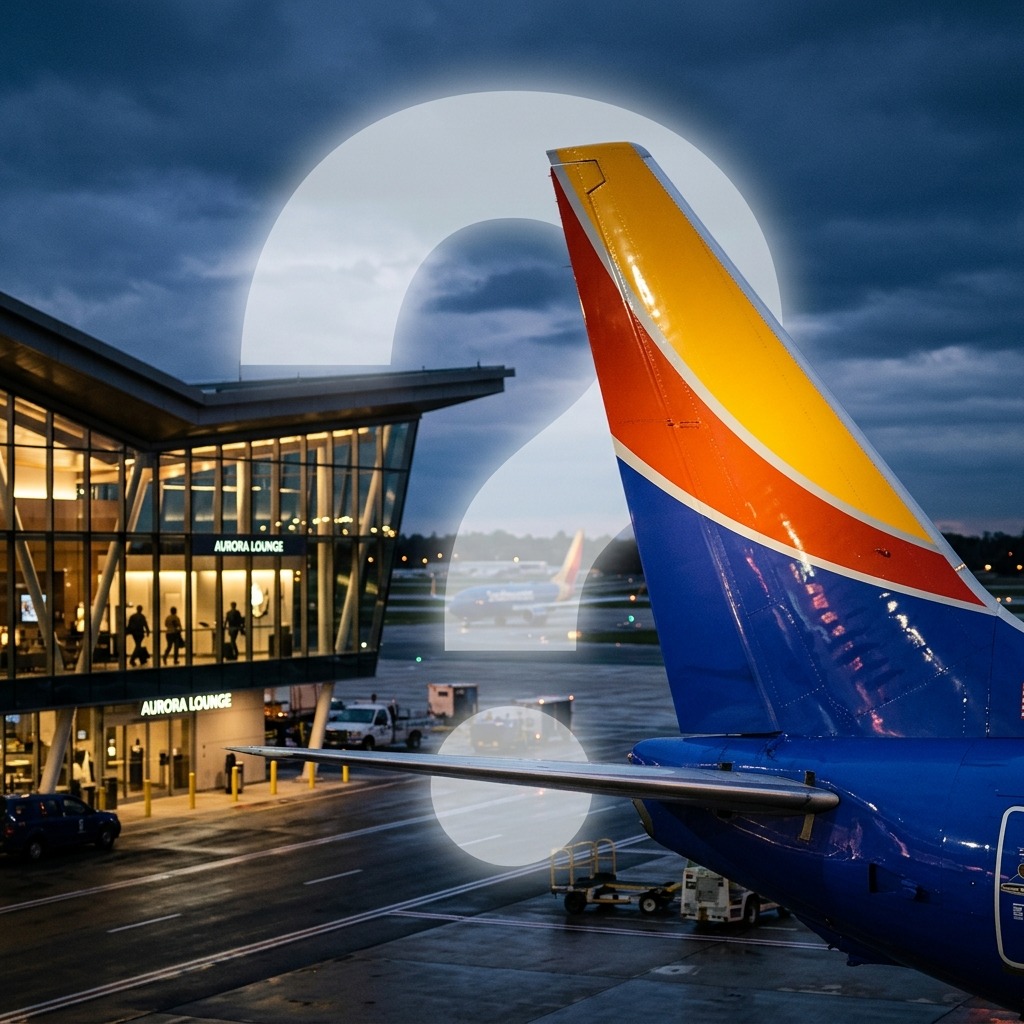
Southwest Airlines CEO Bob Jordan confirmed on July 23, 2026 that airport lounge development is “work underway,” with a confirmed pipeline covering at least five cities Honolulu, Nashville, Denver, Austin, and Dallas Love Field. Southwest has never operated a passenger lounge in its 55-year history, making this the most consequential shift in the airline’s identity since its founding.
For 55 years, Southwest Airlines built its reputation by saying no assigned seats, no checked bag fees, and no airport lounges. That identity made it the most-flown domestic airline in the United States. Now, nearly every pillar of that model is changing at once, and lounges are the most symbolically loaded change of all.
Here’s everything confirmed, speculated, and worth tracking.
Does Southwest Airlines Have Any Airport Lounges Right Now?
No Southwest Airlines does not currently operate any passenger airport lounges. As of mid-2026, the airline has never offered a lounge facility in its 55-year history. However, Southwest secured its first-ever airport lounge lease approval at Honolulu’s Daniel K. Inouye International Airport in October 2025, and CEO Bob Jordan confirmed on July 23, 2026 that additional development is actively underway.
This makes Southwest the last major U.S. carrier without a lounge network. Delta, United, American, JetBlue, and Alaska Airlines all operate clubs at multiple airports. Southwest’s absence from this space was deliberate until now.
What Did the Southwest CEO Say on July 23, 2026?
On July 23, 2026, during Southwest’s Q2 earnings call, CEO Bob Jordan offered his clearest signal yet. “I know I’ve teased the lounges,” he told analysts. “Obviously, there’s work underway.” He stopped short of a formal announcement, but the language marked a significant escalation from prior comments.
Jordan’s earlier statements provide useful context:
- December 2025 (CNBC): “I think lounges would be a huge, next benefit for our customers.”
- December 2025: “We’re gonna make sure that we have a network of lounges that meets the needs of the network that we have.”
- July 2026: “The whole purpose is to expand cobranded opportunities, and expand the card set. And provide to our customers something that they really, really want.”
The credit card angle is key. Lounge access is expected to anchor a forthcoming premium co-branded credit card with Chase, with industry reports placing the annual fee between $500 and $600 competitive with cards from Delta, United, and American.
Where Will Southwest Airport Lounges Open?
Southwest is “near-term active” in securing real estate for a multi-city lounge network. Based on permit filings, lease agreements, and CEO comments, here is the confirmed and anticipated pipeline:
|
Airport |
Status |
Size |
Est. Investment |
|
Honolulu (HNL) |
Lease approved |
12,241 sq ft |
$20M minimum |
|
Nashville (BNA) |
Permits filed Feb 2026 |
30,000 sq ft |
$53M fit-out |
|
Denver (DEN) |
CEO confirmed “near-term” |
TBD |
TBD |
|
Austin (AUS) |
40,000 sq ft claimed |
40,000 sq ft |
TBD |
|
Dallas Love Field (DAL) |
Renovation starting 2027 |
TBD |
Billion-dollar terminal project |
|
Baltimore (BWI) |
Space reserved |
TBD |
$520M Connector includes atrium |
Honolulu is first off the ground. Southwest secured a 5-year lease for a two-story, 12,241-square-foot facility in Terminal 2 at an annual rent of approximately $1.91 million ($156.14 per square foot). The $20 million minimum improvement requirement signals a permanent installation, not a pilot program. Once open, the Honolulu lounge will place Southwest in direct competition with Qantas, Japan Airlines, and Korean Air, all of which operate adjacent facilities in the same terminal.
Nashville is the flagship. Southwest filed permits in February 2026 for “The Oasis” a 30,000-square-foot lounge in the central mezzanine at Nashville International Airport, with a $53 million fit-out cost comparable to high-end downtown office construction. Southwest controls 54% of total airport traffic and 60% of seat capacity at Nashville, its most profitable station in the entire network. Delta Air Lines and American Airlines have already expanded their own Nashville lounges to over 15,000 square feet each.
Denver is a confirmed target. Southwest is the second-largest carrier at Denver International Airport and has committed to a lease through 2035 covering 40 gates. Jordan named Denver a “near-term” lounge site. United Airlines recently opened a 35,000-square-foot lounge at the same airport.
Dallas Love Field is long-term but significant. Southwest controls 90% of gates at DAL, its home base. A billion-dollar terminal renovation set to begin in 2027 will push terminal walls outward by 50 feet to create the airport’s first-ever passenger lounges. Construction is expected to run six years.
Baltimore/Washington (BWI) is Southwest’s busiest East Coast station. The recently completed $520 million Concourse A/B Connector includes reserved space in the central atrium for a potential Southwest lounge. Airport officials have publicly stated they are “ready and willing” if Southwest moves forward.
Does Southwest Have a Lounge in Denver?
Not yet. As of July 2026, Southwest does not operate a lounge at Denver International Airport. However, CEO Bob Jordan has explicitly named Denver as a “near-term” target, and the airline has already committed to a lease through 2035 that includes support space in its Concourse C East expansion widely interpreted as the intended lounge site.
What Would Southwest Lounge Seating and Amenities Look Like?
No official design specifications have been released, but the available data points to a full-service environment. The Nashville “Oasis” permit filings describe a post-security space with upscale dining and integrated restrooms, requiring demolition of existing mezzanine space to accommodate the build-out. The $53 million fit-out cost puts it in the same construction category as premium competitors.
Based on comparable airline lounge openings (JetBlue’s “BlueHouse” in New York, Alaska Airlines’ new lounge network), Southwest’s clubs will likely include:
- Seating zones: A mix of communal tables, individual work stations, and lounge-style seating
- Food and beverage: Hot meals and full bar service are the current industry standard at this price point
- Wi-Fi: Southwest already offers free Starlink Wi-Fi to Rapid Rewards members on planes; lounge Wi-Fi is an obvious extension
- Charging and workspace: Standard in every major competitor’s facility
Is Southwest Adding Lounge Access And Who Gets In?
Southwest is planning to use lounge access as the primary value proposition of a premium co-branded credit card with Chase, with a projected annual fee of $500–$600. Access will not be free or broadly available; it will be gated, similar to how Delta Sky Club and United Club access currently works.
Likely access tiers, based on industry precedent and Jordan’s statements:
|
Access Method |
Likely Cost |
Details |
|
Premium Chase credit card |
~$500–$600/year |
Primary access vehicle |
|
Rapid Rewards elite tier |
TBD |
May include complimentary visits |
|
Day pass |
TBD |
Pay-at-door option likely |
|
Guest access |
TBD |
Likely card-linked or paid |
This is a significant departure from Southwest’s egalitarian boarding culture. For comparison, current competitor lounge fees look like this:
|
Lounge |
Individual Annual Fee |
Guest Access |
|
Delta Sky Club |
$1,495 |
Up to 2 guests or household |
|
United Club (All Access) |
$1,400 |
Up to 2 adult guests |
|
United Club (Individual) |
$750 |
No guest access |
|
Admirals Club |
~$1,575 (household) |
Spouse/domestic partner |
|
Southwest (projected) |
~$500–$600 via credit card |
TBD |
If Southwest’s lounge access lands at the lower end of that range via a credit card, it could be meaningfully more affordable than Delta and United’s standalone memberships a competitive differentiator worth watching.
Why Is This a Historic Shift for the Southwest Brand?
Southwest’s no-lounge policy was never an oversight. For 55 years, the airline built its identity around accessible, affordable air travel. Open seating, free checked bags, and no airport clubs were features, not oversights. The point was to remove friction and cost at every touchpoint.
That model is unraveling under simultaneous pressure. Activist investor Elliott Investment Management pushed for higher profitability before recently reducing its stake. Fuel costs have surged from an expected $2.30 per gallon to approximately $4.30 per gallon due to ongoing geopolitical instability, representing billions in additional annual costs. The airline reported just $0.93 in earnings per share in 2025. Its “Southwest. Even Better” overhaul targets $4.00 per share in 2026.
The changes rolled out in sequence:
- Free checked bags eliminated (2025)
- Open seating ended in favor of assigned seats (January 2026)
- Checked bag fees raised ~30% (first bag now $45, second $55)
- Extra-legroom cabin introduced
- Free Wi-Fi for Rapid Rewards members
- Starlink Wi-Fi installation underway across the fleet
- Airport lounges: in development
According to a J.D. Power report released in December 2025, 82% of travelers say they choose an airline based on lounge access. That number likely helped accelerate Southwest’s timeline.
What Can Southwest Flyers Do Right Now While Waiting?
Southwest does not currently participate in Priority Pass. Rapid Rewards members cannot currently access any Southwest-operated lounge. For frequent Southwest flyers who want lounge access today, options include:
- Chase Sapphire Reserve: Offers Priority Pass Select membership, which covers 1,300+ lounges worldwide. A strong stopgap for Southwest flyers on Chase cards.
- American Express Platinum: Provides Centurion Lounge access and Priority Pass, though coverage at Southwest’s core airports (DAL, MDW, BWI) varies.
- Capital One Venture X: Includes Priority Pass and access to Capital One Lounges, currently at DFW, DEN, IAD, and LAS.
- Day-pass purchases: Most competitors (Delta Sky Club, United Club) allow day passes for $50–$75 at the door for non-members.
What Does This Mean for Southwest’s Competitive Position?
Southwest entering the lounge market creates a genuine competitive threat to legacy carriers at specific airports. Nashville is the clearest example Southwest’s 30,000-square-foot “Oasis” would exceed the footprint of Delta and American’s recently expanded Nashville clubs combined.
At Dallas Love Field, Southwest’s 90% gate dominance means a lounge opening would establish a near-monopoly on premium ground experience at that airport. At Honolulu, the airline will compete directly with international carriers that have operated adjacent facilities for years.
The real question is whether the customers who made Southwest successful price-sensitive travelers who valued the “bags fly free” simplicity will follow the airline into this new premium positioning, or whether Southwest will need to acquire an entirely different customer base to fill these spaces.
Frequently Asked Questions
When will the first Southwest Airlines lounge open?
The Honolulu lounge at Daniel K. Inouye International Airport is the furthest along, with lease approval secured in October 2025 and a $20 million minimum construction commitment in place. No official opening date has been announced as of July 2026.
How much will Southwest lounge access cost?
Southwest is developing a premium co-branded Chase credit card projected to carry an annual fee of $500–$600, with lounge access as the primary benefit. Day-pass pricing has not been confirmed.
Will Rapid Rewards A-List members get free lounge access?
No details have been confirmed. Based on industry precedent, elite status alone rarely grants lounge access without a premium credit card or separate membership but Southwest has not ruled out incorporating Rapid Rewards elite benefits into the access model.
Does Southwest participate in Priority Pass?
No. Southwest does not currently participate in Priority Pass, and there is no indication that arrangement is planned. Southwest’s lounge network is expected to be proprietary, accessed via its own credit card.
How big will Southwest lounges be compared to Delta Sky Club?
Nashville’s “The Oasis” is planned at 30,000 square feet comparable to, or larger than, many Delta Sky Club locations. The Honolulu facility at 12,241 square feet is closer to mid-tier competitor clubs.
Why didn’t Southwest have lounges for 55 years?
Southwest’s cost-leadership model prioritized low fares over premium ground amenities. Eliminating lounges kept overhead low and reinforced the airline’s egalitarian brand identity. That calculus has changed as the airline faces pressure to increase premium revenue.
Will Southwest open a lounge at Chicago Midway (MDW)?
MDW is a major Southwest hub but has not been confirmed in the current pipeline. CEO Jordan mentioned Midway as an airport to watch given Southwest’s significant presence, but no lease or permit filings have been reported there as of July 2026.
What is Nashville’s “The Oasis” Southwest lounge?
“The Oasis” is the internal name for Southwest’s planned 30,000-square-foot flagship lounge at Nashville International Airport. Its $53 million fit-out cost is among the highest of any airline club project announced in recent years. Southwest accounts for 54% of total Nashville airport traffic.
How does Southwest’s lounge strategy compare to JetBlue’s?
JetBlue opened its first lounge “BlueHouse” in New York in late 2025, paired with a new premium credit card. Southwest appears to be following the same model: lounge as credit card anchor. The key difference is scale: Southwest is planning a multi-city network, while JetBlue started with a single flagship location.
Could Southwest lounge plans be cancelled?
Yes. Jordan’s July 23 statement was not a formal product launch. Fuel cost volatility (currently ~$4.30/gallon vs. an expected $2.30), ongoing cost pressures, and the challenge of building out premium infrastructure at scale all represent real execution risks. Honolulu and Nashville are the most committed; airports beyond those five cities remain speculative.

Muhammad Naeem is a travel researcher with 5+ years of experience analyzing airline rules and global travel regulations. He specializes in simplifying complex airline policies to help travelers avoid extra fees and fly with confidence. His work focuses on accuracy, clarity, and up to date information across international carriers.