Greyhound South Africa Luggage Policy: Fees, Limits & Baggage Rules 2026
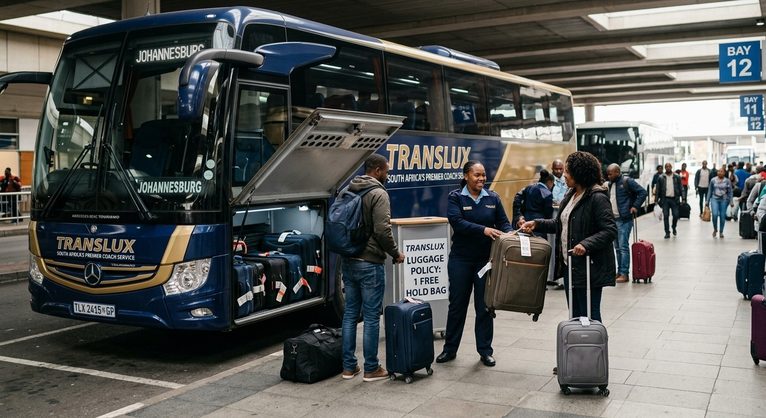
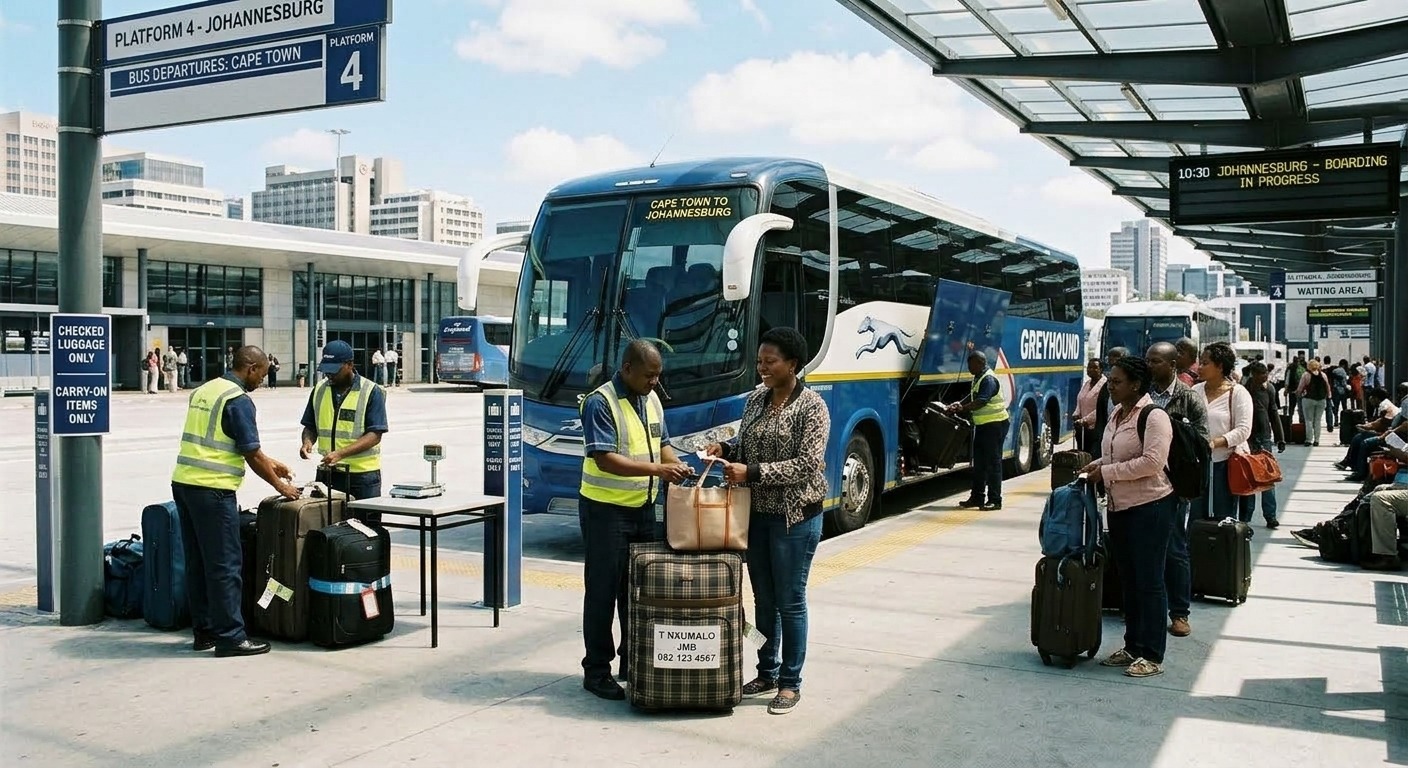
Greyhound includes free transportation of one small carry-on (duffle bag or backpack) and one stored bag with every ticket. Carry-on bags should fit under your seat or in the overhead compartment, while stored bags go in the baggage compartment. Extra or oversized bags cost between $21.99 and $44.99, depending on route and booking timing.
Few things ruin a trip faster than arriving at the station with a bag that doesn’t meet the rules, only to be hit with a surprise fee or forced to leave something behind. If you’re planning a Greyhound trip, understanding exactly what you can bring, how much it weighs, and what it’ll cost you if you go over the limit can save you both money and stress.
What Is Greyhound’s Baggage Policy?
Greyhound’s baggage policy includes free transportation of one small carry-on bag (duffle bag or backpack) and one stored bag per ticket. Your carry-on must fit under your seat or in the overhead bin, while your stored bag travels in the bus’s baggage compartment. Additional or oversized bags require advance booking and an extra fee.
Every Greyhound ticket comes with this baggage allowance built in, so there’s no need to pay extra just to bring a reasonably sized bag along. However, the free allowance only covers standard-sized baggage. If your bags are heavier, larger, or more numerous than the standard allowance, you’ll need to plan ahead and pay for the difference.
|
Baggage Type |
What’s Included |
Where It Goes |
|
Carry-on |
1 small duffle bag or backpack |
Under seat or overhead bin |
|
Checked/Stored |
1 stored bag |
Baggage compartment (loaded before boarding) |
|
Excess |
Additional bags beyond the free allowance |
Baggage compartment, subject to fees and space |
|
Bulky |
Oversized items exceeding standard dimensions |
Baggage compartment, subject to fees |
What Is the Greyhound Bus Luggage Size Limit?
Greyhound’s standard checked bag allowance covers a typical suitcase-sized stored bag, while carry-on items need to be compact enough to store under your seat or in the overhead compartment. Bags that exceed these dimensions are classified as bulky baggage and incur additional charges.
In practice, this means your carry-on should be no larger than a standard backpack or small duffle bag, something you could comfortably carry onto a plane as a personal item. Your checked bag has more room to work with, but it still has practical limits tied to the space available in the bus’s undercarriage compartment.
A useful way to think about it: if your bag wouldn’t fit comfortably in the trunk of a standard car alongside other passengers’ luggage, there’s a good chance it falls into bulky baggage territory and will cost extra.
What Is Greyhound’s Extra Baggage Fee?
Greyhound’s excess and bulky baggage fees range from $21.99 to $44.99 per bag, depending on the specific route, how far in advance you book, and the baggage compartment’s available space. Booking your extra bag online in advance is typically cheaper than paying at the station on the day of travel.
Because fees vary by route and demand, there’s no single flat rate that applies everywhere. Here’s a breakdown of the typical scenario:
- Booking in advance online: Generally the most cost-effective option, since you lock in a price before space runs out.
- Booking at a staffed station: Possible, but subject to availability and sometimes a higher walk-up rate.
- Booking last-minute via Manage My Booking: Convenient, but space constraints may limit your options the closer you get to departure.
Example scenario: Say you’re traveling with one free stored bag and one extra suitcase. If you book the extra bag online two weeks ahead, you might pay closer to the lower end of the 21.99–44.99 range. Wait until the day of travel, and you risk either paying the higher end of that range or finding there’s no compartment space left at all.
What Is a Greyhound Baggage Tag?
A Greyhound baggage tag is a label attached to your stored or checked bag that displays your name and contact information, helping staff and fellow travelers identify your luggage if it’s misplaced, delayed, or mixed up with another bag during transfers.
Labeling your bags isn’t just a suggestion, it’s one of the simplest ways to protect yourself against lost luggage. Greyhound recommends that your name, address, and phone number appear both on the outside of your bag and inside it. If you don’t have a tag handy, Greyhound provides a printable baggage tag you can fill out and attach before you travel.
This step matters most if you’re transferring between buses. Since you’re responsible for collecting and moving your own stored baggage at each transfer point, a clearly labeled bag makes it far easier to avoid confusion or accidental swaps on a busy platform.
What Counts as Greyhound Bulky Baggage?
Bulky baggage refers to any item exceeding Greyhound’s standard checked bag dimensions, including bicycles, golf clubs, skis, and similar oversized equipment. These items must be securely packed in a wood, canvas, or similarly sturdy container and are limited to one bulky bag per passenger, with an additional fee applied.
If you’re traveling with sports equipment or oversized gear, you’ll need to plan for both the packaging requirement and the extra cost. A bicycle, for instance, needs to be boxed or otherwise secured, not simply wheeled onto the bus. The same applies to ski equipment and golf clubs.
What qualifies as bulky:
- Bicycles (must be boxed or securely contained)
- Golf clubs
- Skis and ski poles
- Any item whose combined width, length, and height significantly exceeds standard baggage dimensions
What’s accepted as standard baggage (not bulky):
- Suitcases
- Backpacks
- Duffel bags
- Trunks
- Toolboxes
- Securely tied cardboard boxes
What’s not recommended as baggage at all:
- Plastic bags
- Paper bags
- Items sticking out of your baggage
Can You Bring Strollers, Car Seats, or Service Animals on Greyhound?
Yes. Greyhound transports strollers and car seats at no charge, and these items don’t count against your standard baggage allowance. Service animals are also permitted at no cost, though general pets are not allowed onboard under any circumstances.
Parents traveling with young children can bring a stroller in addition to their maximum baggage allowance, and a car seat in addition to their carry-on bag. This is a meaningful exception worth knowing about if you’re traveling with little ones, since it effectively gives you extra capacity without extra cost.
If you travel with a wheelchair or other walking aid, Greyhound has a separate accommodations process in place, and it’s worth checking those specific details ahead of your trip.
Can You Bring Tools or Toolboxes on Greyhound?
Yes. Toolboxes and tools, including power tools and mechanic’s tools for personal use, are permitted as standard checked baggage as long as they’re securely packed. They’re treated the same as any other stored bag and count toward your baggage allowance.
This is a detail that surprises a lot of travelers, especially those relocating for work or heading to a job site. As long as your tools are contained (not loose or sticking out of the bag) they’re treated like any other piece of luggage, subject to the same weight considerations and excess fees if they push you over your free allowance.
How Do You Book and Manage Extra Baggage?
You can add excess or bulky baggage either at the time of booking your ticket online or afterward through Manage My Booking. Staffed station locations also allow you to book and pay for extra baggage in person, though advance booking is strongly recommended since compartment space is limited.
Here’s the simplest way to approach it:
- At booking: Add your extra or bulky bag when you purchase your ticket online or through the app.
- After booking: Use Manage My Booking to add baggage later if your travel plans change.
- At the station: Pay in person if you’re departing from a staffed location, though this carries more risk of limited availability.
Because baggage space is finite and allocated on a first-booked basis, waiting until the last minute is the riskiest approach. If you know you’re traveling with more than the free allowance, lock it in as early as possible.
Frequently Asked Questions
How many free bags can you bring on Greyhound?
Greyhound includes one free carry-on (duffle bag or backpack) and one free stored bag with every ticket. Additional bags beyond this count as excess baggage and require an extra fee.
How much does Greyhound charge for an extra bag?
Excess and bulky baggage fees typically range from $21.99 to $44.99 per bag, depending on the route, booking timing, and available compartment space.
Is it cheaper to add baggage online or at the station?
Booking extra baggage online in advance is generally cheaper and more reliable than paying at the station, since compartment space can run out closer to departure.
Can you bring a bicycle on Greyhound?
Yes, but a bicycle is classified as bulky baggage. It must be securely boxed or contained and is limited to one bulky item per passenger, with an added fee.
Do strollers count against your baggage allowance?
No. Strollers and car seats travel free of charge and don’t count against your standard baggage allowance, making them an exception worth knowing if you’re traveling with children.
Are pets allowed on Greyhound buses?
No, general pets are not permitted. The only exception is service animals, which travel free of charge under Greyhound’s accessibility accommodations.
Can you pack power tools in your checked baggage?
Yes. Power tools and mechanic’s tools for personal use are allowed as standard checked baggage as long as they’re securely packed in a toolbox or similar container.
What happens if you lose your bag on a Greyhound trip?
Greyhound will assist in trying to locate lost baggage through a lost and found request, but the company disclaims liability for lost or damaged items, making a labeled baggage tag especially important.
Can you add extra baggage after you’ve already booked your ticket?
Yes. You can add excess or bulky baggage after booking through Manage My Booking, though earlier requests have a better chance of securing compartment space.
What items are not recommended for checked baggage?
Plastic bags, paper bags, and items sticking out of your baggage are discouraged, since they’re more prone to damage or getting caught during loading and transfers.

Azeem breaks down airline baggage policies, fare-class benefits, and peak pricing rules into practical guidance for smooth trip planning. He verifies every fee and dimension against official airline sources so travelers can pack with confidence.