Susi Air Baggage Policy: Allowance, Fees & Rules Explained
Susi Air gives every passenger one free carry-on bag (max 6kg, 30cm x 15cm x 10cm) and 10kg of free checked baggage. Anything heavier is charged a per-kilogram excess fee at check-in. Since Susi Air primarily operates small aircraft like the Cessna Grand Caravan and Pilatus Porter, its baggage limits are noticeably tighter than standard Indonesian carriers like Garuda or Lion Air.
Flying with Susi Air means flying into places most airlines can’t reach remote airstrips across Papua, Kalimantan, and the outer islands of Indonesia. But that access comes with a trade-off: smaller planes, stricter weight limits, and a baggage policy that catches a lot of first-time flyers off guard.
What is Susi Air’s baggage allowance?
Susi Air’s baggage allowance includes one free carry-on bag (up to 6kg) and 10kg of free checked baggage per passenger. Carry-on bags must fit within 30cm x 15cm x 10cm noticeably smaller than a standard airline’s cabin bag limit. Anything beyond these free allowances is charged per kilogram at check-in.
|
Baggage Type |
Free Allowance |
Size Limit |
|
Carry-on (cabin) |
6kg, 1 piece |
30cm x 15cm x 10cm |
|
Checked baggage |
10kg |
No published dimension cap |
|
Excess baggage |
Charged per kg |
N/A |
For context, most full-service Indonesian carriers (Garuda Indonesia, Batik Air) allow 20kg or more in checked baggage. Susi Air’s 10kg limit reflects the payload restrictions of its fleet aircraft like the Cessna Grand Caravan and Pilatus PC-6 Porter are built for short, rugged runways, not bulk cargo.
Practical example: If you’re traveling with a 15kg suitcase, you’ll pay excess baggage fees on 5kg. If you’re also carrying a 8kg backpack as your “carry-on,” expect that bag to be weighed and likely redirected to the cargo hold or charged as excess since it exceeds the 6kg cabin limit.
How much does Susi Air charge for excess baggage?
Susi Air charges excess baggage on a per-kilogram basis once you exceed the 10kg free checked allowance or the 6kg carry-on limit. Susi Air does not publish a fixed per-kg rate on its website; the fee is calculated at the check-in counter and can vary by route and aircraft type. Contact Susi Air’s call center for your specific route before flying.
Because Susi Air operates 20+ bases across remote parts of Indonesia, excess fees are calculated locally rather than through a centralized fare system. This is a key difference from major carriers, which typically publish flat per-kg excess rates in advance.
How to avoid surprise charges:
- Weigh your bags at home before heading to the airport
- Call Susi Air’s 24-hour call center (+62 811 211 3080 / +62 811 211 3090) to confirm the excess rate for your specific route
- Consolidate carry-on items into your checked bag if you’re already near the 10kg limit carrying less in the cabin reduces the risk of being charged twice
- Ask about weight restrictions for connecting flights, since combined baggage across multiple short-hop segments can trigger charges even if each leg seems within range
What are Susi Air’s carry-on baggage rules?
Susi Air allows one carry-on bag per passenger, capped at 6kg and 30cm x 15cm x 10cm in size. Oversized or overweight carry-on items are not allowed in the cabin they’ll either be moved to the checked baggage hold or refused for carriage entirely, so pack light and check dimensions before departure.
This size limit is smaller than most backpacks or standard cabin roller bags, so it catches many travelers off guard. A typical 20-liter daypack often exceeds Susi Air’s carry-on dimensions.
What typically fits:
- A small daypack or tote
- A laptop bag or camera case
- Personal items like documents, medication, and snacks
What usually doesn’t fit:
- Standard airline carry-on suitcases (these are built for 7-10kg limits, not 6kg)
- Full-size camera backpacks with tripods
- Surfboards or bulky sports gear (these fall under Susi Air’s separate Surfboard Policy)
What is Susi Air’s checked baggage policy?
Susi Air’s checked baggage policy includes a 10kg free allowance per passenger. Bags over this weight are charged per kilogram at check-in. Susi Air does not publish a maximum checked bag weight, but airport ground staff can refuse baggage that exceeds an aircraft’s total payload capacity a real risk on Susi Air’s smaller planes.
Unlike jet airlines, Susi Air’s payload isn’t just about your bag it directly affects flight safety on aircraft like the Pilatus Porter or Cessna Caravan, which carry limited fuel and passenger loads on remote strip runways. This is why Susi Air enforces its weight limits more strictly than larger carriers might.
Packing tips for the 10kg limit:
- Weigh luggage before you leave your accommodation, not just at the airport
- Pack heavier items (electronics, shoes) in your checked bag, lighter items in carry-on
- If traveling for extended work or research trips (common on Susi Air’s Papua routes), consider shipping non-urgent gear separately via Susi Air’s Freight Service
Does Susi Air have an international baggage policy?
Susi Air does not operate scheduled international routes, so there is no separate international baggage policy published by the airline. Susi Air is a domestic Indonesian carrier, though it offers charter flights to neighboring countries on request. Travelers needing charter service abroad should contact Susi Air directly, as baggage terms for charters are negotiated per booking.
This is an important distinction that many booking aggregators get wrong. Susi Air’s core business since its founding in 2004 has been connecting remote Indonesian communities across Java, Sumatra, Kalimantan, Sulawesi, Papua, Maluku, and Nusa Tenggara through scheduled and pioneer routes. International charter flights exist, but they follow custom terms set on a case-by-case basis rather than a standard published allowance.
If you need international charter service:
- Contact Susi Air’s charter team directly at charter@susiair.com or +62 811 211 1080
- Confirm baggage allowance, aircraft type, and any excess fees in writing before departure
- Note that charter aircraft (like the Piaggio P-180 Avanti or AgustaWestland helicopters) have different payload capacities than scheduled fleet aircraft, which affects allowable baggage
What items are prohibited on Susi Air flights?
Susi Air prohibits dangerous goods in both carry-on and checked baggage, following standard Indonesian aviation safety regulations. This includes flammable materials, compressed gases, corrosive substances, and other items classified as hazardous under IATA dangerous goods guidelines. Susi Air’s FAQ page maintains a dedicated “Dangerous Good(s)” section outlining specific restrictions.
Commonly restricted items include:
- Flammable liquids and aerosols
- Lithium batteries beyond standard consumer electronics
- Compressed gas canisters
- Corrosive chemicals or industrial samples (relevant for researchers flying to Papua)
Special item policies:
- Surfboards: Susi Air maintains a dedicated Surfboard Policy for surf travelers heading to remote breaks check with the call center for size and fee specifics before booking.
- Medical equipment: Given Susi Air’s role in medical evacuation and remote healthcare access, some medical devices may require advance declaration.
- Connecting flights: Susi Air’s “Baggage and Connecting Flight Policy” applies separately from single-leg trips baggage may need to be re-checked at transfer points, especially across different regional bases.
What is Susi Air’s check-in process?
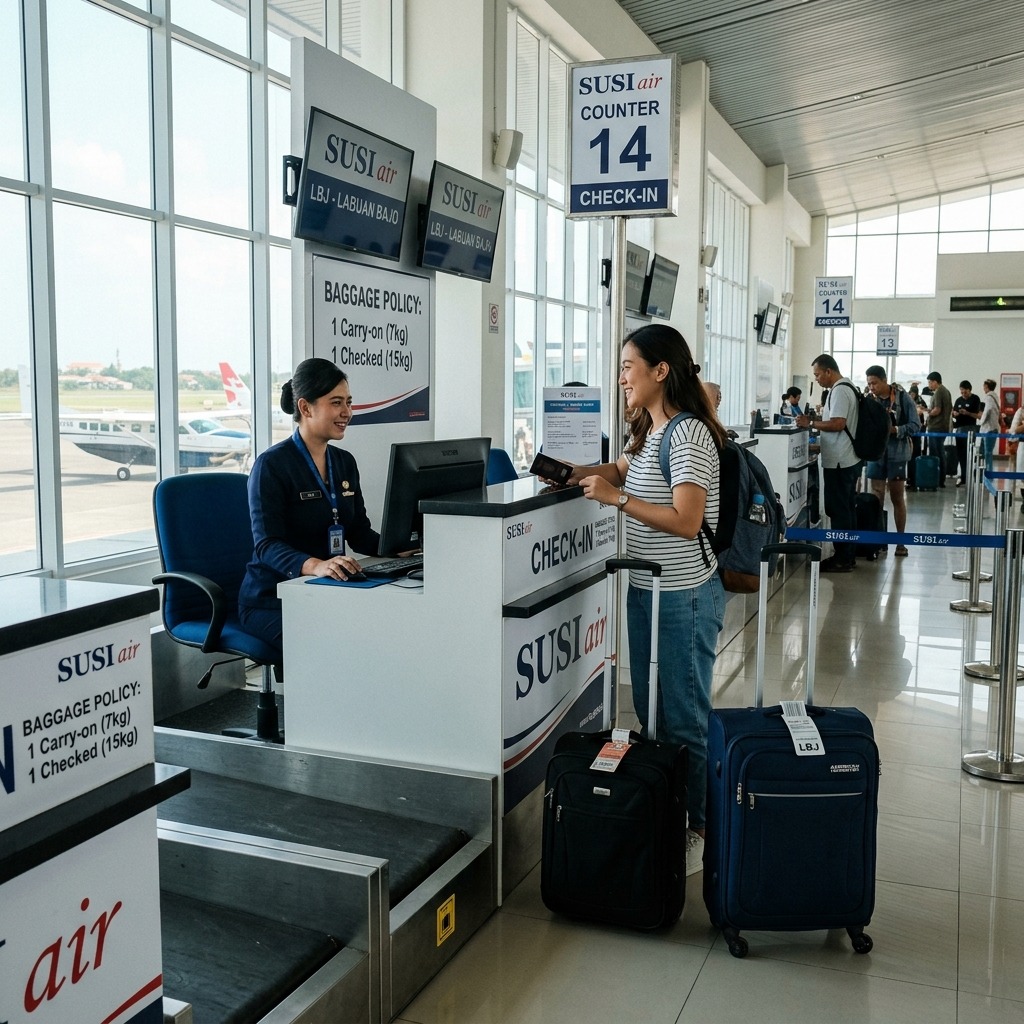
Susi Air does not offer online check-in. Passengers must check in at the airport counter, which opens 2 hours before departure and closes 30 minutes prior. You’ll need your e-ticket and the payment card used for booking (or a photocopy) failure to present these can result in denied boarding.
This manual process reflects the reality of flying into remote airstrips, many of which lack the infrastructure for digital check-in systems. Arriving early isn’t just a suggestion at smaller bases with limited staff, check-in queues can move slowly, and missing the 30-minute cutoff means missing your flight.
What is Susi Air’s flight schedule and route network?
Susi Air operates scheduled and charter flights to more than 150 destinations across Indonesia, making it one of the country’s largest regional route networks by airport count. Scheduled routes cover roughly 10+ major destinations, while charter service extends much further into remote areas across Papua, Kalimantan, and Sumatra.
|
Region |
Airports Served |
|
Papua Low Land |
341 |
|
Sumatera |
85 |
|
Kalimantan |
71 |
|
Papua High Land |
61 |
|
Java |
54 |
|
Sulawesi |
50 |
|
Nusa Tenggara Timur |
11 |
|
Maluku |
3 |
Susi Air’s head office and main operating base is in Pangandaran, West Java, with 20 operational bases spread across the archipelago. Key scheduled destinations include Medan, Jakarta (Halim Perdanakusuma), Sorong, Tarakan, and Jayapura.
Booking note: Because Susi Air serves so many small, remote airstrips, schedules can shift due to weather a real factor when flying into Papua’s highland airports. Confirm your flight status the day before departure, especially during rainy season.
Frequently Asked Questions
Is Susi Air’s baggage allowance the same on every route?
Susi Air’s published allowance (6kg carry-on, 10kg checked) applies system-wide, but excess baggage fees and enforcement can vary by base and aircraft type. Routes flown on smaller aircraft like the Pilatus Porter may have stricter enforcement than routes flown on larger aircraft like the LET-410.
Can I bring two carry-on bags on Susi Air?
No. Susi Air’s policy allows only one carry-on bag per passenger, capped at 6kg. A second bag would need to be checked and may incur excess baggage charges if it pushes you over the 10kg free checked limit.
Does Susi Air allow infants to bring baggage?
Susi Air’s standard baggage allowance excludes infants traveling on laps, based on the airline’s published passenger baggage terms. Contact the call center directly to confirm allowances for infant travel gear like car seats or strollers.
What happens if my bag is overweight at Susi Air check-in?
If your checked or carry-on baggage exceeds Susi Air’s free limits, you’ll be charged a per-kilogram excess fee at the counter. Oversized carry-on items may also be moved to the cargo hold instead of the cabin.
Can I check in online for Susi Air flights?
No. Susi Air does not offer online check-in. All passengers must check in at the airport counter, which opens 2 hours before departure and closes 30 minutes prior to takeoff.
Does Susi Air charge extra for surfboards?
Yes, surfboards fall under Susi Air’s separate Surfboard Policy, which applies different size and fee terms than standard checked baggage. Contact the airline directly for surfboard-specific rates before booking.
How many destinations does Susi Air fly to?
Susi Air serves more than 150 destinations when combining scheduled and charter routes, spanning Java, Sumatra, Kalimantan, Sulawesi, Papua, Maluku, and Nusa Tenggara making it one of Indonesia’s most extensive regional networks.
Does Susi Air fly internationally?
Susi Air does not operate scheduled international flights. It is a domestic Indonesian regional airline, though charter flights to neighboring countries can be arranged through its dedicated charter service.
What documents do I need for Susi Air check-in?
You need your e-ticket and the card used to make the booking (or a photocopy of it). Without these, Susi Air check-in staff may deny boarding, so bring both to the airport counter.
How much do Susi Air First Officers earn per month?
Based on recruitment data, First Officers at Java, Sumatra, and Kalimantan bases earn around IDR 850,000 per day, which translates to roughly IDR 17-25 million per month depending on flying days scheduled that month.

Azeem breaks down airline baggage policies, fare-class benefits, and peak pricing rules into practical guidance for smooth trip planning. He verifies every fee and dimension against official airline sources so travelers can pack with confidence.