Southwest Airlines Fuel Supply Crisis 2026
In spring 2026, Southwest Airlines shipped 12.6 million gallons of jet fuel from Houston to Los Angeles via the Panama Canal a first in the airline’s history. The move was a direct response to the 2026 Iran war–driven fuel crisis, which caused jet fuel prices to spike over 100% and is now pushing domestic airfares up by more than 23% year-over-year.
Southwest Airlines doesn’t do things by boat. The Dallas-based carrier runs an all-Boeing 737 fleet, operates the world’s largest such fleet at 800 aircraft, and has built its entire identity around lean, fast, point-to-point domestic flying. So when Southwest CFO Tom Doxey told CNBC in July 2026 that the airline had hired a ship to haul jet fuel through the Panama Canal to Los Angeles the first time it had ever done so it wasn’t a logistics footnote. It was a signal.
The 2026 aviation fuel crisis, triggered by the U.S.–Israel military strikes on Iran in February 2026, has rattled global supply chains and exposed just how fragile the airline industry’s fuel infrastructure really is. For travelers, the consequences are already showing up in ticket prices, baggage fees, and route cuts. And according to analysts, they’re not going anywhere soon.
What Exactly Did Southwest Do and Why?
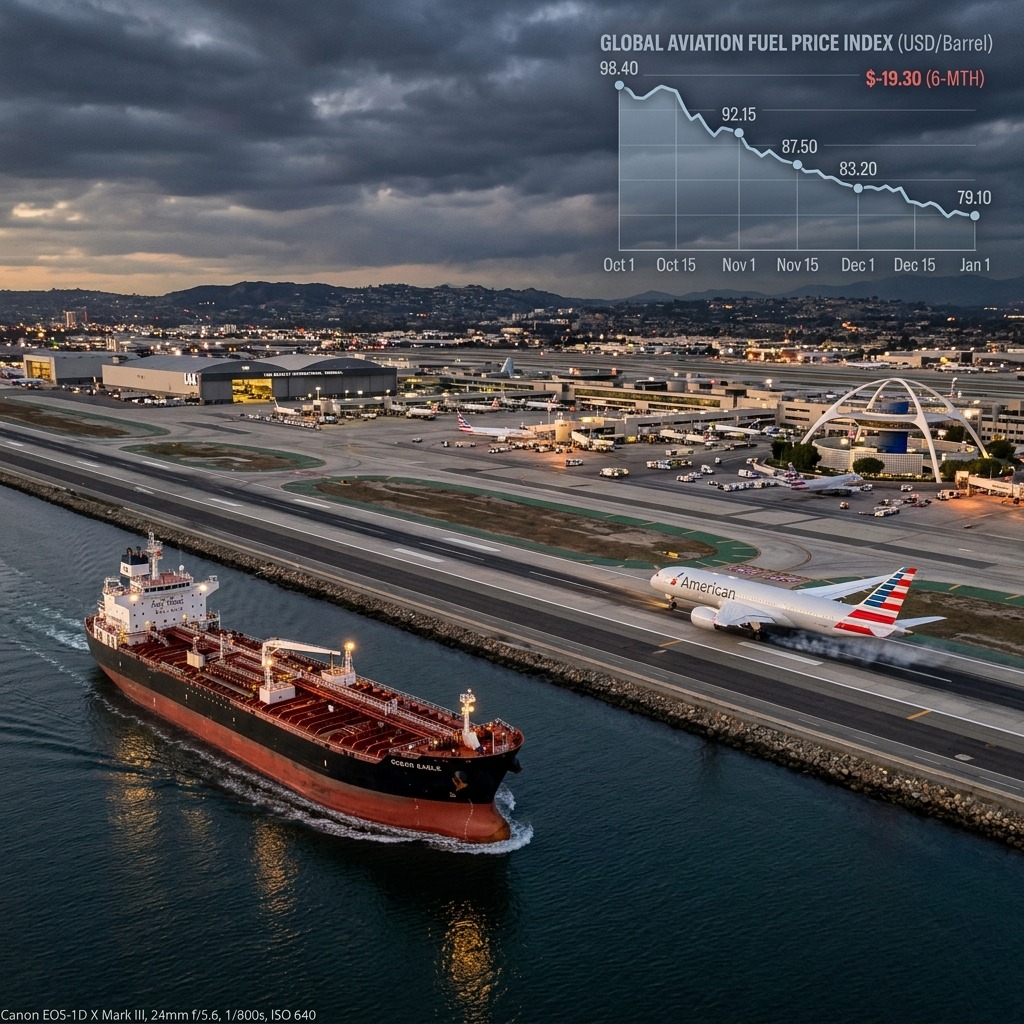
Southwest Airlines hired a tanker vessel in spring 2026, loaded it with 12.6 million gallons of jet fuel in Houston, and routed it through the Panama Canal to Los Angeles. The ship arrived at the Port of Los Angeles on May 28, 2026. To do it legally, Southwest needed a waiver of the Jones Act a 1920 federal law requiring shipments between U.S. ports to use U.S.-flagged vessels. President Trump waived that requirement in March 2026 as fuel prices surged in the weeks following the start of the Iran war.
“It brought like a week’s supply to the West Coast at a time when supply was most constricted,” CFO Tom Doxey told CNBC “when it was most at risk.”
For context: Southwest used 564 million gallons of jet fuel in Q2 2026 alone. The boat shipment covered roughly one percent of quarterly needs. But the point wasn’t scale it was contingency planning at a moment when West Coast fuel availability was genuinely uncertain.
What Caused the 2026 Fuel Crisis?
The 2026 jet fuel crisis stems from a convergence of three simultaneous pressures: a geopolitical shock, a structural supply chain weakness, and the long-term abandonment of hedging practices by most major U.S. airlines.
The Iran war and Strait of Hormuz disruption
When the U.S. and Israel struck Iran in February 2026, shipping through the Strait of Hormuz the narrow channel through which approximately 20% of the world’s oil normally flows became severely restricted. Jet fuel prices responded immediately. According to the Eno Center for Transportation, U.S. jet fuel prices climbed from $2.50 per gallon in late February to $4.88 per gallon by early April 2026, a 103% increase in under six weeks.
West Coast refinery dependency
The U.S. West Coast is significantly more dependent on imported petroleum than other regions. California, in particular, has limited pipeline connectivity to Gulf Coast refineries, making airports like LAX, OAK, and SAN disproportionately exposed when international supply chains tighten. Southwest’s heavy California presence made this structural vulnerability acutely personal.
The end of fuel hedging
For most of the past decade, U.S. airlines have largely abandoned fuel hedging the practice of locking in fuel prices via futures contracts months in advance. When domestic supply was abundant and prices were stable, hedging seemed unnecessary. In 2026, that decision is costing the industry billions. Southwest, ironically, was once the most celebrated fuel hedger in U.S. aviation history.
|
Cause |
Impact |
|
Iran war / Strait of Hormuz closure |
Jet fuel up 103% (Feb–Apr 2026) |
|
West Coast refinery dependency |
LAX, OAK, SAN most affected |
|
Airlines abandoned fuel hedging |
No cost protection for 2026 price spike |
|
Countries restricting fuel exports |
Global supply further constrained |
How Much Has Jet Fuel Spiked in 2026?
The scale of the price movement is hard to overstate. U.S. jet fuel prices surged from approximately $2.50 per gallon pre-war to a peak of nearly $5.00 per gallon in April 2026. By late June, prices had eased to around $2.87 per gallon as the Strait of Hormuz partially reopened but that’s still well above pre-crisis levels, and tensions with Iran reignited in July, pushing prices up again.
|
Period |
U.S. Jet Fuel Price (per gallon) |
|
Pre-war (late February 2026) |
~$2.50 |
|
Early April 2026 (peak) |
~$4.88 |
|
Late June 2026 |
~$2.87 |
|
Southwest Q2 2026 average |
$3.92 |
|
United Airlines Q3 2026 estimate |
Highly volatile; guidance withdrawn |
Southwest reported that its fuel expenses increased by approximately $889 million in Q2 2026 compared to the same quarter in 2025. United Airlines projected a $575 million fuel cost increase representing a $1.12 hit to adjusted earnings per share for Q3 2026 alone.
Which Airlines Are Most Affected by the Fuel Crisis?
Not all carriers face the same exposure. Geography, fleet efficiency, route mix, and financial reserves all shape how hard a fuel shock hits.
Southwest Airlines is among the most exposed U.S. carriers due to its heavy California presence (LAX, OAK, SAN), its all-737 fleet structure, and the fact that it no longer hedges fuel. The company’s Q2 2026 results reflected the full weight of this exposure: fuel expenses rose nearly $900 million year-over-year, and the airline cut its full-year profit outlook.
United Airlines operates more international routes than any other U.S. carrier, giving it broader fuel exposure but also more pricing power on premium cabins. United publicly announced both fare increases and a 5% cut to its Q2/Q3 schedule. The airline anticipates oil prices above $100 per barrel through the end of 2027.
American Airlines estimated a $400 million increase in Q1 2026 fuel costs and has since raised its checked baggage fee twice, with the most recent hike occurring on May 18.
Budget carriers face the sharpest structural threat. Low-cost airlines operate on the thinnest margins, and their passengers are most sensitive to price increases. Spirit Airlines ceased operations entirely in early 2026 partly a casualty of sustained cost pressure. Frontier raised its checked baggage fee from $35 to $79 (a $44 increase), far outpacing any legacy carrier.
|
Airline |
California Exposure |
Hedging? |
Q2 2026 Fuel Impact |
|
Southwest |
High (LAX, OAK, SAN) |
No |
+$889M vs. prior year |
|
United |
Moderate (international hub) |
No |
+$575M Q3 estimate |
|
American |
Moderate |
No |
+$400M Q1 estimate |
|
Delta |
Lower (Atlanta-hub focused) |
No |
Significant but offset by premiumization |
|
Frontier |
Variable |
No |
Raised bag fees 126% |
What Is Southwest Airlines’ 2026 Strategy?
Southwest Airlines is simultaneously managing a fuel crisis and executing one of the most significant business transformations in its 50-year history.
Under pressure from activist investor Elliott Management, Southwest has shifted to a hybrid business model. Key changes rolling out in 2026 include:
- Assigned seating: Launched in the first half of 2026, reversing the airline’s signature open-seating policy. CEO Robert Jordan cited research showing 80% of customers and 86% of potential customers preferred assigned seats.
- End of “bags fly free”: Southwest’s most famous perk is gone. Checked bag fees are now $45 (first bag) and $55 (second bag), matching most legacy carriers.
- Overnight “redeye” flights: Expanded to maximize aircraft utilization.
- Premium cabin options: Part of the broader premiumization strategy to grow revenue per seat.
The airline is also undergoing a point-to-point network review, with some underperforming routes reduced or suspended to manage fuel burn during the crisis period.
Is Southwest Airlines in Trouble?
Southwest Airlines is under real financial pressure, but it is not in a crisis comparable to ultra-low-cost carriers like Spirit. The airline reported Q2 2026 adjusted earnings of 94 cents per share nearly double the analyst consensus estimate of 51 cents. That beat came despite the fuel cost surge, suggesting the transformation strategy is generating operating improvements.
Still, Southwest cut its full-year profit outlook, and CFO Tom Doxey acknowledged publicly that West Coast fuel supply “was most at risk” during the spring months. The boat shipment itself is evidence that Southwest is managing the crisis actively rather than reactively.
The bigger question for Southwest is whether it can complete its strategic reinvention assigned seating, premium options, baggage fees while simultaneously absorbing $889 million in additional fuel costs in a single quarter.
Who Is Southwest’s Biggest Competitor in 2026?
Southwest Airlines’ biggest direct competitor in the domestic U.S. market is Delta Air Lines. Delta ranked as America’s most popular airline in 2026 per customer satisfaction surveys, and it has led the industry’s premiumization trend with products like Basic Business fares and expanded lounge access. Delta’s Atlanta hub focus gives it slightly lower California fuel exposure relative to Southwest, though it is not immune to the 2026 cost environment.
United Airlines is Southwest’s primary competitor on transcontinental routes and in the premium cabin segment, while American Airlines competes heavily across the mid-continent domestic network.
What Does This Mean for Your Airfare?
The short answer: prices are already higher, and they are expected to remain elevated.
According to data from airfare search engine Skiplagged, domestic flight prices rose 23.2% from March 2025 to June 2026. International flight costs rose a comparatively modest 11.5% over the same period. Global airfares averaged $461 in June 2026, up 10.8% year-over-year according to OAG Aviation data.
“As someone looking for air travel, you can expect prices to be high and stay high for the near term,” Christopher Anderson, a Cornell University professor of services management who studies the airline industry, told Fortune in June 2026. “It’s not like air travel is going to get insanely inexpensive anytime soon.”
The reasons domestic fares have risen faster than international ones are partly counterintuitive. Airlines have been cutting domestic capacity to protect margins, reducing competition for seats on shorter routes. Spirit’s exit removed a major source of budget pricing pressure. And several carriers including American suspended or scaled back select domestic routes during peak summer.
How have baggage fees changed in 2026?
Beyond base ticket prices, airlines have transferred fuel costs directly into ancillary fees. Most major U.S. carriers raised checked baggage fees by approximately $10 per bag in early 2026.
|
Airline |
1st Bag (2025) |
1st Bag (2026) |
Increase |
|
American Airlines |
$35 |
$45 |
+$10 (raised twice) |
|
Delta Air Lines |
$35 |
$45 |
+$10 |
|
United Airlines |
$35 |
$45 |
+$10 |
|
Southwest Airlines |
Free |
$45 |
New fee |
|
Frontier Airlines |
$35 |
$79 |
+$44 |
Southwest’s shift from free bags to $45 represents the most dramatic change for its customer base a fundamental break from the brand promise that defined the airline for decades.
Southwest Airlines Fuel Efficiency and Sustainability in 2026
Southwest’s all-Boeing 737 fleet gives it a structural fuel efficiency advantage over carriers operating diverse fleets of older, less efficient aircraft. The 737 MAX variants Southwest has been adding to its fleet deliver roughly 14% better fuel efficiency than the classic 737-800 models they replace.
On the sustainability front, Southwest has previously explored sustainable aviation fuel (SAF) partnerships. Demand for SAF is accelerating industry-wide in 2026 as the price gap between crude-based jet fuel and synthetic alternatives narrows. According to the Eno Center for Transportation, European airline usage of SAF has already tripled in 2025 due to the EU’s 2% blending mandate, and the Iran war has intensified commercial interest in supply chain diversification.
How to Protect Your Travel Budget Right Now
Book early. Airline executives from Delta, American, and United have all signaled that elevated fares are expected to persist through at least the rest of 2026. Booking now for fall and winter travel locks in current pricing before further increases.
Be flexible on dates and routes. Mid-week flights (Tuesday, Wednesday) and departures from secondary airports often carry lower base fares. For California travel specifically, consider Sacramento (SMF) or Long Beach (LGB) as alternatives to LAX.
Use airline credit cards strategically. Cobranded airline cards typically waive the first checked bag fee for the cardholder and companions on the same reservation. On a family of four round trip, that’s as much as $360 saved at current bag fee rates.
Book bags online in advance. Most airlines charge $5–$10 more per bag when paid at the airport versus online at booking.
Consider travel insurance. As fuel supply disruptions continue, operational delays and route suspensions are more likely than in typical years. A policy covering trip interruption and delay reimbursement is worth the cost in 2026’s environment.
Watch for fare sales on international routes. Domestic prices have risen faster than international fares. If you have flexibility, transatlantic or transpacific routes may offer relatively better value this summer.
What Happens Next for the Aviation Fuel Market?
Industry consolidation among smaller carriers is the most likely near-term structural change. Spirit’s exit has already removed one major budget competitor. Analysts watching Frontier’s dramatically escalating ancillary fees suggest the carrier may face similar financial pressure if fuel costs remain elevated.
Regulatory attention to pricing is another variable. If fare increases continue outpacing inflation significantly, consumer advocates and congressional oversight could pressure carriers to disclose fuel surcharges more transparently.
Longer term, the 2026 crisis is accelerating investment in refinery diversification, pipeline infrastructure for the West Coast, and SAF supply chains. United Airlines’ forecast that oil prices will remain above $100 per barrel through end of 2027 suggests the industry isn’t expecting a quick return to pre-war conditions.
Frequently Asked Questions
Why did Southwest ship jet fuel to LA by boat in 2026?
Southwest Airlines shipped 12.6 million gallons of jet fuel from Houston to Los Angeles via the Panama Canal in spring 2026 because the Iran war disrupted Strait of Hormuz oil shipments, creating acute supply shortages on the U.S. West Coast. California’s limited pipeline connectivity to Gulf Coast refineries made it especially vulnerable. Southwest used a Jones Act waiver to complete the shipment legally.
How much did jet fuel prices increase in 2026?
U.S. jet fuel prices rose 103% from late February to early April 2026, climbing from approximately $2.50 per gallon to $4.88 per gallon. Prices eased to around $2.87 per gallon by late June as the Strait of Hormuz partially reopened, but Southwest’s Q2 2026 average fuel cost was still $3.92 per gallon well above 2025 levels.
How much more are domestic airfares in 2026 vs. 2025?
According to Skiplagged airfare data, domestic U.S. flight prices rose 23.2% from March 2025 to June 2026. Global airfares averaged $461 in June 2026, up 10.8% year-over-year per OAG Aviation. Domestic fares have risen faster than international fares due to capacity cuts and the exit of Spirit Airlines.
Why did Southwest end its “bags fly free” policy?
Southwest ended its free checked baggage policy in 2026 under pressure from activist investor Elliott Management as part of a broader revenue strategy overhaul. The airline now charges $45 for the first checked bag and $55 for the second, matching most legacy carriers. Some fare classes and Rapid Rewards cardholders still receive free bags.
Is Southwest Airlines at risk of financial failure in 2026?
No. Southwest reported Q2 2026 adjusted earnings of 94 cents per share, nearly double the analyst estimate of 51 cents, despite $889 million in additional fuel costs. The airline faces real pressure but is not in the same precarious position as Spirit Airlines, which ceased operations earlier in 2026.
Which U.S. airline has the most fuel risk exposure in 2026?
Southwest Airlines has particularly high fuel exposure in 2026 due to its heavy California presence (LAX, OAK, SAN), lack of fuel hedging, and West Coast fuel supply vulnerability. United Airlines has broader international exposure, and budget carriers like Frontier face existential margin pressure given their thinner financial reserves.
Do any U.S. airlines still hedge fuel in 2026?
No major U.S. airline currently hedges fuel. Most carriers abandoned the practice over the past decade when domestic supply was abundant and prices were stable. Southwest was historically the most celebrated fuel hedger in U.S. aviation, locking in fuel costs up to a decade in advance but the airline had largely exited those positions before the 2026 crisis hit.
Will domestic airfares come down in late 2026 or 2027?
Cornell aviation professor Christopher Anderson told Fortune in June 2026 that travelers “can expect prices to be high and stay high for the near term.” United Airlines expects oil to remain above $100 per barrel through end of 2027. While jet fuel prices have eased from April peaks, airlines are slow to add capacity back, meaning fewer available seats will sustain higher fares.
Should I buy travel insurance for 2026 flights given the fuel crisis?
Yes. Travel insurance covering trip interruption, cancellation, and delay reimbursement is a higher-value purchase in 2026 than in typical years. Route suspensions (American cut six domestic routes in August–September), operational delays tied to fuel logistics, and broader geopolitical instability all increase the probability of flight disruptions.
How do baggage fee increases relate to the 2026 fuel crisis?
Airlines use ancillary fees primarily checked bag charges as a mechanism to recover fuel costs without raising base fares that appear in price comparison searches. All six major U.S. carriers raised checked bag fees in 2026, with most increasing from $35 to $45 for the first bag. Frontier raised its first bag fee by $44, from $35 to $79. Southwest, which previously charged nothing, now charges $45.

Muhammad Naeem is a travel researcher with 5+ years of experience analyzing airline rules and global travel regulations. He specializes in simplifying complex airline policies to help travelers avoid extra fees and fly with confidence. His work focuses on accuracy, clarity, and up to date information across international carriers.