Boeing 737 MAX 10 Delay: How Airbus Won United Airlines Over
United Airlines has pivoted toward Airbus A321neo aircraft after nearly a decade of waiting for Boeing’s 737 MAX 10, which remains uncertified as of mid-2026. Persistent engine de-icing certification hurdles, compounded by post-crash regulatory scrutiny, have cost Boeing its competitive edge and United’s confidence.
United Airlines committed to buying 100 Boeing 737 MAX 10s back in 2017. By mid-2026, it hasn’t received a single one. That’s not a supply chain hiccup. That’s a structural failure of trust and United’s boardroom has responded accordingly.
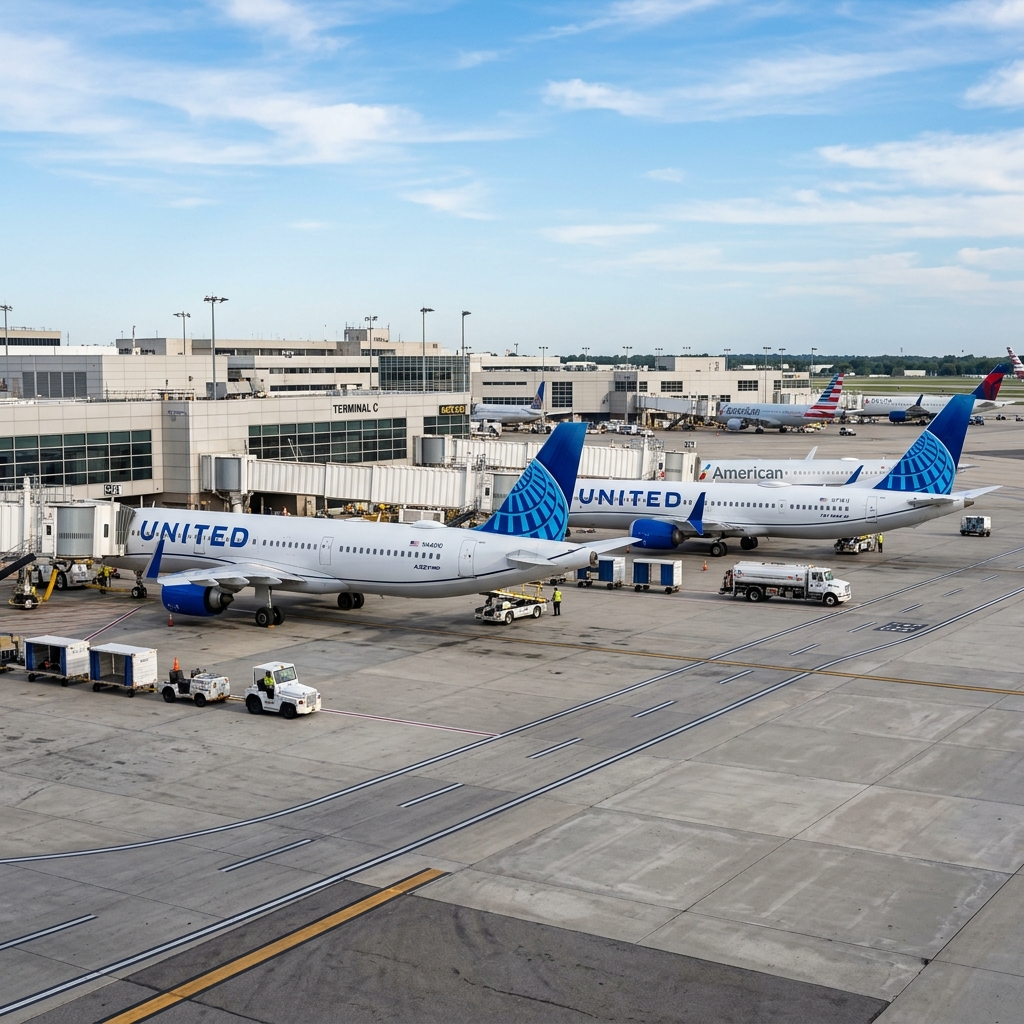
As Boeing continues to chase FAA and EASA certification for its largest narrowbody, United has steadily shifted its order portfolio toward the Airbus A321neo, converting MAX 10 commitments to MAX 9s and expanding its Airbus acquisitions. The airline ordered 50 A321XLRs as early as December 2019 long before the certification chaos reached its current pitch and has only deepened that Airbus relationship since.
What Happened to Boeing’s 737 MAX Program?
The Boeing 737 MAX’s troubled history began with two fatal crashes that grounded the entire fleet worldwide. On October 29, 2018, Lion Air Flight 610 crashed shortly after takeoff, killing all 189 people on board. Less than five months later, on March 10, 2019, Ethiopian Airlines Flight 302 crashed under near-identical circumstances, killing all 157 passengers and crew.
Both crashes were linked to MCAS the Maneuvering Characteristics Augmentation System a flight control software that was poorly designed and inadequately disclosed to pilots. Regulators around the world grounded all 737 MAX variants in March 2019. Boeing’s CEO was subsequently ousted. The FAA, whose oversight had drawn intense public criticism, overhauled its certification processes entirely.
The MAX returned to service in November 2020 after extensive MCAS redesigns. But the regulatory relationship between the FAA and its international counterparts particularly EASA had fundamentally changed. Certification, going forward, would take longer and demand more documentation. The MAX 10 has borne the full weight of that new reality.
Why Is Boeing’s 737 MAX 10 Certification Delayed?
Boeing’s 737 MAX 10 certification has been delayed primarily due to an unresolved engine de-icing (anti-icing) issue affecting the CFM LEAP-1B engine, combined with heightened post-crash FAA scrutiny that slowed the entire certification process. As of June 2026, both the FAA and EASA have signaled they are in the final stages of approval.
Boeing launched the 737 MAX 10 on June 19, 2017. The aircraft made its first flight on June 18, 2021. Certification was originally expected in 2023 it hasn’t happened yet.
The Boeing 737 MAX 10 Delay Timeline
|
Year |
Key Event |
|
2017 |
Boeing launches 737 MAX 10 to compete with Airbus A321neo; United orders 100 aircraft |
|
2019 |
First fuselage arrives at Renton; MAX fleet grounded worldwide after two fatal crashes |
|
2021 |
737 MAX 10 completes first flight (June 18) from Renton to Moses Lake |
|
2022 |
FAA certification deadline (Dec. 27) passes; Boeing contests new “flight crew alerting system” requirement |
|
2023 |
Certification originally expected; delayed further due to engine de-icing issue |
|
2024 |
Boeing finds partial fix for one of two de-icing problems (reported May 2024, Forbes); date slips again |
|
2025 |
Certification expected but not achieved; FAA output described as “critically constrained” |
|
Mid-2026 |
FAA and EASA declare final stages of certification; MAX 10 expected before end of 2026 |
What Are the Challenges Delaying Boeing 737 MAX 10 Certification?
The core certification challenge for the 737 MAX 10 centers on an engine anti-icing system deficiency in the CFM LEAP-1B engine, which poses risks in icing conditions. Beyond the de-icing issue, Boeing also had to develop an enhanced synthetic angle-of-attack (eAOA) sensor and a redesigned semi-levered landing gear both new to the 737 platform extending FAA testing requirements.
The specific hurdles Boeing has had to clear include:
- Engine de-icing fix: The LEAP-1B engine had two identified de-icing problems; Boeing resolved one by May 2024 but the second delayed certification further
- Flight crew alerting system: A December 2022 FAA rule required new transport aircraft to carry this system; Boeing successfully argued the MAX 10 should be exempt to preserve cockpit commonality with the rest of the MAX family
- Enhanced AoA (eAOA): A synthetic angle-of-attack sensor computing data from five existing aircraft systems, demanded by EASA after the crashes to compensate for the 737 having only two AoA probes
- Semi-levered landing gear: Required because lengthening the fuselage risked tail strikes; the gear telescopically extends up to 241mm on rotation, fitting within the existing wheel well
As of June 17, 2026, FAA Deputy Administrator Chris Rocheleau described the remaining certification work as largely “dotting i’s and crossing t’s” (Reuters). EASA Executive Director Florian Guillermet confirmed validation was “a top priority,” with only weeks of document processing remaining under the current schedule.
What Did Boeing Do to Fix the 737 MAX?
Boeing fixed the 737 MAX primarily by redesigning MCAS to accept dual angle-of-attack sensor inputs, limiting its authority, and requiring pilot override capability. For the MAX 10 specifically, Boeing also developed the eAOA synthetic sensor, a new semi-levered landing gear, an improved wing for low-speed drag reduction, and enhanced overspeed/stall warning inhibit switches.
Key post-crash and MAX 10-specific fixes:
- Revised MCAS software using Mid Value Select (MVS) from both AoA probes, eliminating single-sensor dependence
- Synthetic eAOA sensor that cross-checks data from five existing systems
- Modified wing for improved low-speed performance
- Improved flap design enabling more approaches and landings at Flaps 40
- Autoland certified for lower landing flap settings to improve icing-condition go-around performance
- Modified aft pressure bulkhead (lighter design)
When Was the Boeing 737 MAX 10 Announced, and Is It in Service Yet?
Boeing announced the 737 MAX 10 on June 19, 2017, at the Paris Air Show. As of July 2026, the aircraft has not entered commercial service. No airline in the world has yet received a 737 MAX 10 for revenue operations. FAA certification is expected before the end of 2026, per FAA Administrator Bryan Bedford’s May 2026 statement.
Why Does the 737 MAX Take So Long to Start?
A content gap competitors frequently miss: the 737 MAX uses pneumatic engine starting, unlike some newer aircraft that feature electric starts. The LEAP-1B engine requires a bleed air sequence from the APU or ground air source, which takes longer than electronic engine control (EEC) starts. Combined with post-grounding procedural additions new crew alerts, updated checklists, and MCAS confirmation steps pre-departure startup times on the MAX family are noticeably longer than on pre-MAX 737s.
Boeing 737 MAX 10: Capacity and Dimensions
The 737 MAX 10 is Boeing’s largest narrowbody, designed to match the Airbus A321neo in passenger count while promising lower operating costs. Understanding its dimensions clarifies why United originally wanted it and why delays proved so costly.
|
Specification |
Boeing 737 MAX 10 |
|
Length |
43.8 m / 143 ft 8 in |
|
Max single-class capacity |
230 passengers |
|
Typical two-class capacity |
189 passengers |
|
Range |
3,215 nm |
|
Engine |
CFM LEAP-1B |
|
Max takeoff weight |
~92,000 kg |
|
Landing gear |
Semi-levered (extends 241mm on rotation) |
The MAX 10 is 66 inches or two seat rows longer than the MAX 9, giving it 12 additional seats in single-class configuration. However, its two-class capacity of 189 passengers still falls four seats short of the A321neo’s two-class layout.
How Does the Airbus A321neo Compare to the Boeing 737 MAX 10?
The Airbus A321neo outperforms the Boeing 737 MAX 10 on range, two-class passenger capacity, cabin width, and fuel efficiency per seat while offering a wider choice of engines and a longer-proven production history. For airlines prioritizing large-volume narrowbody routes, the A321neo’s combination of capacity and range gives it a structural advantage.
|
Specification |
Airbus A321neo |
Boeing 737 MAX 10 |
|
Length |
44.51 m |
43.8 m |
|
Max cabin width |
3.70 m |
~3.53 m |
|
Typical two-class seating |
180–220 |
~189 |
|
Max single-class seating |
244 |
230 |
|
Range |
4,000 nm |
3,215 nm |
|
Fuel burn vs. prior gen |
20% lower per seat |
Comparable |
|
Engine options |
CFM LEAP-1A or P&W GTF |
CFM LEAP-1B only |
|
Certification status (July 2026) |
Fully certified and in service |
Pending |
|
Max takeoff weight |
97.0 tonnes |
~92.0 tonnes |
Passenger experience note: The A321neo’s wider fuselage (3.95 m vs. the 737’s ~3.76 m) translates to marginally more shoulder room per seat in economy a small but meaningful differentiator on routes over three hours.
What Is United Airlines’ Fleet Strategy for 2026 and Beyond?
United Airlines’ fleet strategy centers on bridging a capacity gap created by Boeing’s delays, using Airbus A321neos and A321XLRs alongside continued Boeing 737 MAX 8 and MAX 9 deliveries. The airline plans to retire 80 older aircraft by 2027, requiring a steady flow of replacement narrowbodies that Boeing has been unable to guarantee.
United’s strategic position:
- Originally committed to 100 Boeing 737 MAX 10s in 2017 as a replacement for 737-900 and 737-900ER variants
- Ordered 50 Airbus A321XLRs in December 2019, initially as a range play rather than a Boeing substitute
- Has since converted a portion of MAX 10 orders to MAX 9s and expanded its Airbus order book
- Scheduled to receive 55 new Boeing 737 MAX aircraft across all variants in 2026
- Is introducing new seating configurations on A321XLRs to strengthen passenger appeal on competitive routes
United’s historical Boeing alignment stems from its 2010 merger with Continental Airlines, which left it with one of the world’s largest 737 fleets. Abandoning that commonality entirely would carry significant training and maintenance cost implications so the airline isn’t walking away from Boeing. It’s diversifying, reducing its exposure to any single manufacturer’s delivery risk.
What Can Passengers Expect When Flying the A321neo Instead?
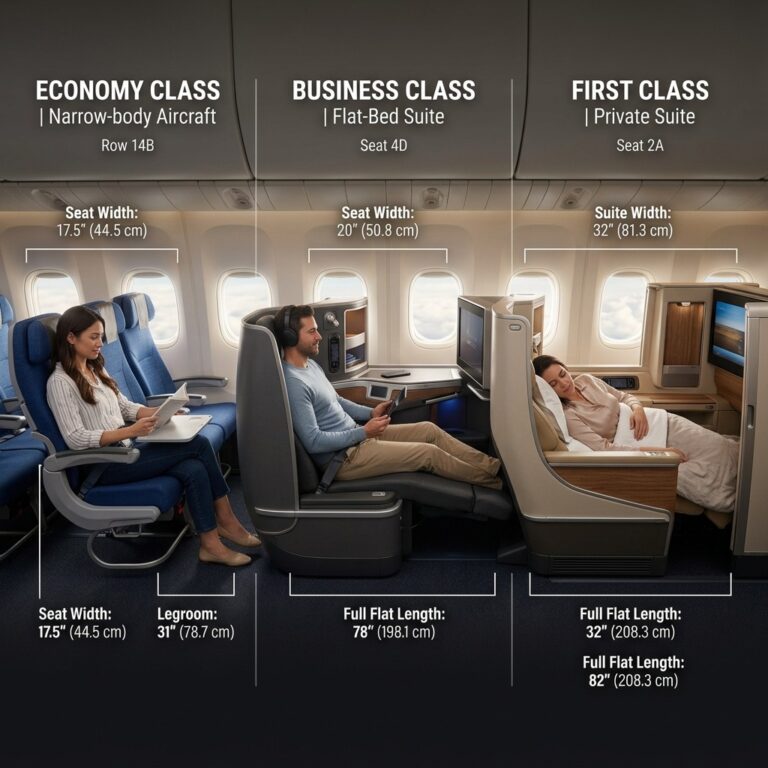
Passengers who previously might have flown a MAX 10 will notice several A321neo cabin advantages: Airbus’s Airspace interior features larger overhead bins, customizable LED lighting, wider window bezels, and fractionally more shoulder room in economy. On United’s A321XLR routes, new cabin configurations add further differentiation against competitors.
Practical passenger differences:
- Overhead bin space: A321neo’s Airspace cabin offers the largest overhead bins in its class for single-aisle jets
- Cabin ambiance: Full LED customizable lighting vs. standard LED on the MAX
- Seat width: A321neo’s wider fuselage typically allows for slightly broader economy seats
- Range: A321XLR can operate routes up to 4,700 nm nonstop routes no MAX 10 could serve
What Does United’s Shift Mean for the Broader Market?
United’s Airbus pivot matters beyond one airline’s fleet plan. It signals to the entire narrowbody market that delivery certainty now outweighs brand loyalty. Airbus already dominates U.S. narrowbody orders among United’s peers American Airlines is the world’s largest A320-family operator, and Delta has placed substantial A321 orders. United’s move accelerates that alignment and increases pressure on Boeing to stabilize not just its quality processes but its certification timelines.
Boeing, for its part, is focused on production stability at Farnborough 2026 rather than new order capture a telling shift in posture for a manufacturer that historically led airshow order books.
The broader dynamic: Boeing has lacked a direct A321-class competitor since discontinuing the 757 in 2004. The MAX 10 was designed to close that gap. Every year it remains uncertified, Airbus consolidates its large single-aisle dominance.
Frequently Asked Questions
Has United Airlines canceled all its Boeing 737 MAX 10 orders?
No. United has not fully canceled its MAX 10 orders, but has gradually converted some commitments to the MAX 9 and expanded its Airbus A321neo order book as a hedge against continued delays. As of mid-2026, the MAX 10 remains on United’s fleet roadmap.
When is the Boeing 737 MAX 10 expected to receive FAA certification?
The FAA expects to certify the MAX 10 before the end of 2026. FAA Administrator Bryan Bedford stated in May 2026 that the MAX 7 was expected to receive certification by summer 2026, with the MAX 10 following before year-end.
What caused the Boeing 737 MAX 10 certification delays?
Two primary causes: an unresolved engine anti-icing deficiency in the CFM LEAP-1B engine, and heightened post-crash FAA and EASA scrutiny that required extensive additional testing and documentation for all new 737 MAX variants.
How many seats does the Boeing 737 MAX 10 have compared to the A321neo?
The 737 MAX 10 seats up to 230 passengers in single-class layout and around 189 in two-class. The A321neo seats up to 244 in high-density configuration and 180–220 in typical two-class four more than the MAX 10 in two-class.
How much greater is the A321neo’s range compared to the 737 MAX 10?
The A321neo has a range of approximately 4,000 nm, while the 737 MAX 10’s range is approximately 3,215 nm a difference of roughly 785 nm, or about 1,450 km. The A321XLR variant extends range further to 4,700 nm.
Why did United Airlines originally order the Boeing 737 MAX 10 in 2017?
United committed to 100 MAX 10s to replace aging 737-900 and 737-900ER aircraft, attracted by Boeing’s claims of comparable A321neo capacity at lower weight and operating cost. The commitment predated both the 2018–2019 crashes and the subsequent certification difficulties.
Is any airline currently flying the Boeing 737 MAX 10?
No. As of July 2026, the Boeing 737 MAX 10 has not entered commercial service with any airline. The aircraft awaits final FAA and EASA certification before it can be delivered to customers.
How does the A321neo’s cabin width compare to the 737 MAX 10?
The A321neo has a maximum cabin width of 3.70 m within a fuselage width of 3.95 m. The Boeing 737’s fuselage is approximately 3.76 m wide, resulting in a narrower cabin a difference passengers notice most in economy shoulder room on flights over two hours.
What is United Airlines’ plan for retiring older aircraft if Boeing deliveries remain delayed?
United plans to retire 80 older aircraft by 2027. To meet this target without relying solely on MAX 10 deliveries, the airline has accelerated Airbus A321neo and A321XLR acquisitions and continues to receive MAX 8 and MAX 9 variants from Boeing’s existing certified lineup.
Could Boeing’s delivery delays push other airlines toward Airbus as well?
Yes. United’s shift reinforces a trend already visible at American Airlines and Delta, both of which have large A320-family fleets. Analysts and competitors are closely monitoring United’s move, which increases pressure on Boeing to resolve its delivery constraints and may accelerate Airbus order placements across the broader U.S. carrier market.

Muhammad Naeem is a travel researcher with 5+ years of experience analyzing airline rules and global travel regulations. He specializes in simplifying complex airline policies to help travelers avoid extra fees and fly with confidence. His work focuses on accuracy, clarity, and up to date information across international carriers.


One Comment