Hard vs Soft Suitcases: Pros, Cons & 2026 Rules
Standing at the baggage carousel with a cracked case or fighting to shove an oversized bag into an overhead bin is the quickest way to ruin a trip.
With airlines introducing automated bag sizers and stricter weight enforcement in 2026, the margin for error is shrinking.
Choosing between hard-shell and soft-sided luggage isn’t just about aesthetics anymore; it’s about matching your gear to how you travel.
Whether you are a frequent flyer dodging gate-check fees or an international explorer navigating cobblestone streets, the right choice depends on durability, flexibility, and airline regulations.
This guide breaks down the pros, cons, and new travel realities to help you decide which suitcase deserves to be your travel companion.
What Are the Key Differences?
Before diving into the specific benefits, it helps to know what you are actually buying. The materials used determine the weight, price, and lifespan of the bag.
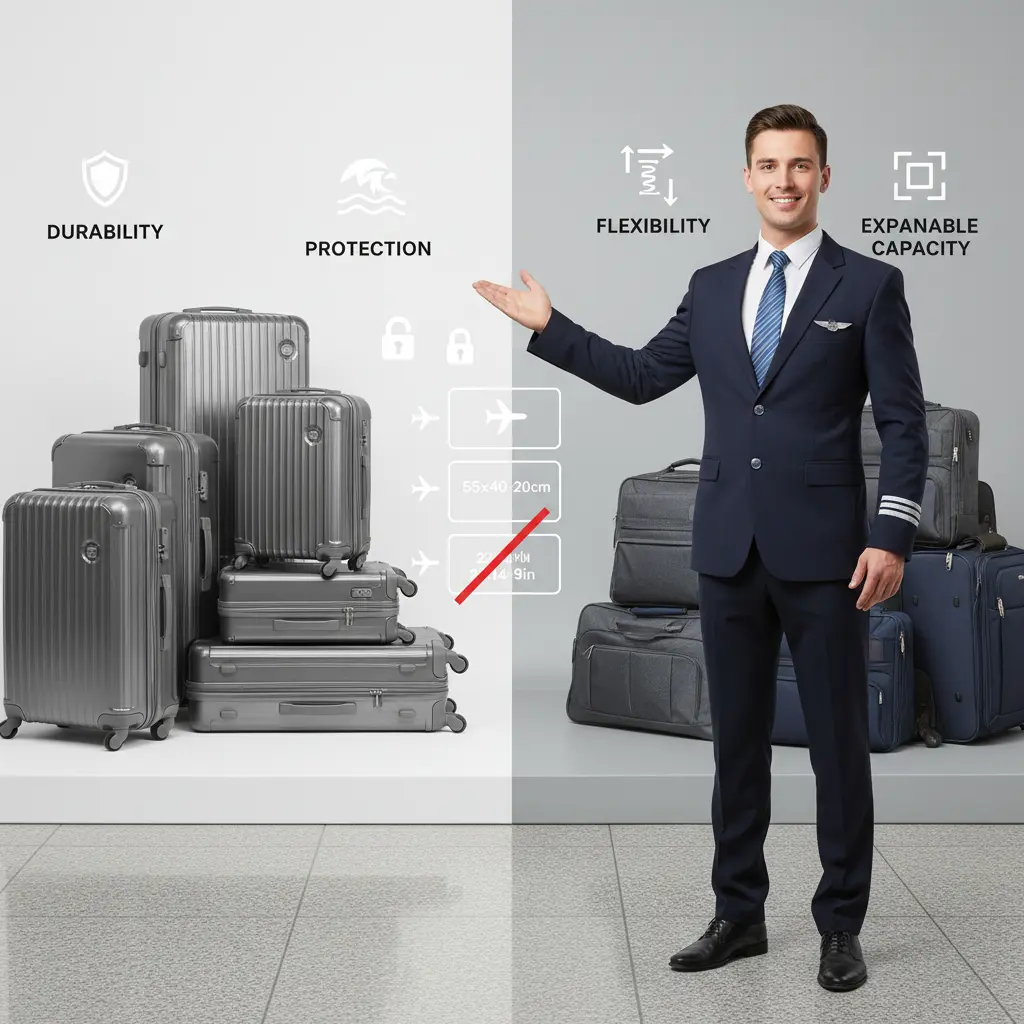
- Hard-Shell Luggage: Typically made from high-tech plastics like polycarbonate, ABS (acrylonitrile butadiene styrene), or aluminum. These cases are rigid, offering a protective shell around your belongings.
- Soft-Sided Luggage: Constructed from fabrics like ballistic nylon, Cordura, or polyester. These bags are pliable, often featuring exterior pockets and expandable zippers.
Why Choose Hard-Shell Luggage?
Hard-shell suitcases have surged in popularity, evolving from heavy trunks into lightweight, sleek travel staples.
Superior Protection for Valuables
If you travel with camera gear, laptops, or fragile souvenirs, a hard shell acts as a helmet for your stuff. Polycarbonate shells flex under pressure to absorb impact, while aluminum options offer fortress-like security (though they dent).
Better Security
Thieves can easily slash through fabric bags. Hard-shell cases, particularly those with latch closures rather than zippers, are significantly harder to breach. Integrated TSA-approved locks are standard on almost all modern hard cases.
Weather Resistance
While not fully waterproof (water can seep in through zippers), hard shells shed rain, snow, and spilled coffee much better than fabric. If your bag sits on a wet tarmac, your clothes inside stay dry.
The “No-Bulge” Guarantee
In the era of strict carry-on enforcement, rigid luggage keeps you honest. A hard shell prevents you from overstuffing the bag. If you can zip it, it will likely fit the sizer (assuming you bought the right dimensions).
Why Choose Soft-Sided Luggage?
Soft-sided luggage remains the classic choice for a reason: versatility.
Organization and Accessibility
Soft bags almost always feature exterior pockets. This is a lifesaver when you need to grab your passport, charger, or a jacket without opening the entire suitcase. Hard shells usually require you to unzip the whole clamshell to access anything.
Squeezing into Tight Spaces
Because the fabric has “give,” soft-sided bags can be shoved into tight overhead bins or the trunk of a compact rental car. If the bin is slightly crowded, a soft bag might squash in where a hard case would be rejected.
Storage at Home
This is a major factor for apartment dwellers. Many soft-sided duffels or carry-ons can collapse down for easy storage under a bed. Hard shells require a dedicated storage footprint equal to their size.
Comparison at a Glance
| Feature | Hard-Shell Luggage | Soft-Sided Luggage |
| Durability | High (cracks/dents possible) | High (rips/tears possible) |
| Weight | Generally lighter (Polycarbonate) | Variable (Ballistic Nylon is heavy) |
| Flexibility | None (rigid shape) | High (can overstuff) |
| External Pockets | Rare (some newer models have them) | Standard |
| Water Resistance | Excellent | Low to Moderate |
| Security | High (slash-proof) | Moderate |
Hard vs. Soft Luggage for Flying
Air travel in 2026 looks different than it did a few years ago. Airlines are increasingly using automated scanners at gates to measure bag dimensions instantly. This shift impacts which luggage type is safer for avoiding fees.
The Case for Hard Shells in 2026
If you buy a hard-shell carry-on that meets the 22″ x 14″ x 9″ requirement, it will always meet that requirement. It physically cannot expand beyond its frame. This makes it the safest bet for budget airlines like Frontier or Spirit where gate agents—and now scanners—are looking for any reason to charge you.
The Risk of Soft Shells
Soft bags often come with expansion zippers. While convenient for packing, an expanded soft bag will almost certainly fail the sizer test. Furthermore, even if you don’t use the expander, overstuffing a soft bag can make it bulge outward, pushing it over the dimension limits and leading to a mandatory gate-check fee.
Smart Luggage Warning
Regardless of the exterior, if you choose a “smart” bag with charging ports, the lithium battery must be removable.
- Carry-on: You can keep the battery in, but it must be removable.
- Checked: You must remove the battery and bring it into the cabin with you.
If you buy a hard-shell smart bag where the battery is integrated and non-removable, you will be forced to leave the bag behind if it needs to be checked.
Hard vs. Soft Luggage for International Travel
International travel introduces variables like smaller planes, weight limits, and rough terrain.
Handling Cobblestones and Stairs
If you are visiting Europe, you will likely encounter cobblestones and older hotels without elevators. A lightweight polycarbonate hard shell with high-quality spinner wheels is often easier to maneuver than a heavy soft-sided bag. However, a soft-sided travel backpack or duffel is the ultimate winner for mobility if you can carry the weight.
Stricter Weight Limits
International carriers (especially in Asia and Europe) often enforce a 7kg to 10kg (15-22 lbs) carry-on limit. Polycarbonate hard shells are surprisingly light, often lighter than thick ballistic nylon soft bags. Every ounce of the bag’s weight is an ounce of gear you can’t pack.
The “Tiny Hotel Room” Factor
European and Japanese hotel rooms can be notoriously small. Hard-shell cases typically open like a clamshell (50/50 split), meaning they take up twice their footprint when open. Soft-sided bags usually open via a single lid, allowing you to prop them against a wall or put them on a small rack easily.
Frequently Asked Questions
Which material lasts longest: polycarbonate or aluminum?
Aluminum is the most durable but will dent and scratch (which many travelers think adds character). Polycarbonate is highly durable and bounces back from impact, making it the best all-around choice for longevity vs. weight.
Is ABS plastic good for luggage?
ABS is the cheapest hard plastic. It is lighter but more prone to cracking in cold weather or rough handling compared to polycarbonate. It is not recommended for frequent checked travel.
Do hard-shell suitcases crack easily?
Quality polycarbonate is flexible and rarely cracks. Cheap ABS plastic cracks easily. If a hard shell cracks, it is usually irreparable. Soft luggage tears can often be patched.
Can I repair a zipper on a hard-shell case?
Zipper repair on hard shells is difficult and expensive because the zipper is often sewn into the lining and glued to the shell. Soft-sided luggage zippers are generally easier for luggage repair shops to fix.
Are zipperless suitcases better?
Zipperless bags (usually aluminum or hybrid frames with latches) are more secure against theft and water. However, they are heavier and offer zero “give” for overpacking.
Which type is better for souvenirs?
Soft-sided luggage with an expansion zipper is superior for souvenirs. The fabric flexibility accommodates irregularly shaped items better than a rigid shell.
Does color matter for checked luggage?
Yes. Light-colored hard shells (white, pastel) will show black scuff marks from conveyor belts immediately. Darker colors or textured surfaces hide wear better.
Is soft-sided luggage waterproof?
Generally, no. Most utilize water-resistant coatings, but heavy rain will soak through zippers and fabric. Hard shells offer much better protection against rain and snow.
What is “ballistic nylon”?
It is a thick, tough synthetic nylon fabric originally developed for military body armor. It resists abrasion and tearing better than polyester but is heavier.
Which is better for business travel?
Hard-shell carry-ons are currently trending for business travel due to their sleek, professional look and ability to protect laptops. However, soft-sided bags with dedicated front laptop pockets are more practical for airport security lines.
Which One Suits Your Lifestyle?
The “best” luggage isn’t about the material; it’s about the mission.
- Buy Hard-Shell If: You carry breakables, want to ensure you never exceed carry-on dimensions, prefer 4-wheel spinners, and want a modern look.
- Buy Soft-Sided If: You need pockets for organization, live in a small apartment (storage), travel to places with tiny hotel rooms, or simply love to overpack.
As 2026 brings tighter enforcement on baggage sizes, investing in a high-quality suitcase that adheres to airline dimensions is the smartest travel hack of all. Whether you go hard or soft, check the measurements (including wheels and handles) before you buy.

Muhammad Naeem is a travel researcher with 5+ years of experience analyzing airline rules and global travel regulations. He specializes in simplifying complex airline policies to help travelers avoid extra fees and fly with confidence. His work focuses on accuracy, clarity, and up to date information across international carriers.